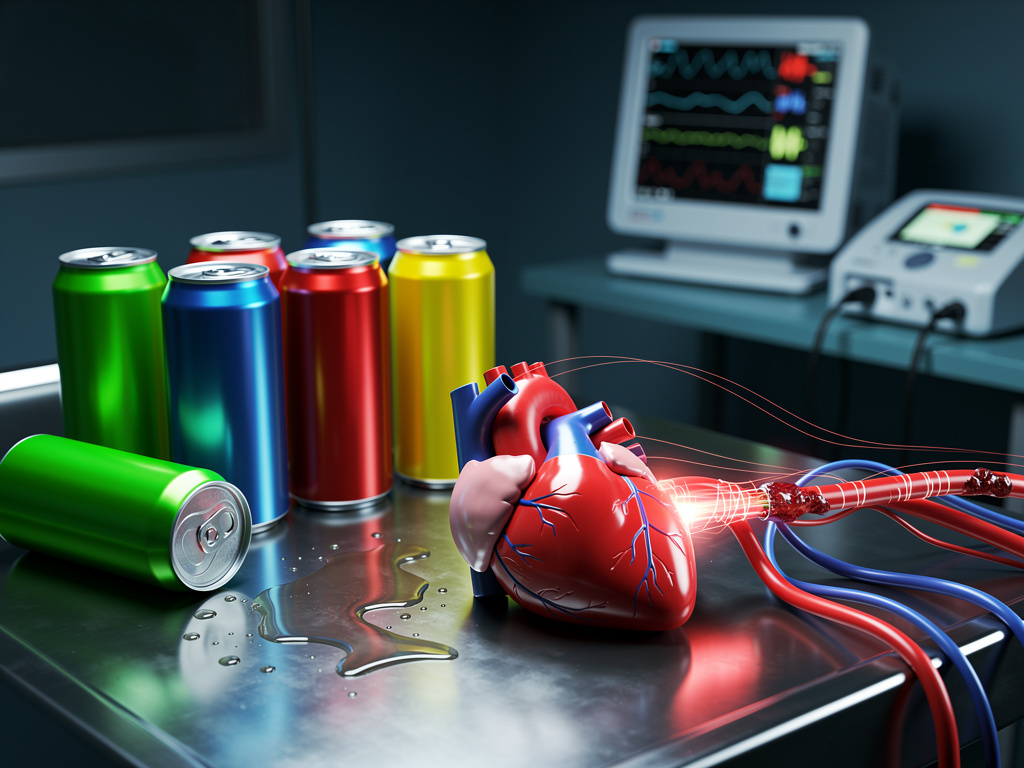
A recent case study published in BMJ Case Reports highlights the serious health risks associated with excessive consumption of energy drinks. A 50-year-old warehouse worker, previously healthy with no significant medical history, suffered a minor stroke after consuming up to eight cans of energy drinks daily. His alarming blood pressure reached a staggering 254/150 mmHg, indicating a critical health crisis linked to his caffeine intake.
Upon arrival at the emergency room, the patient exhibited symptoms commonly associated with strokes, including slurred speech and facial droop. Medical professionals quickly identified that his only significant risk factor was the excessive consumption of energy drinks, each containing approximately 160 mg of caffeine. This equated to over 1,280 mg of caffeine daily, more than triple the recommended limit for adults.
Investigations revealed that a small blood clot in the brain caused the stroke, leading to permanent neurological damage despite immediate medical intervention. Notably, the patient’s blood pressure returned to normal levels only after he discontinued the energy drinks, suggesting a direct connection between his consumption habits and the health emergency.
Health Risks of Energy Drinks
Medical experts have long raised concerns about the cardiovascular risks linked to energy drinks. Ingredients like caffeine and taurine can significantly impact heart health. Caffeine, while effective for boosting alertness, can constrict blood vessels and elevate blood pressure. When combined with high levels of sugar, these drinks pose a serious threat to cardiovascular well-being. The case study illustrates how chronic consumption can lead to endothelial dysfunction, compromising the blood vessels’ ability to regulate blood flow.
A 2021 study indicated that energy drinks could prolong QT intervals on electrocardiograms, increasing the risk of fatal arrhythmias. Social media platforms have seen a surge in discussions regarding these risks, with numerous users, including healthcare professionals, sharing personal experiences of heart palpitations linked to energy drink consumption.
As highlighted by The Guardian, health experts emphasize the need for public awareness, particularly among shift workers and younger demographics who frequently rely on these beverages to combat fatigue. The case serves as a cautionary tale, revealing that even those who appear healthy can experience severe health consequences from seemingly innocuous habits.
Industry Response and Regulatory Challenges
The energy drink market has seen significant growth, with global sales exceeding $50 billion annually. Major brands like Red Bull and Monster dominate the sector. However, regulatory frameworks remain inadequate in many regions. In the United States, energy drinks are classified as dietary supplements, which allows for higher caffeine levels without stringent oversight or consumer warnings about potential cardiovascular risks.
Reports from MedPage Today suggest that eliminating high-caffeine products could reverse some of the associated health issues. After the patient ceased his energy drink consumption, his blood pressure stabilized within weeks, although some neurological deficits persisted.
Public discourse around energy drink consumption has intensified following this incident. Posts on platforms like X reflect growing concerns about the health implications of habitual use, with anecdotal evidence highlighting risks such as elevated blood pressure and heart issues.
Experts advocate for better labeling and education regarding high-caffeine products. Some European countries mandate warnings for energy drinks, yet implementation varies widely. Industry insiders acknowledge that while companies are exploring “healthier” formulations, caffeine levels often remain high.
The patient’s recovery involved lifestyle modifications, including improved hydration and exercise. Medical professionals recommend that heavy users have their blood pressure monitored and limit intake to one can per day to mitigate risks.
As awareness increases, this case may influence public perception and policy concerning energy drinks. It underscores the need for consumers to weigh the short-term benefits of these beverages against potential long-term health consequences. With ongoing research revealing links to serious health issues, the push for a more informed approach to energy drink consumption becomes ever more critical.