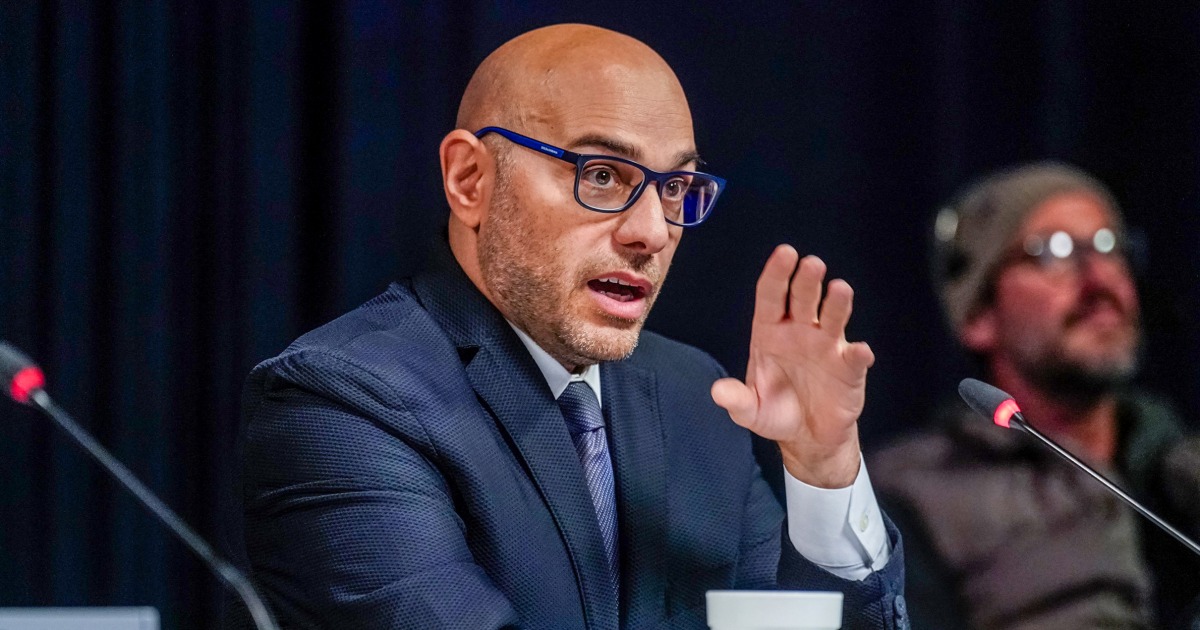
An unusual scene unfolded on March 15, 2024, as lawyer Aaron Siri, known for his anti-vaccine stance, addressed the Advisory Committee on Immunization Practices (ACIP) at the Centers for Disease Control and Prevention (CDC). His participation sparked significant controversy, marking a departure from the committee’s long-standing role as a trusted source for vaccine recommendations.
Siri, who has been involved in numerous lawsuits against federal and state health agencies, presented a detailed critique of the childhood immunization schedule. He highlighted alleged adverse events linked to vaccines, particularly the hepatitis B, pneumococcal, and diphtheria-tetanus-pertussis (DTaP) vaccines. During his presentation, he made claims regarding a supposed connection between vaccines administered in early childhood and autism, a notion that has been widely discredited by extensive research.
Dr. Art Caplan, head of the division of medical ethics at NYU Langone Medical Center, criticized Siri’s presence at the meeting. He suggested that the ACIP was shifting towards an ideology that could undermine childhood vaccination efforts. “This is a science issue,” Caplan stated, emphasizing the need for credible scientific evidence in discussions surrounding vaccine safety.
Siri argued for the necessity of more robust studies to disprove claims linking vaccines to autism, stating, “If you’re going to say vaccines don’t cause autism, have the data to say it.” This assertion disregards decades of research, including a large Danish study published in July 2023, which found no correlation between aluminum exposure from vaccines and neurodevelopmental disorders.
Despite Siri’s claims, Dr. Jake Scott, an infectious diseases specialist at Stanford Medicine, refuted the notion that childhood vaccines were inadequately tested. “Inert placebo-controlled trials exist for most of the routine childhood vaccines,” he explained, highlighting that several studies have utilized saline or sterile water as controls.
Siri also criticized the efficacy of certain vaccines, suggesting that they do not sufficiently prevent transmission of diseases. Public health experts maintain that the primary goal of vaccines is to prevent symptomatic diseases and fatalities, countering Siri’s assertions.
The meeting, which had been contentious from the start, saw the advisory panel vote to amend longstanding recommendations. ACIP members decided that newborns born to mothers who test negative for hepatitis B could consult healthcare providers before receiving the initial dose of the hepatitis B vaccine.
This decision follows a significant shift in the committee’s composition. Robert F. Kennedy Jr., who has long been an outspoken critic of vaccines, dismissed previous members of the advisory panel in June 2023, alleging conflicts of interest and replacing them with individuals more aligned with his views.
Siri, who disclosed multiple conflicts of interest during his presentation, including ongoing lawsuits against the Department of Health and Human Services, has previously sought to compel the CDC to release studies that demonstrate vaccines do not cause autism.
Notably, prominent vaccine advocates were invited to the meeting but declined to participate. Dr. Paul Offit, director of the Vaccine Education Center at the Children’s Hospital of Philadelphia, and Dr. Peter Hotez, co-director of the Texas Children’s Hospital Center for Vaccine Development, both indicated their concerns regarding the meeting’s focus and direction.
Dr. Cody Meissner, a pediatrician and former ACIP member, expressed deep disappointment with Siri’s presentation, labeling it a distortion of facts. He stated, “For you to come here and make these absolutely outrageous statements about safety, it’s a big disappointment to me.”
Critics of the meeting, including Caplan, argue that the debate surrounding vaccine safety should not be framed as a matter of opinion. “We don’t really need to debate evolution again, probably don’t need to debate settled opinion about whether we went to the moon — and we don’t need to debate this,” he asserted, underscoring the importance of evidence-based medicine in public health discussions.
As debates over vaccine safety and efficacy continue, the implications of this meeting may have far-reaching effects on public health policy and the ongoing dialogue surrounding vaccination.