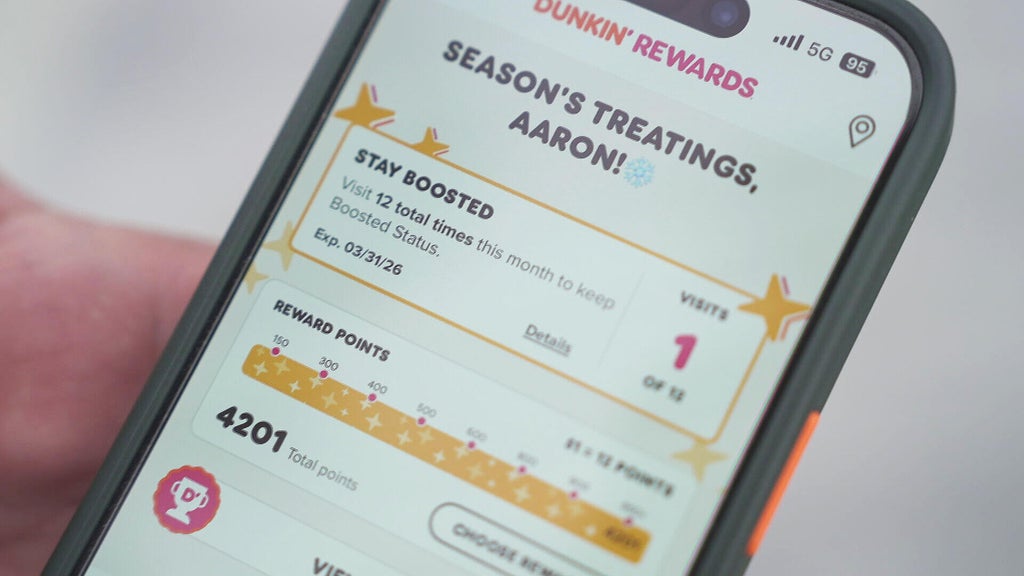
Dunkin’ has made significant changes to its loyalty program that have left some customers frustrated, particularly in Massachusetts. A recent policy update now stipulates that points earned will expire one year from the last day of the month they were accumulated. This shift has resulted in a substantial loss for loyal patrons, including Aaron Braun from Stowe, who lost 62,000 points, equivalent to about $260 or roughly 100 coffees.
Braun had diligently accumulated over 93,000 points over several years, with plans to share the rewards with his children. “My kids now have a driver’s license so they can order on the way to school if they want to, breakfast sandwiches, all the products are there. And it doesn’t cost anything,” Braun stated in an interview with WBZ-TV. Following the changes, he has resorted to making his coffee at home, expressing disappointment that his loyalty was not reciprocated. “I wrote and said, ‘I’ve been loyal to you, but you’re not showing any loyalty back to me,'” he added.
The backlash from customers like Braun highlights a broader concern regarding loyalty programs. Social media platforms have been inundated with complaints regarding Dunkin’s updated policy, which has left many feeling undervalued. Braun’s experience serves as a case study in the potential pitfalls of such programs.
Understanding Loyalty Program Risks
Deidre Cummings, legislative director for the consumer advocacy group MASSPIRG, emphasized the inherent risks associated with loyalty programs. “The rule of thumb I have is you gotta use it or lose it, because these things can change, in a moment’s notice, as we’ve seen here,” she explained. Cummings pointed out that companies reserve the right to modify their loyalty offerings at any time, often incorporating numerous conditions that may not be immediately apparent to consumers.
Moreover, Cummings noted that customers provide valuable data, including purchasing history and personal information, in exchange for loyalty rewards. “It’s important to remember that we are paying in terms of giving them our purchasing history and personal data. So, we should just keep that in mind. So, it’s not really free. I call it like ‘free not free,'” she said.
As Dunkin’ faces scrutiny over its revised loyalty program, it remains to be seen how it will address the concerns of its customer base. The company has not responded to inquiries from WBZ regarding the backlash. Dunkin’ is not alone in reevaluating loyalty programs; various airlines and credit card companies are also revising their offerings, indicating a trend that may affect customers across multiple sectors.
The evolving landscape of loyalty programs serves as a reminder for consumers to remain vigilant and informed about the terms and conditions that accompany these rewards. As Braun’s situation illustrates, loyalty can come at a cost, and it is essential for customers to be proactive in utilizing their perks before changes are implemented.