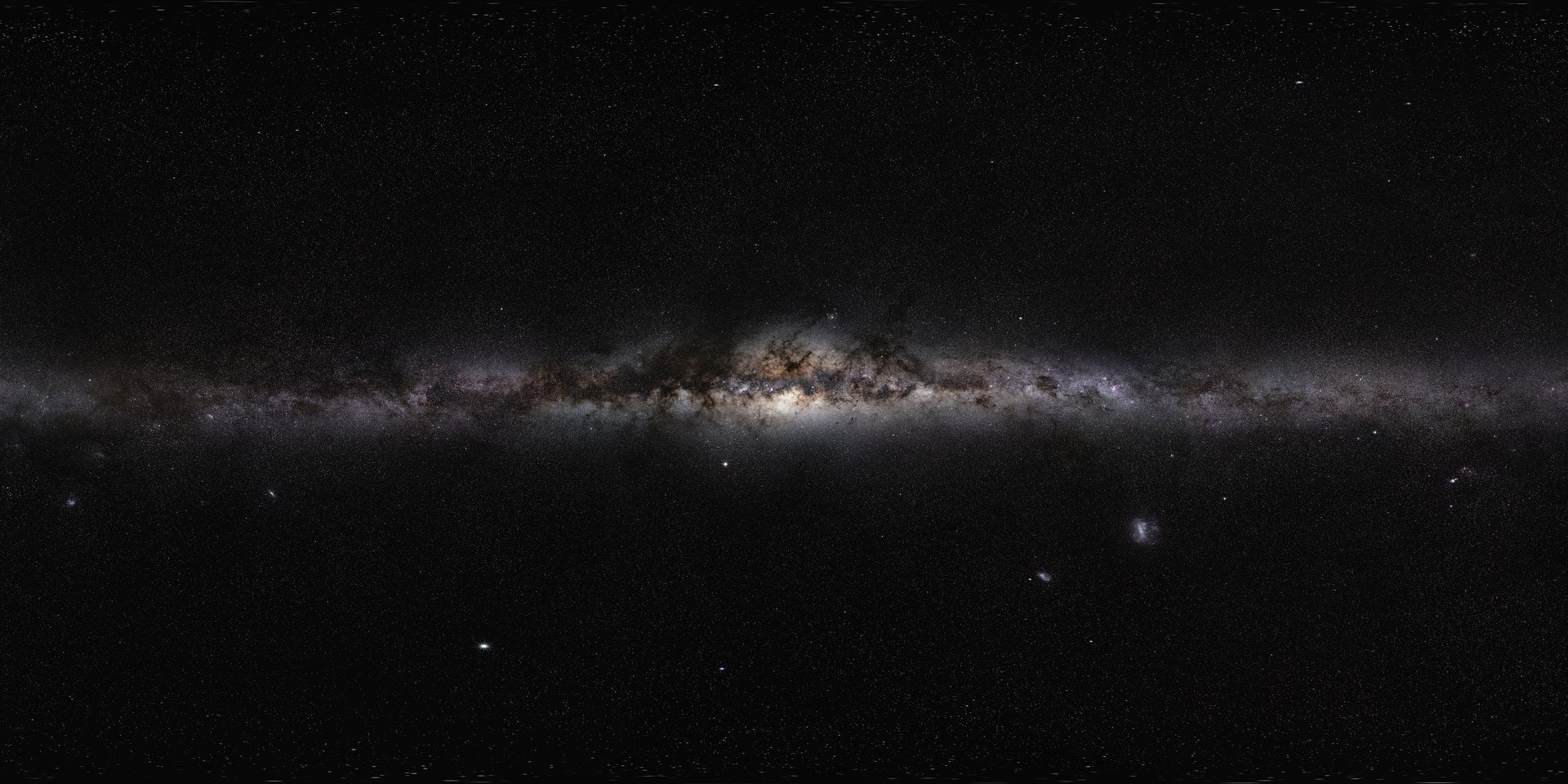
Researchers at the RIKEN Center for Interdisciplinary Theoretical and Mathematical Sciences (iTHEMS) in Japan have achieved a groundbreaking milestone in astrophysics. Collaborating with colleagues from the University of Tokyo and the Universitat de Barcelona, they have created the first high-resolution simulations of the Milky Way, accurately modeling over 100 billion stars over a time span of 10,000 years. This achievement marks a significant advancement in the field, as it surpasses previous models by a factor of 100 in both the number of stars simulated and the speed of computation.
The simulation utilized an innovative combination of 7 million CPU cores, advanced machine learning algorithms, and complex numerical simulations. This powerful approach not only enhances the understanding of stellar and galactic evolution but also represents a leap forward in supercomputing and artificial intelligence development. The findings were documented in a paper titled “The First Star-by-star N-body/Hydrodynamics Simulation of Our Galaxy Coupling with a Surrogate Model,” which is set to be presented at the Proceedings of the International Conference for High Performance Computing, Networking, Storage and Analysis (SC ’25) on March 15, 2025.
Advancements in Galactic Simulations
The ability to simulate the Milky Way at such unprecedented detail allows astronomers to rigorously test theories related to galactic formation, structure, and evolution. Historically, researchers faced significant challenges when attempting to model the complexities of galaxies. Accurately capturing the myriad forces at play—such as gravity, fluid dynamics, supernovae, and the influences of supermassive black holes—requires immense computational power and resources.
Previously, the mass limit for galaxy simulations was around one billion solar masses, representing less than 1% of the stars in the Milky Way. Moreover, current state-of-the-art supercomputers would need approximately 315 hours (over 13 days) to simulate just 1 million years of galactic evolution, a tiny fraction of the Milky Way’s estimated age of 13.61 billion years. This limitation restricted astronomers to modeling only large-scale events, as adding more supercomputer cores did not effectively resolve the underlying issues.
To overcome these obstacles, the team, led by researcher Hirashima, implemented an innovative machine learning surrogate model. This AI-driven approach allows for the efficient prediction of supernova effects on surrounding gas and dust, simulating outcomes as far ahead as 100,000 years post-explosion. By integrating this AI model with traditional physical simulations, the researchers were able to simultaneously capture the dynamics of a Milky Way-sized galaxy alongside smaller stellar phenomena.
Testing and Implications of the New Model
The performance of this new model was validated through extensive testing on the Fugaku and Miyabi Supercomputer Systems, both based in Japan. The results were remarkable: the new method could simulate the resolution of individual stars in galaxies containing more than 100 billion stars, achieving a simulation of 1 million years of evolution in just 2.78 hours. This efficiency implies that a simulation covering 1 billion years of galactic history could be completed in less than 115 days.
These advancements provide astronomers with a vital tool for exploring and validating theories surrounding galactic evolution and the origins of the Universe. Additionally, the success of incorporating surrogate AI models into astrophysical simulations may have far-reaching implications beyond astronomy. This “AI shortcut” approach could enhance simulations in diverse fields such as meteorology, ocean dynamics, and climate science, where both large-scale and small-scale factors play critical roles.
As this research continues to unfold, it promises to redefine our understanding of the cosmos and the intricate processes that govern it. The integration of advanced computational techniques stands to not only advance astrophysical studies but also expand the horizons of scientific inquiry across multiple disciplines.