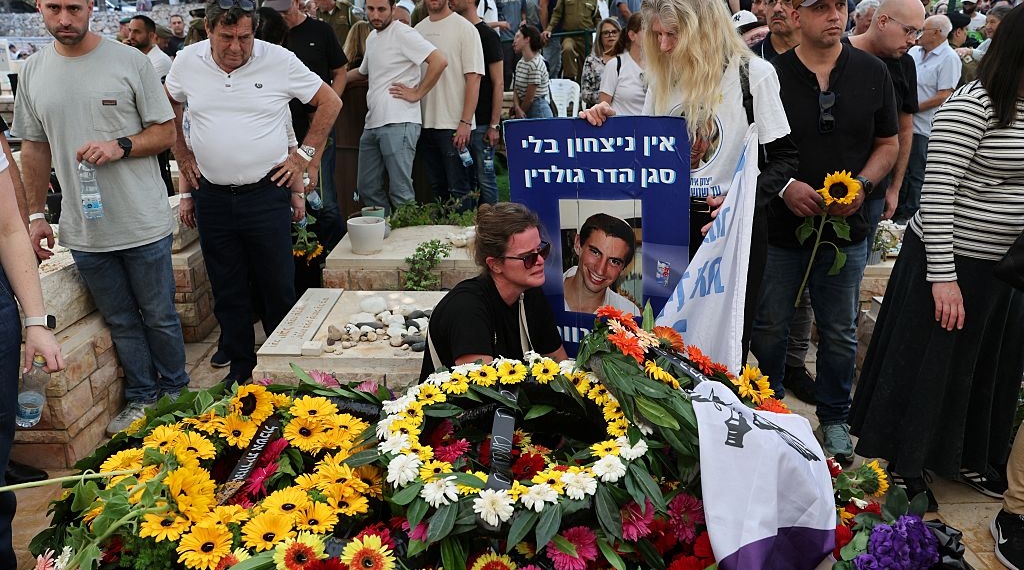
BREAKING: Tens of thousands of mourners gathered in central Israel on Tuesday for the emotional funeral of Lt. Hadar Goldin, whose body was returned from Gaza after being held for over a decade. The massive crowd filled the streets, waving Israeli flags and standing in silence as Goldin was finally laid to rest, marking a profound moment for the nation.
The return of Goldin’s remains, facilitated by a ceasefire agreement brokered by former President Donald Trump, was confirmed on Sunday. This development ends an 11-year campaign led by his family, who traveled globally advocating for the return of their loved one. “Hadar, we waited for you 11 years, that’s a long time. A very long time. I honestly can’t explain how we did it,” his mother, Leah Goldin, expressed beside his grave.
Goldin, just 23 years old when he was killed in August 2014—only two hours after a ceasefire began during the 2014 Gaza War—has become a national symbol in Israel. Evidence discovered in the tunnel where Hamas held his body, including a blood-soaked shirt, confirmed his death. His family’s relentless campaign has kept his memory alive, with posters displayed across Israel for years.
Prime Minister Benjamin Netanyahu did not attend the funeral, but Lt. Gen. Eyal Zamir, Israel’s military chief of staff, spoke on behalf of the military. Attendees included Benny Gantz, the chief of staff during Goldin’s abduction. “Hamas’ kidnapping of bodies is attempting to destroy families and destroy Israel from the inside,” said Goldin’s twin brother, Tzur.
His sister, Ayelet Goldin, called the day “historic,” stating, “Suddenly, now that you’re here, I understand how sacred and profound it is to bring you home.” The emotional impact of Goldin’s return resonates deeply within Israeli society, as it represents closure for many affected by the ongoing conflict.
The 2014 war that claimed Goldin’s life resulted in over 2,200 Palestinian and 73 Israeli deaths. Israel’s military response to his abduction, which included a significant assault on Rafah, drew international condemnation due to the high Palestinian casualty rate. Following this, the military scrapped the controversial “Hannibal directive” that had authorized overwhelming force in such operations.
In a related announcement, the Israeli military confirmed on Tuesday that it had dismantled the Rafah tunnel where Goldin was taken, further emphasizing the military’s commitment to addressing issues surrounding the conflict with Hamas.
The return of Goldin’s remains is perceived by many Israelis as the closing of one of the most painful chapters in their struggle with Hamas, reigniting discussions about the complexities of war, loss, and the enduring hope for peace. This moment not only honors Lt. Hadar Goldin but also serves as a reminder of the ongoing challenges faced by families in conflict zones.
As the nation mourns, the focus now shifts to how this development might influence future relations between Israel and Hamas and what steps might be taken to prevent similar tragedies.