MEET Battery Research Center Launches Breakthrough Modular Battery Pilot Line
The MEET Battery Research Center at the University of Münster has just launched a cutting-edge modular pilot production line that promises to transform the future of battery technology across industries. This development is happening right now as the center rolls out its ambitious “REFlexBatt 2.0” project, backed by a €5 million funding initiative from the European Union and the State of North Rhine-Westphalia.
The modular pilot line, designed with flexibility at its core, enables rapid switching between different battery cell materials and designs—including emerging alternatives like sodium and potassium-based cells. “This will be a game-changer for battery manufacturing,” says Dr. Markus Börner, Head of Cell System Research at MEET. “The modular design allows fast changeover times and prevents cross-contamination, accelerating the development cycle of next-generation batteries.”
Revolutionizing Battery Innovation with Speed and Flexibility
At the heart of “REFlexBatt 2.0” is the ability to adapt production processes on the fly, responding immediately to the evolving demands of diverse battery chemistries. The pilot line will not only produce multi-layer cells with various chemistries at an early stage but also streamline scaling these processes up to full industrial manufacturing more quickly than ever before.
The project aims to bridge the costly and time-consuming gap between laboratory prototypes and mass production—a bottleneck that has long slowed innovation in battery technology worldwide. This leap forward could bring high-performance, sustainable energy storage solutions to market faster, impacting everything from electric vehicles to grid storage.
Strong Regional and EU Support to Secure Energy and Tech Futures
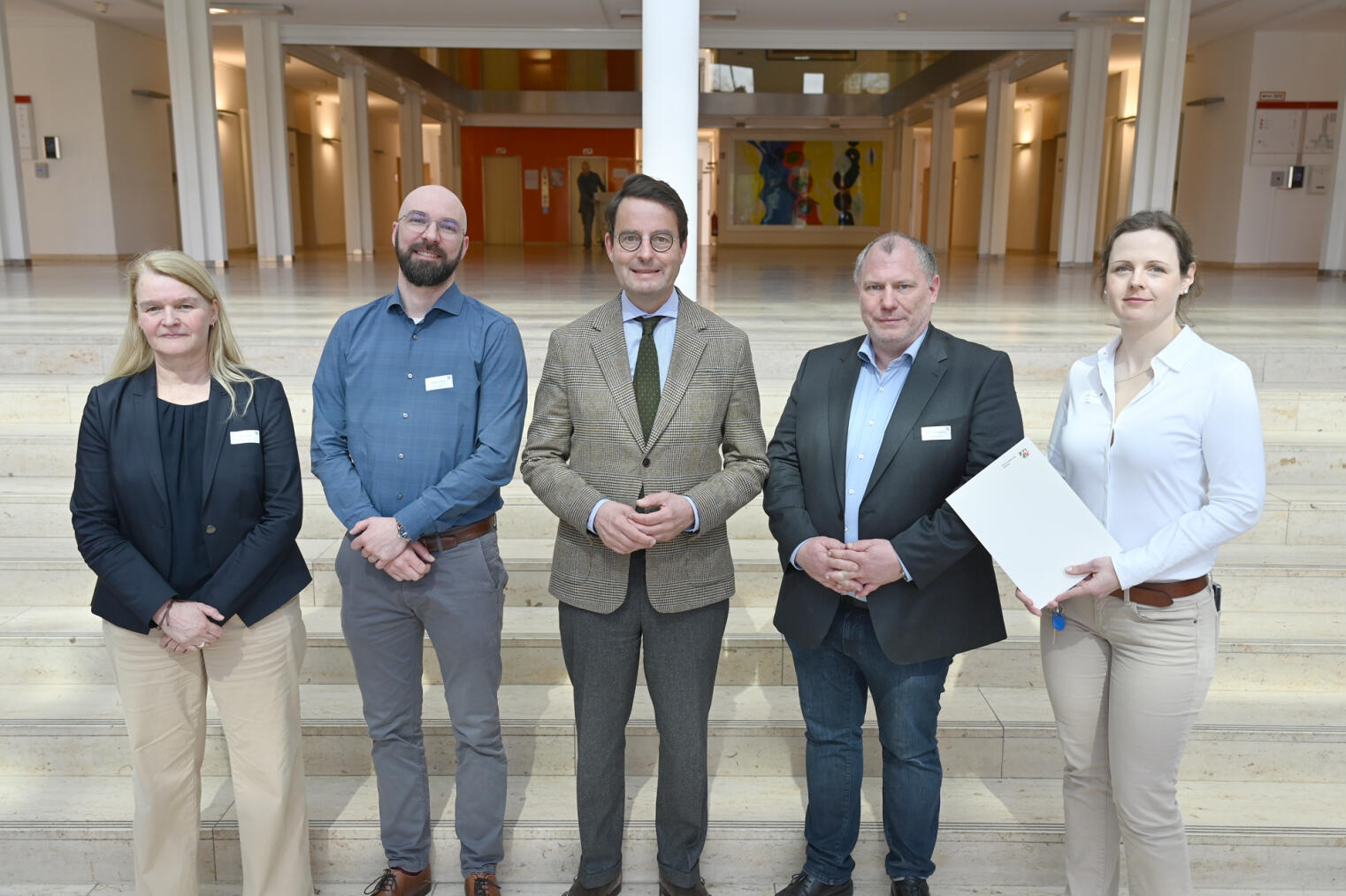
The initiative is led in partnership with industry player Safion GmbH and supported by the Münster Regional Council, which officially presented the grant notification on April 9, 2026. Regional President Andreas Bothe highlighted the significance of the project, stating,
“Battery research in Münster covers a broad spectrum… this funding strengthens essential infrastructure and supports resource-efficient supply chains across North Rhine-Westphalia and the European Union.”
For U.S. and Montana audiences watching advances in energy technology, this project underscores a global push to accelerate innovations in battery materials, which directly impacts clean energy strategies, electric vehicle adoption, and energy storage capacity improvements nationwide.
What’s Next for Battery Tech and Global Energy Storage?
As MEET’s modular pilot line ramps up, industry experts expect shortened innovation cycles that could speed the arrival of more efficient and versatile batteries. This development arrives amid surging demand for alternative energy solutions and raw materials diversification—critical in light of supply chain and sustainability challenges facing the energy sector.
U.S. companies and researchers are closely monitoring such breakthroughs. Technologies enabling rapid prototyping and flexible manufacturing of battery cells could soon influence domestic production models, including in Montana’s growing clean energy landscape.
MEET Battery Research Center’s modular pilot line signals an evolution in turning science into real-world battery solutions—and it’s happening right now.