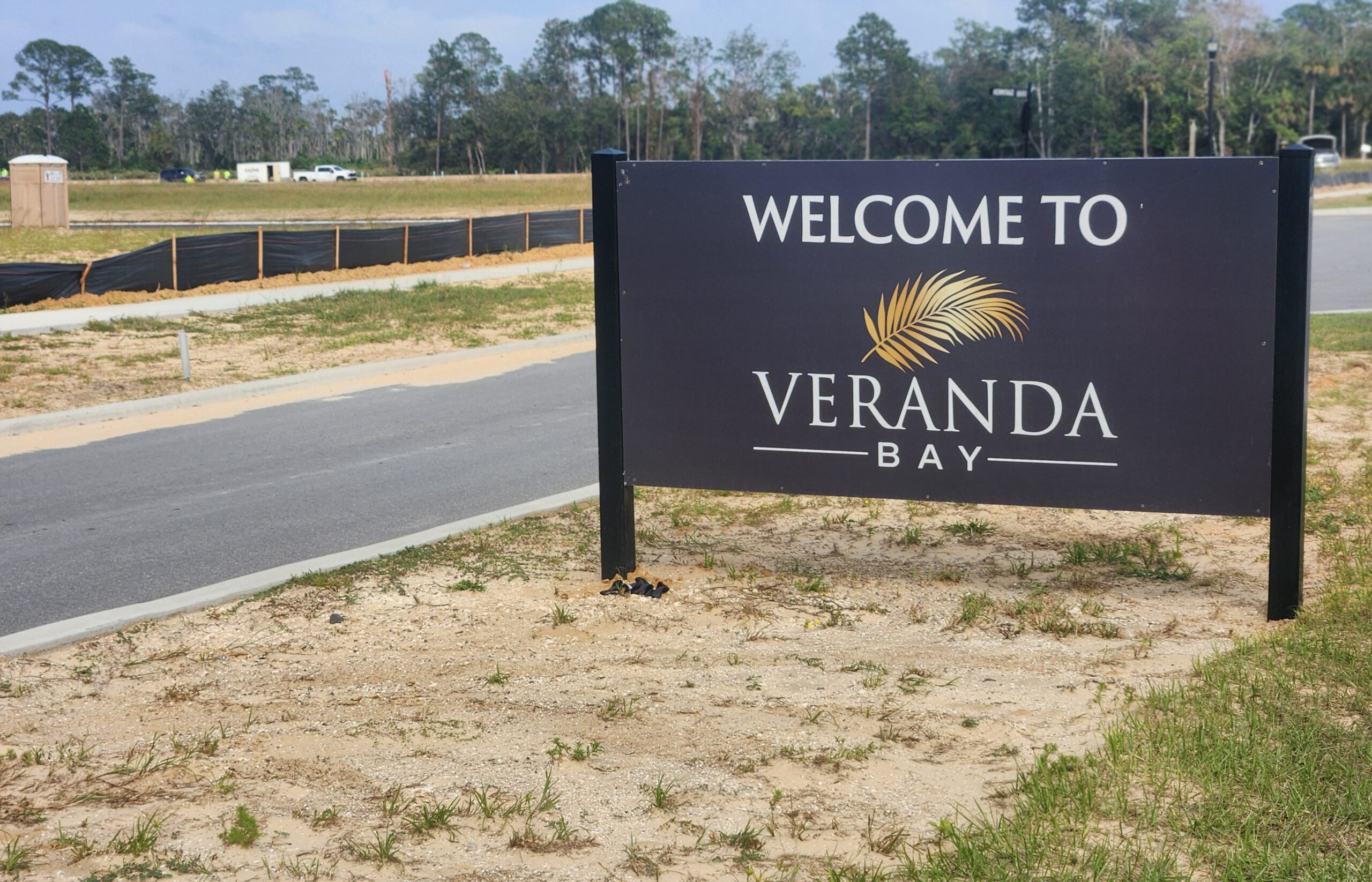
UPDATE: In a surprising turn of events, Flagler County officials have decided not to challenge the annexation of Veranda Bay by Flagler Beach. The Board of County Commissioners made this critical decision at a meeting on March 9, following a heated discussion over the legality of the annexation process.
This decision comes just a week after the board had called for a special meeting to deliberate over possible legal disputes regarding the annexation, raising significant concerns among local residents and officials. The main issue revolves around whether homeowners in unincorporated areas must sign a separate annexation petition, as outlined in Florida Statutes Sec. 171.044, or if their signatures during home purchases suffice.
Currently, 122 lots have been constructed in Veranda Bay since its approval in 2020, with approximately half already inhabited. Developer Ken Belshe has stated that these lot owners consented to the annexation at the time of purchasing their homes, adding a layer of complexity to the legal debate.
Commissioner Greg Hansen led the motion not to challenge the annexation, supported by Vice Chair Kim Carney and Commissioners Pam Richardson and Andy Dance. Chair Leann Pennington opposed the motion, emphasizing the importance of adhering to state statutes. Had the board moved forward with a challenge, it would have triggered the Florida Governmental Conflict Resolution Act, necessitating a conflict resolution process before any litigation could commence.
During the discussion, both County Attorney Michael Rodriguez and Flagler Beach City Attorney Drew Smith indicated that any court case arising from this issue would be unprecedented, with no clear legal precedent to guide the outcome. Commissioner Dance highlighted the potential repercussions of challenging the annexation, noting, “We worked too hard to get to this point to jeopardize our negotiations with the developer.”
The negotiations pertain to the acquisition of approximately 153 acres of floodplain land in the Bulow Creek Preserve, with Belshe agreeing to sell this land if the county can secure funding. Dance pointed out that the board’s decision could jeopardize these crucial negotiations aimed at preserving the area.
Vice Chair Carney expressed her disappointment, interpreting the decision as a compromise of the county’s responsibilities. “It’s a sad day in Flagler County,” she remarked, suggesting that the board should not prioritize development deals over legal obligations.
Public reactions varied during the meeting, with some residents supporting the decision and others urging the board to challenge the annexation process. Resident Jay Gardener noted that the absence of protests from the 122 lot owners indicated a lack of public discontent. In contrast, resident John Tanner argued for a challenge, insisting that the law requires explicit petitions rather than signatures included in closing documents.
The board’s decision will undoubtedly impact future developments in the area, as the community grapples with balancing growth and preservation. As this situation unfolds, residents and officials alike will be watching closely for any further developments.
Stay tuned for more updates on this evolving story as Flagler County navigates the complexities of local governance and land development.