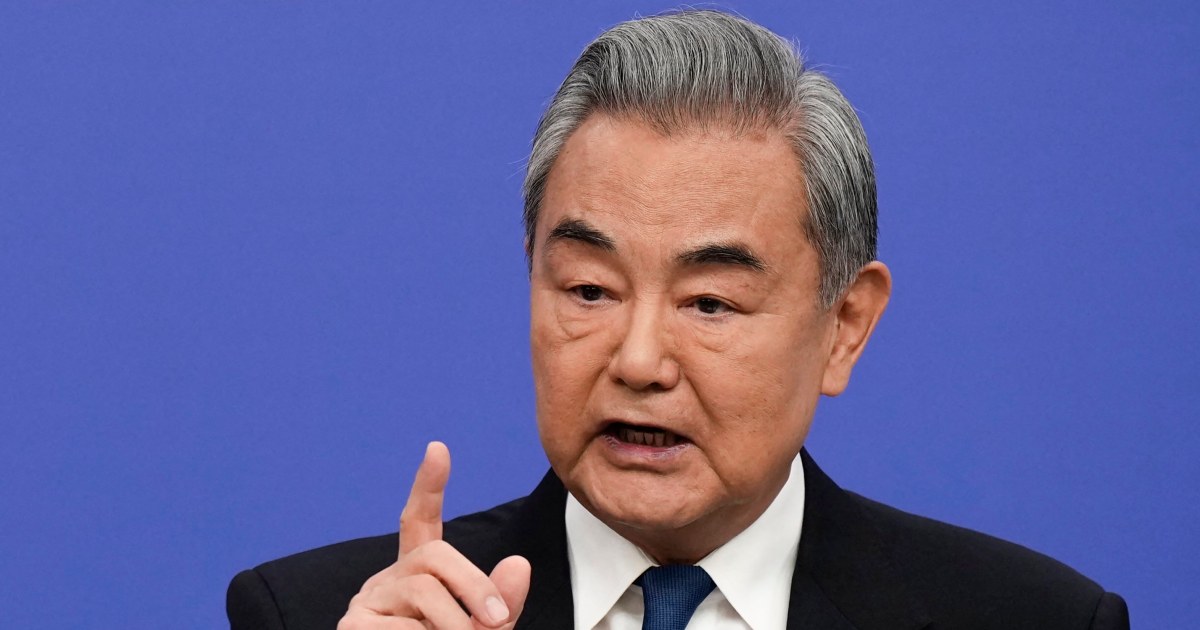
In a clear dismissal of the idea of a global governance model dominated by the United States and China, Chinese officials have expressed their reluctance to embrace the concept of a “Group of Two” (G2). This term, popularized by former President Donald Trump, suggests a dual leadership role for the world’s two largest economies. However, during a recent press conference, Chinese Foreign Minister Wang Yi emphasized that such an arrangement overlooks the importance of the broader international community.
China’s Stance on Global Leadership
The G2 concept was originally introduced in 2005 by economist C. Fred Bergsten, aiming to enhance communication between the United States and China. While some American policymakers initially supported the idea, it has lost traction in recent years, particularly amid escalating tensions between the two nations. Trump’s administration has often highlighted the G2 in discussions, including a planned meeting with Chinese President Xi Jinping later this month. Yet, the U.S. approach raises concerns among its allies about potential exclusion from significant international decisions.
During the conference, Wang articulated that while both nations wield considerable influence, there are over 190 countries in the world. He stated, “World history has always been written by many countries together, and the future of humanity will be forged through the collective efforts of all nations.” This perspective underscores China’s commitment to multilateralism rather than a binary power structure.
Concerns Over Hegemony and Global Governance
China is particularly wary of the implications of the G2 concept on its diplomatic relations, especially with nations in the Global South. The country desires to avoid scenarios where major powers dictate terms to smaller states. Wang reiterated that China will “never seek hegemony or expansion,” advocating instead for a “multipolar world” that fosters equality among nations.
Wang’s comments come at a critical time for U.S.-China relations, which have been strained due to various geopolitical issues, including trade tensions and military engagements. He warned that “turning our backs on each other would only lead to mutual misperception and miscalculation,” emphasizing the risks of sliding into confrontation.
Despite ongoing challenges, Wang noted that both Trump and Xi have maintained productive communication, which he views as vital for restoring stability in their bilateral relations. He expressed optimism that the two leaders, through their interactions, could facilitate improvements in U.S.-China ties.
The two leaders are scheduled to meet multiple times this year, beginning with Trump’s three-day visit to China starting on March 31, 2024. Following this, Xi is expected to visit the United States, and both leaders may participate in significant summits, including the G20 in Miami and the Asia-Pacific Economic Cooperation (APEC) summit in Shenzhen.
Wang also highlighted the potential disruption posed by ongoing military actions in the Middle East, particularly regarding U.S.-Israeli strikes in Iran. He reiterated China’s calls for an immediate cessation of hostilities, stating, “This is a war that should not have happened,” and emphasized the need for dialogue over force.
The remarks from Wang provide a glimpse into China’s strategic vision for its role on the global stage, signaling a commitment to collaborative governance while firmly rejecting the notion of a U.S.-China power monopoly. As both nations navigate their complex relationship, the focus will likely remain on fostering dialogue and cooperation rather than unilateral dominance.