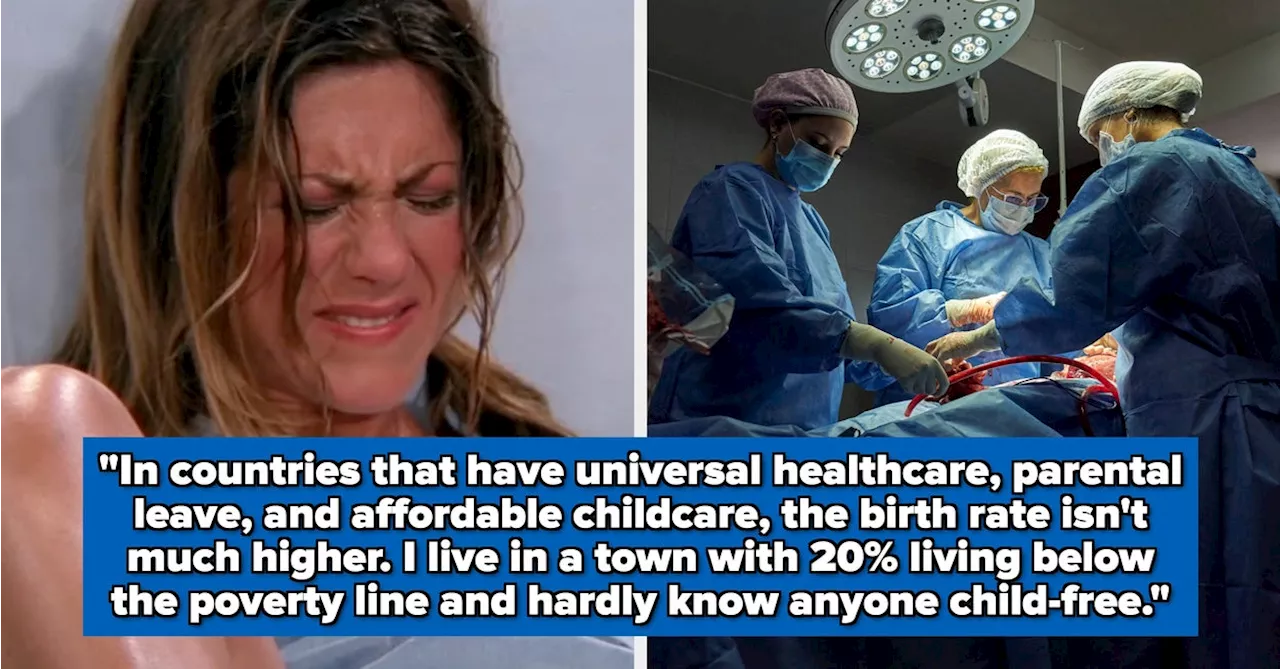
Declining birth rates in developed nations have sparked discussions that extend beyond mere economics. While financial considerations such as childcare, housing, and healthcare undoubtedly influence family planning decisions, personal choice and evolving societal attitudes also play critical roles.
Understanding the Economic Context
Many individuals cite the financial burden of raising children as a significant barrier. In some cases, the high costs associated with starting a family, including education and healthcare, lead to delays or reconsiderations of parenthood. The economic strain can be particularly pronounced for young couples, resulting in the postponement of family planning until financial circumstances improve.
Statistics reveal a troubling trend: in countries like the United States, birth rates have dropped to record lows, with the total fertility rate estimated at just 1.64 children per woman as of 2022, well below the replacement level of 2.1. This decline prompts debates about the long-term implications for societies that depend on population growth to sustain their economies.
While many argue that improved economic conditions could reverse this trend, a deeper examination reveals that financial factors are not the sole determinants for many individuals.
Shifting Attitudes Towards Parenthood
A growing number of individuals express a conscious choice to remain childfree, regardless of their financial situation. This shift in perspective indicates a significant change in societal norms, as traditional expectations around parenthood evolve. The ability to openly discuss personal preferences regarding family planning has gained traction, highlighting a new era of autonomy over reproductive choices.
The introduction and accessibility of reliable birth control methods have empowered individuals, particularly women, to take control of their reproductive futures. This newfound autonomy allows people to align their family planning decisions with personal aspirations and life goals instead of conforming to cultural expectations.
Moreover, motivations for not having children extend beyond financial concerns. Many individuals prioritize personal fulfillment, career aspirations, and lifestyle choices. Some express worries about genetic issues or the availability of adequate support systems for raising children. Such diversity in motivations underscores the complexity of the decision-making process surrounding parenthood.
Policymakers often interpret declining birth rates primarily through an economic lens, viewing them as a challenge to workforce sustainability and economic growth. However, recognizing that these choices stem from changing priorities may lead to more nuanced and effective policy responses.
As society normalizes the choice to remain childfree, understanding that the decision regarding parenthood is deeply personal becomes essential. The dialogue surrounding declining birth rates must evolve to reflect this complexity, acknowledging that each individual’s choice is informed by a multitude of factors that extend beyond just economics.
In conclusion, the declining birth rates in developed nations highlight a multifaceted issue. While economic factors undoubtedly play a role, personal choice and shifting societal attitudes are equally significant. Acknowledging this complexity will be crucial for addressing the implications of these trends in the years to come.