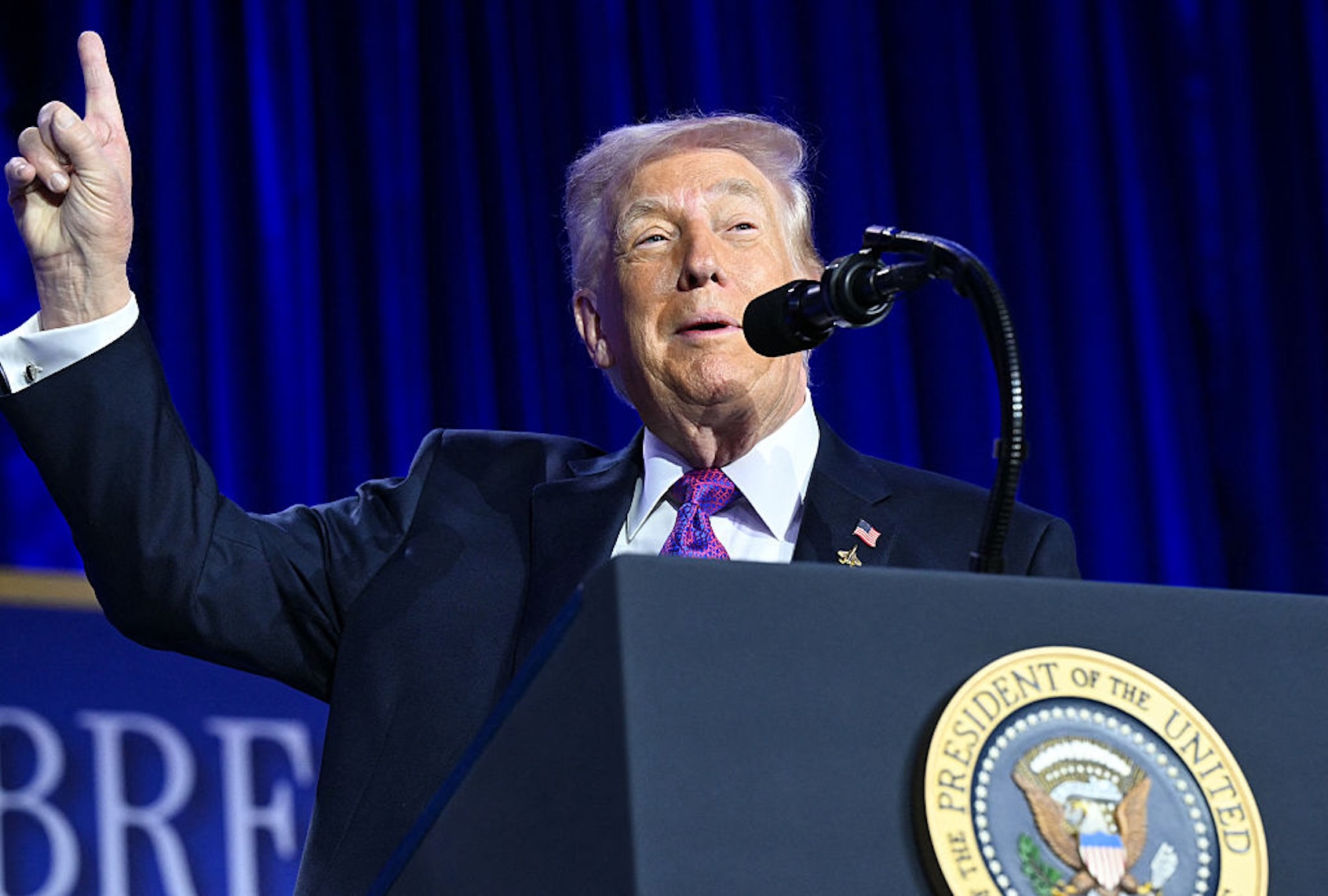
Donald Trump has sparked renewed controversy following a post on his social media platform, Truth Social, where he revived debunked claims of widespread voter fraud in the 2020 presidential election. The post, which featured a racially charged video of former President Barack Obama and former First Lady Michelle Obama, triggered a swift backlash from both sides of the political spectrum and led to the post’s eventual deletion.
Trump’s claims about the 2020 election being “stolen” continue to resonate with some of his supporters. His insistence on this narrative has been a cornerstone of his political identity, framing his grievances as central to his messaging. Following the controversial post, Karoline Leavitt, Trump’s press secretary, initially defended the content before it was retracted, with the White House attributing the decision to an unidentified staff member. As of Friday evening, Trump had not issued an apology.
Polling and Political Dynamics
Despite Trump’s vocal assertions, polls indicate a significant disconnect between his views and those of the broader American public. A majority of Americans, including many Republicans, believe that the 2020 presidential election was legitimate. This sentiment is underscored by a recent report which highlighted that approximately 70% of Americans do not support Trump’s claims regarding electoral fraud.
The GOP’s adherence to Trump’s rhetoric has led some conservatives to abandon key principles, such as their staunch support for the Second Amendment and opposition to government overreach. The Republican Party’s current stance reflects a shift that prioritizes loyalty to Trump over traditional conservative values.
In a political landscape increasingly dominated by culture wars, Trump’s rhetoric has thrived on polarizing issues. Debates over inclusivity, such as the use of pronouns in social media bios, and accusations of “cancel culture” have fueled the party’s grievances. Critics argue that this fixation on culture war issues distracts from substantive policy discussions affecting everyday Americans.
Democrats Respond and Reclaim Messaging
In response to Trump’s antics, political figures within the Democratic Party have attempted to reclaim the narrative. Minnesota Governor Tim Walz previously described Trump and his political allies as “weird,” a label that resonated and provided a contrasting perspective to the GOP’s messaging. This characterization, while initially captivating, faced challenges in sustaining traction as Walz’s campaign experienced a swift decline.
Democratic leaders, including Pete Buttigieg and Chris Murphy, have pointed to specific Republican policies as misaligned with mainstream American values. Murphy notably criticized the GOP’s preoccupation with drag performances and book bans, emphasizing the disconnect between conservative priorities and those of the average voter.
While Trump’s provocative statements and social media presence continue to dominate headlines, the effectiveness of his messaging appears to be waning. As Democrats strategize for upcoming elections, they aim to pivot the focus back to pressing issues such as affordability, housing, and infrastructure—matters that resonate more deeply with the electorate than the grievances of Trump’s base.
In navigating the complexities of contemporary politics, both parties must contend with the challenges posed by their respective narratives. While Trump’s grievances may sustain fervor among his loyal supporters, the broader electorate appears increasingly receptive to a discourse centered on everyday concerns rather than cultural squabbles.
As the political landscape evolves, the ability to engage with voters on substantive issues may ultimately dictate the success of both parties in forthcoming elections.