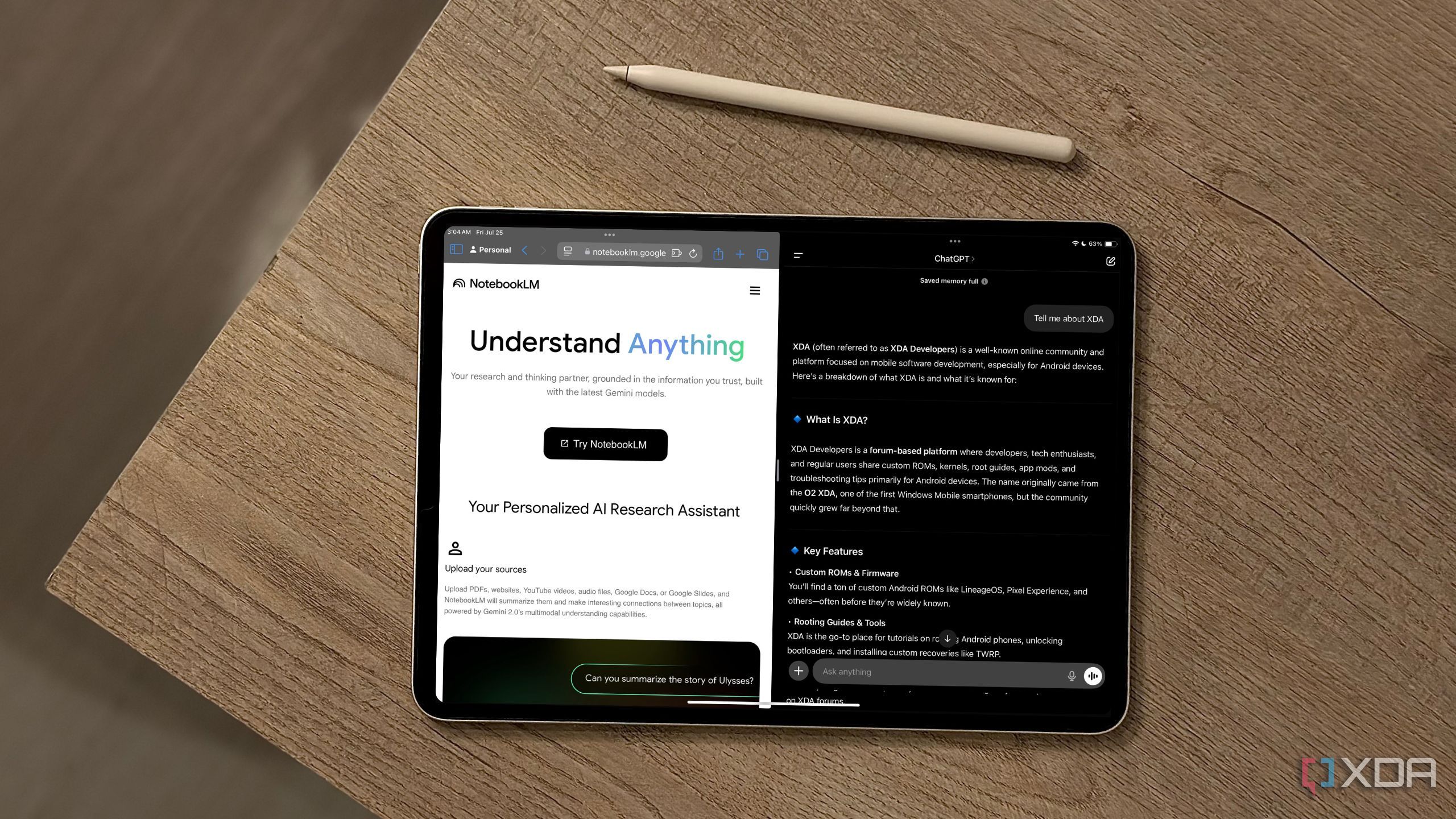
The advent of NotebookLM has prompted a shift in how users approach research, particularly in comparison to established tools like ChatGPT. Increasingly, individuals are recognizing the limitations of ChatGPT, especially in contexts requiring detailed analysis and effective sourcing. This transition signifies a broader change in research methodologies as students and professionals seek more robust tools for their academic and professional needs.
NotebookLM, a tool designed to enhance research efficiency, diverges from the traditional AI model exemplified by ChatGPT. While ChatGPT excels in conversational responses and offers a user-friendly experience, it has notable constraints, particularly for in-depth research. Users often encounter restrictions on document uploads in the free version, limited to just three files per day with a maximum size of 512MB each. Such limitations can hinder effective research, especially when working with multiple or larger sources.
Conversely, NotebookLM leverages retrieval-augmented generation (RAG) technology, which allows it to analyze weblinks and documents in a manner that enhances the research experience. By fetching and parsing full content, NotebookLM creates an indexed database that persists across multiple queries. This indexing allows users to engage deeply with the material, retrieving specific passages directly linked to their prompts. Users benefit from reduced risk of vague responses, as the tool draws from a stable corpus of indexed information.
How NotebookLM Enhances Research Engagement
One of the most significant advantages of NotebookLM is its focus on sources rather than prompts. This fundamental shift compels users to familiarize themselves with the content before seeking AI assistance. For individuals who prefer a bottom-up approach, this feature promotes active engagement with research material, ultimately enhancing comprehension and retention. The tool’s intuitive design encourages users to explore various sources, providing a more thorough understanding of the topics at hand.
Furthermore, NotebookLM’s real-time web search functionality, powered by advanced AI, allows users to generate relevant weblinks as needed. This feature serves as a valuable resource for those who may not have the time or inclination to sift through multiple documents manually. The combination of structured citation models and embedded indexing makes verification of claims more efficient, significantly benefiting users involved in rigorous academic or professional research.
In addition to its research capabilities, NotebookLM offers a suite of generative tools designed to facilitate learning and retention. Features such as Mind Map, Quiz, and Flashcards empower users to convert their research into interactive study materials. These tools allow users to actively engage with their content, further solidifying their understanding and recall of key information.
Complementing Tools for Optimal Research Workflow
While NotebookLM has proven to be a powerful asset for research, ChatGPT remains relevant for certain functions. Its conversational interface and ability to retrieve information quickly are advantageous for initial queries or to gather sources. For instance, users can utilize ChatGPT to identify relevant materials before transferring them to NotebookLM for deeper synthesis and structured analysis.
This dual approach — starting with ChatGPT for broad queries and then refining research with NotebookLM — maximizes the strengths of both tools. Each serves a distinct purpose within the research workflow, allowing users to harness the immediate accessibility of ChatGPT while benefiting from the analytical depth provided by NotebookLM.
In summary, the emergence of NotebookLM as a research tool marks a significant evolution in how individuals engage with information. By fostering a more hands-on approach to research and providing structured support, it empowers users to take control of their learning processes. The integration of generative features further enhances its practicality, making it a valuable resource for anyone seeking to deepen their understanding of complex topics. As users continue to explore the capabilities of both NotebookLM and ChatGPT, the landscape of research tools is likely to evolve, encouraging more informed and engaged scholarship.