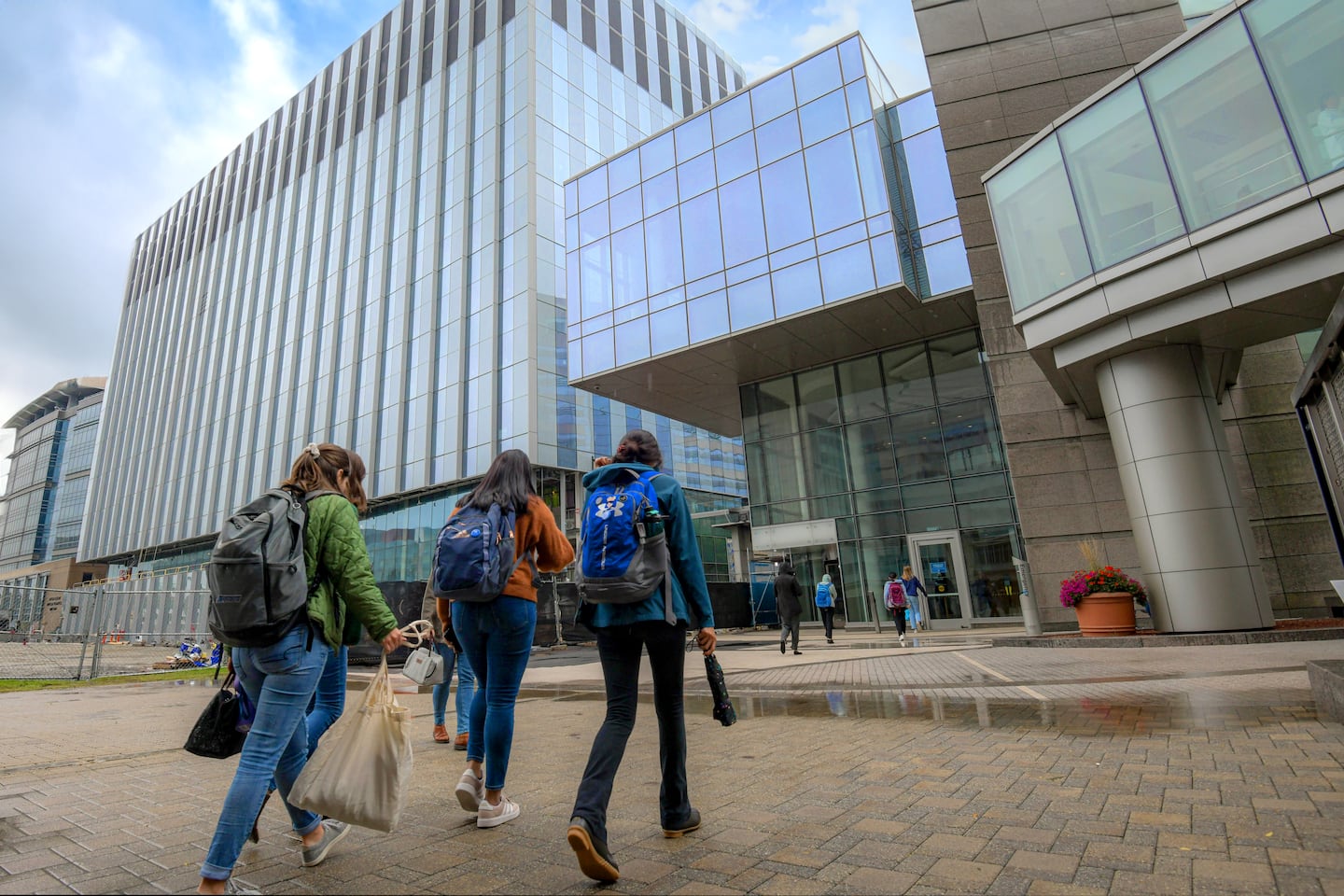
The UMass Chan Medical School has experienced a significant decline in PhD student admissions, accepting only 13 students this academic year, compared to 73 last year. This sharp reduction raises concerns about the future of scientific research and innovation in Massachusetts and beyond, as these students are poised to contribute to vital fields such as cancer biology, immunology, and neuroscience.
The admissions cuts at UMass Chan may signal broader challenges across educational institutions in the United States. According to Michael Nietzel, president emeritus of Missouri State University, this decline represents a loss of future talent in science and engineering. He emphasized the critical role of PhD students in shaping the academic workforce and driving innovation in various fields.
While UMass initially offered places to between 60 and 80 biomedical PhD candidates for the upcoming academic year, these offers were largely rescinded due to fears of federal funding cuts. The situation at UMass serves as a potential indicator of a looming crisis in higher education, where opportunities for young researchers are increasingly limited.
Federal Funding Cuts Impact Graduate Programs
The recent passage of a spending bill by Congress, which rejected proposed cuts to the National Institutes of Health (NIH), has not fully alleviated concerns regarding funding for academic institutions. UMass Chan Chancellor Michael Collins stated that he expects next year’s PhD class to be larger than this year’s but still fewer than typical numbers due to ongoing declines in federal grant funding. In fiscal 2025, the medical school received only 345 NIH awards, the lowest in five years, totaling $190.4 million.
Despite a relatively small decrease of $3 million, or 1.6 percent, from the previous year, significant portions of this funding are restricted due to changes in grant distribution policies initiated by the Trump administration. Collins expressed his dissatisfaction with the current state of funding, indicating that fewer available grants lead to reduced opportunities for graduate students.
The national landscape reflects similar trends. Data from the National Student Clearinghouse Research Center indicates that there were 2,122 fewer doctoral students enrolled in fall 2025 compared to the previous year, marking a 0.3 percent decline. This is the first significant drop in doctoral enrollment since 2020. The overall decrease in graduate student numbers has been attributed to a loss of nearly 10,000 international students, although it remains unclear how many would have pursued doctoral studies.
Mixed Enrollment Trends at Leading Institutions
In the Boston area, doctoral enrollment patterns vary among prestigious institutions. Harvard University reported 4,061 doctoral students in fall 2025, a decrease from 4,166 the year before. The Harvard Crimson noted that Harvard’s Faculty of Arts and Sciences plans to admit PhD students at significantly reduced levels for the 2026-2027 academic year due to financial pressures.
In contrast, the Massachusetts Institute of Technology (MIT) reported an increase in doctoral students, totaling 4,107, up from 4,083. However, MIT admitted 96 fewer graduate students overall this year, reflecting wider challenges in the academic job market. MIT President Sally Kornbluth commented on the loss of promising talent, highlighting the negative impact of such reductions on institutions.
Further complicating the situation, Brown University has announced a planned 20 percent reduction in PhD student enrollment for the next academic year, pausing admissions in several departments to manage costs. This proactive approach illustrates the ongoing struggle universities face in balancing program viability with financial realities.
While some argue that funding cuts may prompt universities to reevaluate their programs, concerns remain regarding whether strategic reductions will occur in fields with low market demand. Richard Larson, a professor at MIT, pointed out that the current system produces more PhD graduates than there are academic openings. This imbalance raises questions about the long-term sustainability of certain academic programs.
As institutions grapple with these challenges, Phillip Levine, an economics professor at Wellesley College, emphasized the political complexities involved in making targeted cuts to specific programs. The stakes are high, as reduced opportunities for doctoral students could lead to a brain drain, with talented individuals pursuing careers elsewhere.
The Canadian government’s recent investment of $1.7 billion over 12 years to attract international researchers underscores the competition for top talent. This includes $133.6 million earmarked for recruiting doctoral students and post-doctoral researchers, highlighting the importance of maintaining a robust academic workforce.
In conclusion, the challenges faced by UMass Chan Medical School and similar institutions reflect a broader crisis in doctoral admissions and funding. Without a concerted effort to stabilize federal support for research and education, the implications for the future of scientific advancement and workforce development could be profound. The time for decisive action is now, as the academic landscape continues to evolve amid financial uncertainties.