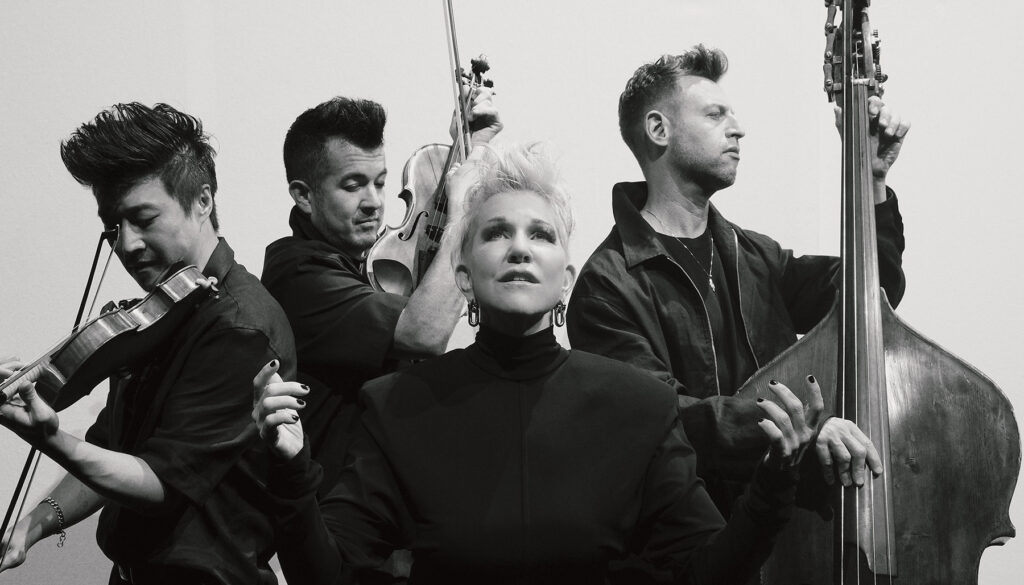
The fusion of Emily Dickinson’s powerful poetry with music is set to be showcased in a new performance titled Emily — No Prisoner Be, premiering on February 7, 2026, at Zellerbach Hall in Berkeley. This innovative production, co-commissioned by Cal Performances, features compositions by Pulitzer Prize-winning composer Kevin Puts and will be performed by mezzo-soprano Joyce DiDonato alongside the trio Time for Three.
In the lead-up to this event, Berkeley English lecturer John Shoptaw reflects on the transformative nature of Dickinson’s work. He emphasizes the necessity of reading her poems aloud to fully grasp their intricate rhythms, slant rhymes, and dashes that create an expansive emotional landscape. Shoptaw first encountered Dickinson’s poetry during his undergraduate studies at the University of Missouri-Rolla in the late 1970s, where he was profoundly affected by the poem “Apparently with no Surprise.”
The poem, according to Shoptaw, reveals a blindness to the everyday catastrophes that surround us, expressing a duality that lies between hope and despair. He describes his initial reaction as one of bewilderment, likening Dickinson’s verse to a hymn — a sentiment he connects to his upbringing in a musical environment filled with hymns like “A Mighty Fortress Is Our God” and “Amazing Grace.”
Throughout the years, Dickinson’s poetry has inspired numerous musicians, from Aaron Copland to contemporary artists like Phoebe Bridgers. The upcoming performance promises to explore a range of her work through 24 intimate songs that capture the essence of her voice, inviting audiences to experience her poetry in a new light.
Joyce DiDonato describes Dickinson’s poetry as both expansive and introspective, capable of traversing vast emotional landscapes. This duality is central to the performance, which aims to showcase the breadth of Dickinson’s imagination rather than confining it to her physical reality. As she puts it, the performance will reflect “the mystical and infinite world of her poetry.”
Born in 1830 in Amherst, Massachusetts, Dickinson lived a largely reclusive life, particularly during the Civil War. Despite her prolific output, fewer than a dozen of her nearly 1,800 poems were published during her lifetime, and those were often heavily edited. It was only years after her death in 1886 that her unique voice began to be recognized and staged, highlighting the need for her work to be heard.
The poems selected for Emily — No Prisoner Be range from the yearning “Wild Nights! Wild Nights!” to the poignant “I felt a Funeral, in my Brain,” which delves into the deep grief experienced during the Civil War. Shoptaw regards the latter as one of Dickinson’s most ambitious pieces, encapsulating the emotional intensity of her work.
In his current teaching role, Shoptaw encourages students to engage with Dickinson’s poetry in a tangible way. He fosters an environment where they read aloud, often linking sentences across stanzas, creating a collaborative experience that contrasts sharply with the polished interactions of the digital age. This method reflects the physical and emotional labor that Dickinson’s poetry demands and which continues to resonate with audiences over a century later.
Shoptaw believes that Dickinson’s poems are not merely immortal; they are transhistorical, evolving in meaning and relevance as they traverse time. DiDonato echoes this sentiment, suggesting that in an age defined by constant digital engagement, Dickinson’s work serves as a reminder to embrace introspection and creativity.
As the performance date approaches, interest in Emily — No Prisoner Be continues to grow. Tickets are available through the Cal Performances website and at the Zellerbach Hall box office. Attendees can also look forward to a post-performance discussion featuring Shoptaw, DiDonato, and the musicians, further enriching the experience of Dickinson’s extraordinary legacy.