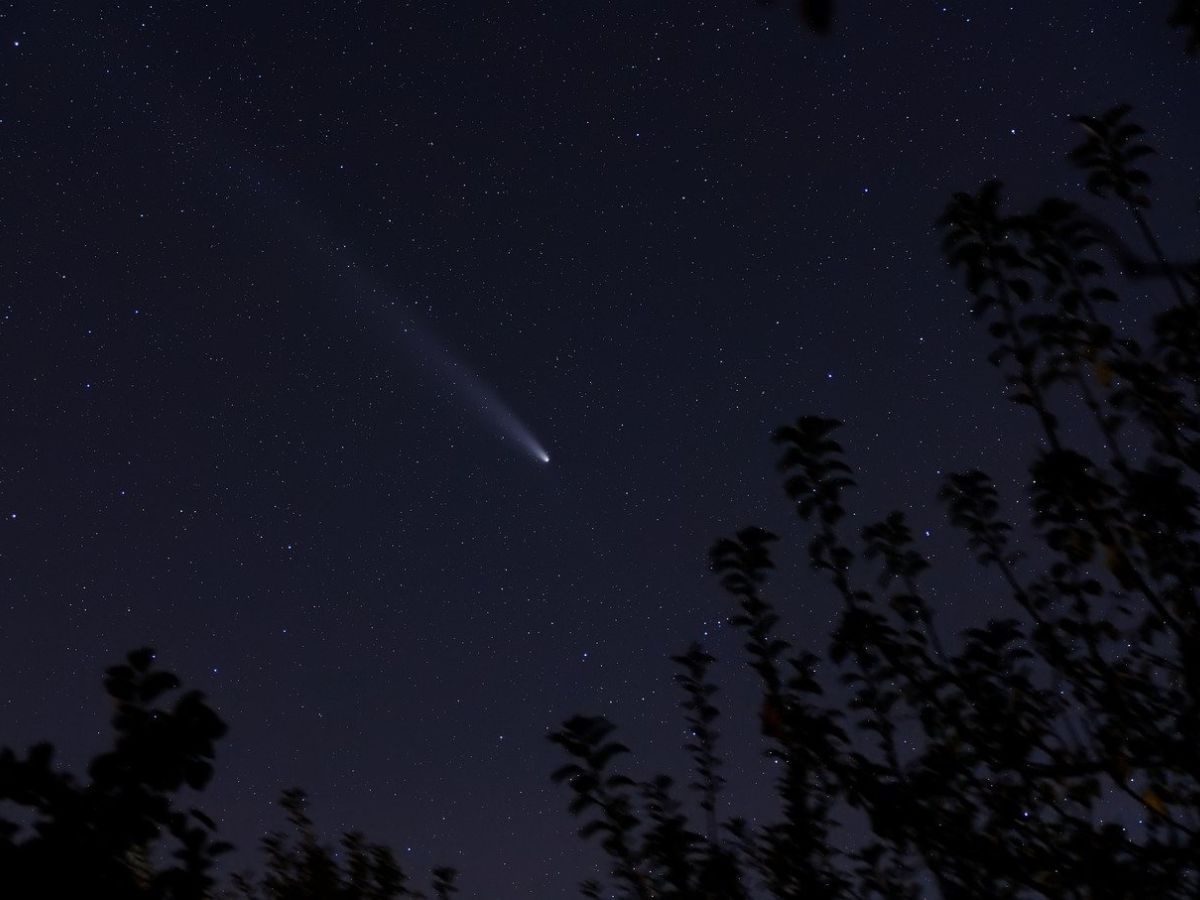
Scientists have captured stunning new images showing the comet C/2025 K1 (Atlas) disintegrating in space. These visuals, taken by the International Gemini Observatory and released by the National Optical-Infrared Astronomy Research Laboratory (NOIRLab), reveal a significant fragmentation event occurring in real-time.
The images, which were obtained on March 4, 2025, illustrate the comet breaking apart as it approaches the inner solar system. Researchers have identified multiple fragments, each exhibiting distinct tails, indicating the comet’s volatile nature. This event highlights the dynamic processes that can occur in the life cycle of comets, as they traverse the solar system.
Significance of the Discovery
The disintegration of comet C/2025 K1 (Atlas) is significant for multiple reasons. First, it provides scientists with an opportunity to study the physical and chemical properties of cometary materials. Understanding these properties can offer insights into the early solar system and the formation of planetary bodies.
According to B. Bolin, an astronomer at the International Gemini Observatory, “Observing a comet disintegrate allows us to gather data that we can’t obtain from intact comets. The fragments can reveal information about their composition and structure that is crucial for understanding their origins.”
This event also raises questions about the potential impact of such disintegration on Earth. While there is no immediate threat posed by C/2025 K1 (Atlas), studying the behavior of comets as they break apart is vital for planetary defense strategies in the future.
Expert Analysis and Future Observations
Astronomers plan to continue monitoring the fragments of C/2025 K1 (Atlas) as they move through space. This ongoing observation will help scientists determine the trajectory of the comet’s remnants and their potential interactions with other celestial bodies.
The data collected from these observations is expected to contribute to a broader understanding of cometary behavior. It will also assist in refining models predicting how comets behave as they approach the Sun and other gravitational influences.
As the scientific community processes the information gained from this disintegration event, it reinforces the importance of international collaboration in space research. Institutions like NOIRLab and the International Gemini Observatory play critical roles in advancing our knowledge of space phenomena.
The disintegration of C/2025 K1 (Atlas) serves as a reminder of the dynamic nature of our solar system. As research continues, astronomers remain optimistic about the potential discoveries that can emerge from studying these fragmented celestial bodies.