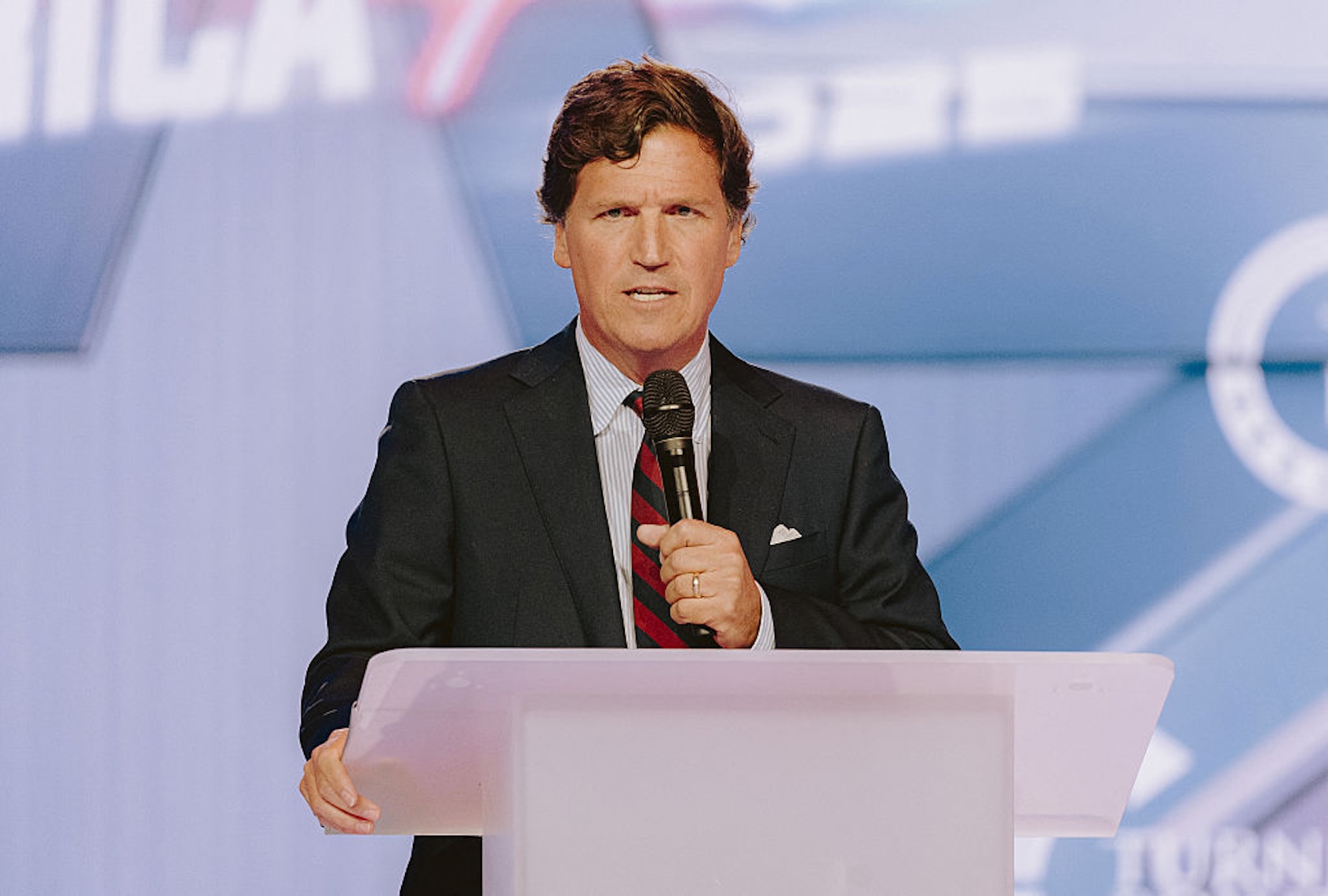
In a pivotal moment for political discourse, comedian Jon Stewart delivered a scathing critique of commentator Tucker Carlson on the CNN debate show Crossfire in 2004. Stewart, then the host of the popular “The Daily Show” on Comedy Central, condemned the show for its superficial approach to political debate, arguing that it treated serious issues like mere entertainment. This confrontation would have lasting implications for Carlson’s career and the broader political landscape in the United States.
Stewart’s appearance on Crossfire was marked by his blunt assessment of the show and its hosts. He accused them of being “hacks” and claimed that their format was detrimental to American politics. The exchange became infamous, particularly when Stewart labeled Carlson a “d**k” and emphasized that their dialogue was more akin to a scripted wrestling match than a genuine discussion. Following this incident, Crossfire was canceled, highlighting the impact of Stewart’s critique.
In the years that followed, Carlson took Stewart’s comments to heart. Initially, he sought to navigate the political landscape as a traditional journalist, working for networks like MSNBC and attempting to create a credible news outlet with the Daily Caller. However, he gradually shifted his approach, reinterpreting Stewart’s critique as a dismissal of his political beliefs. Rather than embracing honest journalism, Carlson began to craft a narrative that positioned progressives as the primary adversaries of American values.
Transformation into a Controversial Figure
Recent scrutiny of Carlson’s career has been fueled by Jason Zengerle‘s biography, “Hated by All the Right People,” which chronicles his evolution from a mainstream journalist to a prominent conservative commentator. The book highlights how Carlson’s response to the “Crossfire” incident was not merely to reject Stewart’s critique but to amplify the very characteristics that Stewart criticized. Carlson’s talent for appealing to the extreme right has enabled him to maintain a significant following, even as his rhetoric grew more controversial.
Carlson’s ability to engage with his audience has been rooted in a keen understanding of their desires for moral reassurance. He has skillfully framed his commentary as a defense against a perceived liberal conspiracy, providing a narrative that allows his followers to absolve themselves of moral responsibility for their political choices. This approach resonates deeply with a segment of the population that feels alienated by mainstream media and traditional political discourse.
The dynamics of Carlson’s commentary are evident in his portrayal of progressives as malevolent forces seeking to undermine American values. He has transformed his platform into a space where his audience is encouraged to view themselves as victims of a grand conspiracy, effectively shifting the focus away from their own complicity in the political climate. This tactic not only bolsters Carlson’s popularity but also reinforces a worldview that dismisses opposing perspectives.
Consequences for Political Discourse
Carlson’s rise reflects a broader trend within right-wing media, where sensationalism often trumps factual reporting. His narratives have increasingly diverged from established truths, presenting a distorted view of reality that appeals to the worst instincts of his audience. By framing dissenters as part of an elite conspiracy, he has cultivated a following that thrives on conflict and division.
The legacy of Stewart’s critique is evident in Carlson’s current style, which actively rejects the notion that journalism should prioritize facts and rationality. Instead, Carlson has capitalized on the demand for content that affirms his audience’s beliefs, regardless of the truth. This shift underscores a significant transformation in political commentary, where audience demand has reshaped the landscape of media consumption.
Reflecting on the past two decades, it is clear that Carlson’s career has flourished not simply by countering Stewart’s critique but by recognizing a fundamental shift in the media environment. The demand for partisan narratives has allowed Carlson to thrive, perpetuating a cycle of misinformation that continues to influence American politics today. The impact of Stewart’s critique may have been immediate, but its long-term consequences have given rise to a media figure who embodies the very excesses Stewart sought to challenge.