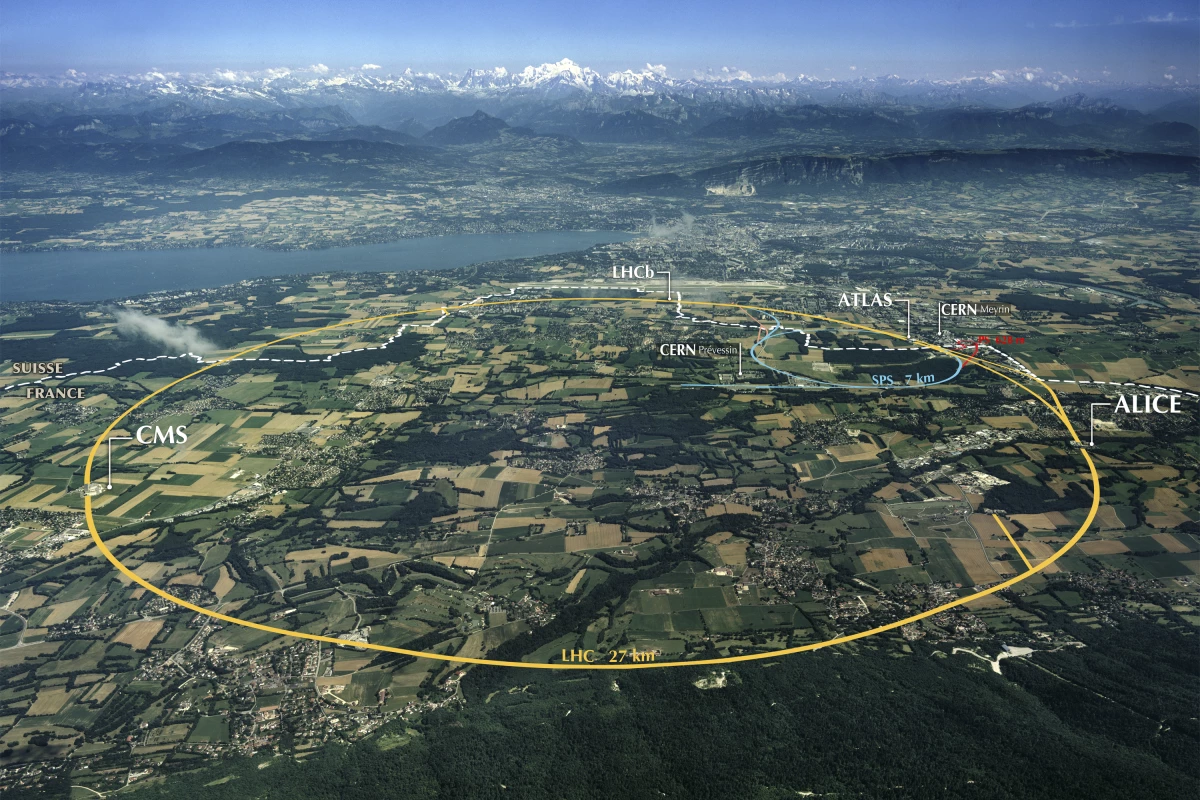
The Large Hadron Collider (LHC) at the European Organization for Nuclear Research, known as CERN, has taken a significant step in sustainability by redirecting its waste heat to warm local homes. This initiative not only enhances the environmental impact of the facility but also provides heat to thousands of residences in the nearby French town of Ferney-Voltaire.
Located in a 26.7 km (16.6 miles) circumference tunnel, the LHC is the world’s largest particle accelerator. It operates by colliding subatomic particles at high speeds, a process that consumes between 600 and 750 GWh of energy annually. The immense energy requirements result in substantial waste heat, which until recently was dissipated into the atmosphere through cooling towers.
In a collaboration with local authorities, CERN has launched the Large Hadron Collider beauty (LHCb) project to utilize this waste heat effectively. In December 2023, the system was inaugurated and has now become fully operational. Heat exchangers have been installed at the Point 8 location of the accelerator, allowing the collection of excess thermal energy.
Nicolas Bellegarde, CERN’s energy coordinator, explained the mechanics of the new system. “Typically, hot water would then pass through a cooling tower, releasing heat into the atmosphere so that the cooled water could be reinjected into the equipment,” Bellegarde stated. “In the new set-up, hot water initially passes through two 5-MW heat exchangers, which transfer thermal energy to the new heating network in Ferney-Voltaire.”
The heat is now redirected into a district heating system that services several thousand domestic and commercial properties in the Zone d’Aménagement Concerté Ferney-Genève Innovation. This development contributes not only to energy efficiency but also supports local initiatives aimed at reducing carbon footprints.
The LHC’s transition from a purely research-focused installation to a facility that also serves community needs highlights the potential for large scientific operations to integrate with local infrastructures. As CERN continues to push the boundaries of particle physics, it is simultaneously making strides in environmental sustainability, proving that even the most advanced scientific endeavors can find ways to benefit society at large.