
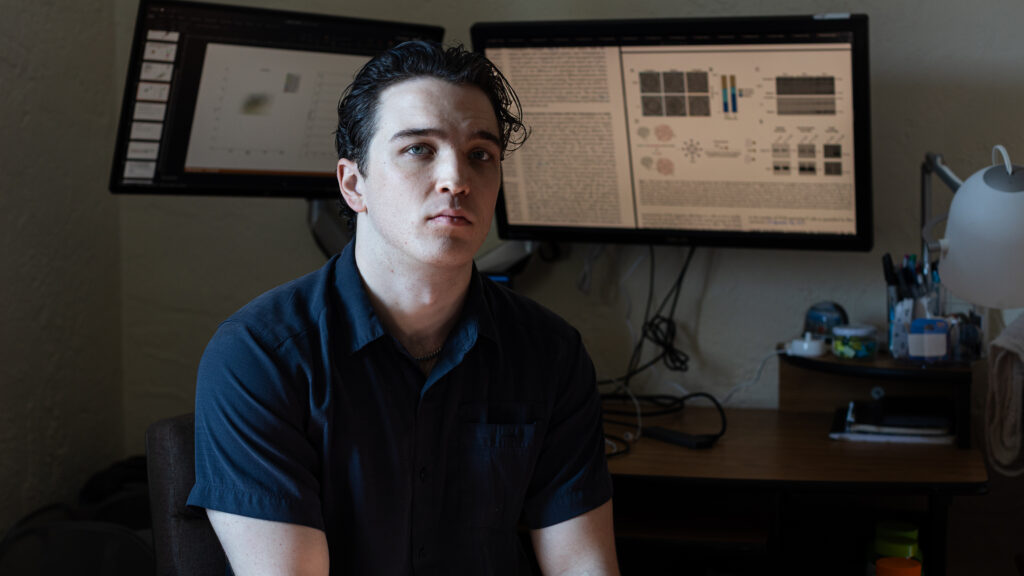
First-year Ph.D. students in biomedical programs across the United States are facing significant challenges due to a precarious funding landscape. Many aspiring researchers, like Alex Sathler, who recently received a prestigious National Science Foundation (NSF) fellowship, are finding it difficult to secure positions in research labs, which are crucial for their academic and professional development.
Sathler, who was thrilled to learn of his NSF Graduate Research Fellowship Program award, which provides an annual stipend of $37,000 for three years, encountered unexpected barriers when he sought to join a lab at the University of California, Berkeley and UC San Francisco. Despite his funding, two labs turned him away, citing budget constraints. “The real sense that I get is that there aren’t enough labs with funding to give everyone their best fit,” Sathler remarked, reflecting a sentiment echoed by many of his peers.
The situation stems from a broader trend impacting first-year biomedical graduate students nationwide. According to a report by STAT, the National Institutes of Health (NIH) has been funding fewer projects, a trend expected to continue into 2026. This shift has intensified competition for limited slots in well-funded labs, leading to disillusionment among students. Several Ph.D. programs have reported that professors who initially expressed interest in mentoring students have since withdrawn their support.
These funding challenges have prompted some programs to reduce incoming class sizes. While certain institutions anticipated the financial squeeze and cut enrollment significantly last year, recent data indicates a slight increase in overall biomedical graduate enrollment for the autumn of 2023. The factors contributing to this rise remain unclear, especially in light of funding concerns.
During their first year, life science Ph.D. students typically engage in lab rotations, which allow them to explore different research environments. This process, often described as “scientific speed dating,” is essential for finding a suitable lab and adviser. However, students like Hannah Barsouk, a biochemistry student at Stanford University, have reported difficulties in securing placements. Barsouk has contacted between 30 to 40 labs, yet many have expressed uncertainty about their ability to accept new students due to funding issues.
The competitive atmosphere has led to anxiety among students, with some feeling pressured to demonstrate their commitment by spending excessive hours in the lab. “There is kind of this atmosphere of maybe not wanting to openly acknowledge the competition,” Barsouk noted. This sentiment has been observed in other institutions as well, with programs like those at Georgia Tech and Emory University transitioning to direct-admission systems, requiring students to secure lab placements before being accepted into their programs.
At Stanford, funding for bioscience graduate students has been trimmed from four years to two, with plans to reduce it to just one year for incoming students. These changes force advisers to rely on their research grants to sustain students after their initial funding runs out. Joe Wu, director of the Stanford Cardiovascular Institute, stated that this situation necessitates increased scrutiny in selecting students, making it less likely that professors will commit to new candidates without exceptional qualifications.
The impact of this funding crisis is profound. One anonymous biology student described feeling deceived after being assured of a spot in a lab, only to be told later that she needed to secure an NSF fellowship to join. The professor’s lab had lost funding due to shifts in federal priorities, leaving students grappling with uncertainty about their academic futures.
Even students like Sathler, who have secured fellowships, face hurdles. Some labs have indicated that while the NSF funding is beneficial, it may not cover the full salary requirements. Additionally, a seminar designed to recruit first-year students into labs struggled to attract participants this past fall, highlighting the ongoing challenges within the academic research community.
As students navigate these complexities, some are considering alternate paths. The biology student mentioned earlier applied to other graduate programs but faced rejection, leaving her uncertain about her future. She expressed concern that her aspirations of running her own lab may be unattainable under the current funding climate. “I try to avoid looking further ahead, because it just gets bleak,” she admitted.
While there is hope that funding conditions may improve—Congress recently endorsed a slight budget increase for the NIH—students remain anxious about the long-term implications of the funding environment. As they confront these obstacles, the future of many budding scientists hangs in the balance, raising important questions about the sustainability of academic research careers in a climate of financial instability.


