UPDATE: Chicago Mayor Brandon Johnson is gearing up for another attempt to pass his “Bring Chicago Home” referendum aimed at combating homelessness, according to top aide Cristina Pacione-Zayas. This revelation comes as the city grapples with a pressing affordability crisis.
Pacione-Zayas, now Johnson’s chief of staff and a former state senator, emphasized that ballot measures often fail on the first try, citing trends from California and beyond. “We believe that with continued education and outreach, we can secure the necessary support,” she stated, highlighting that successful initiatives often require multiple attempts.
The referendum, which aims to raise the transaction tax on properties sold for over $1 million to generate $100 million annually for homelessness initiatives, was narrowly defeated in March 2024 by a margin of 54%. Business and real estate interests spent more than $2 million to oppose the measure, leading to a disappointing turnout and a significant 15,398 vote differential.
In the wake of this setback, Johnson remains optimistic, claiming there are “a lot more yeses” among residents most affected by housing challenges. He insisted on the importance of continued grassroots organizing to engage those who may not fully grasp the implications of the referendum.
Pacione-Zayas shared similar sentiments, accusing opposing forces of running a “disinformation campaign” that misled voters into believing the referendum would raise their property taxes. Drawing parallels to a failed income tax amendment in Illinois, she noted, “We have to understand where we succeeded and where we fell short to better inform voters.”
Her comments come as Chicago’s five-year plan to tackle homelessness underscores the need for stable funding sources for affordable housing and necessary support services. “To address homelessness effectively, we need dedicated revenue streams,” she emphasized.
Chicago is currently navigating a tumultuous budget cycle, with an unprecedented coalition of conservative and moderate city council members recently rejecting Johnson’s proposed corporate head tax. This has strained the mayor’s relationship with the City Council, complicating his ability to implement key initiatives.
Pacione-Zayas acknowledged the challenges of a more combative political landscape, stating that the dynamics are shifting. “We’re in a different time with a different council,” she explained, urging collaboration among all parties to effectively serve Chicago residents.
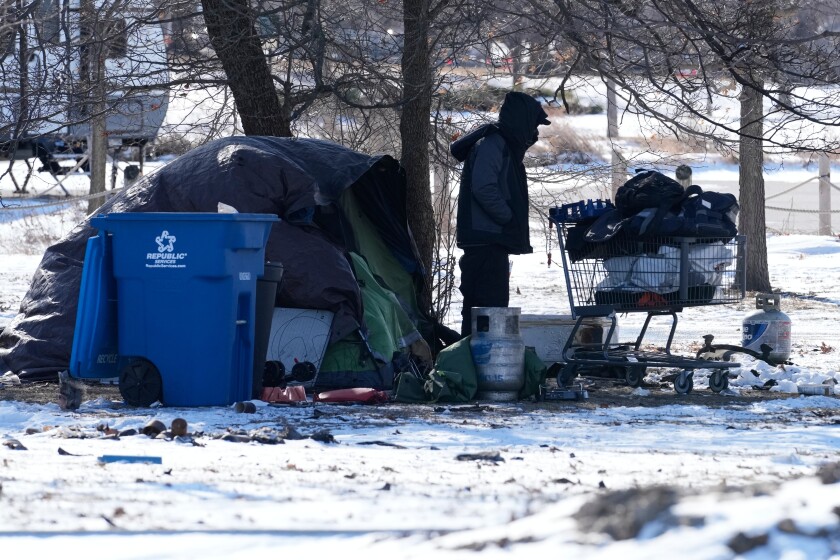
The urgency of the upcoming referendum may be amplified by escalating homelessness rates and rising housing costs across the city, making it critical for Johnson and his team to refine their approach.
As they prepare for this second push, the focus will be on building a stronger educational campaign to ensure voters understand the referendum’s benefits and counteract misinformation. “We have to ensure transparency and clarity in our messaging,” Pacione-Zayas concluded, signaling a commitment to turning the tide on this crucial issue.
With the stakes high, Johnson’s next steps will be vital in addressing the ongoing homelessness crisis that impacts countless Chicagoans. Stay tuned for further developments as this story unfolds.