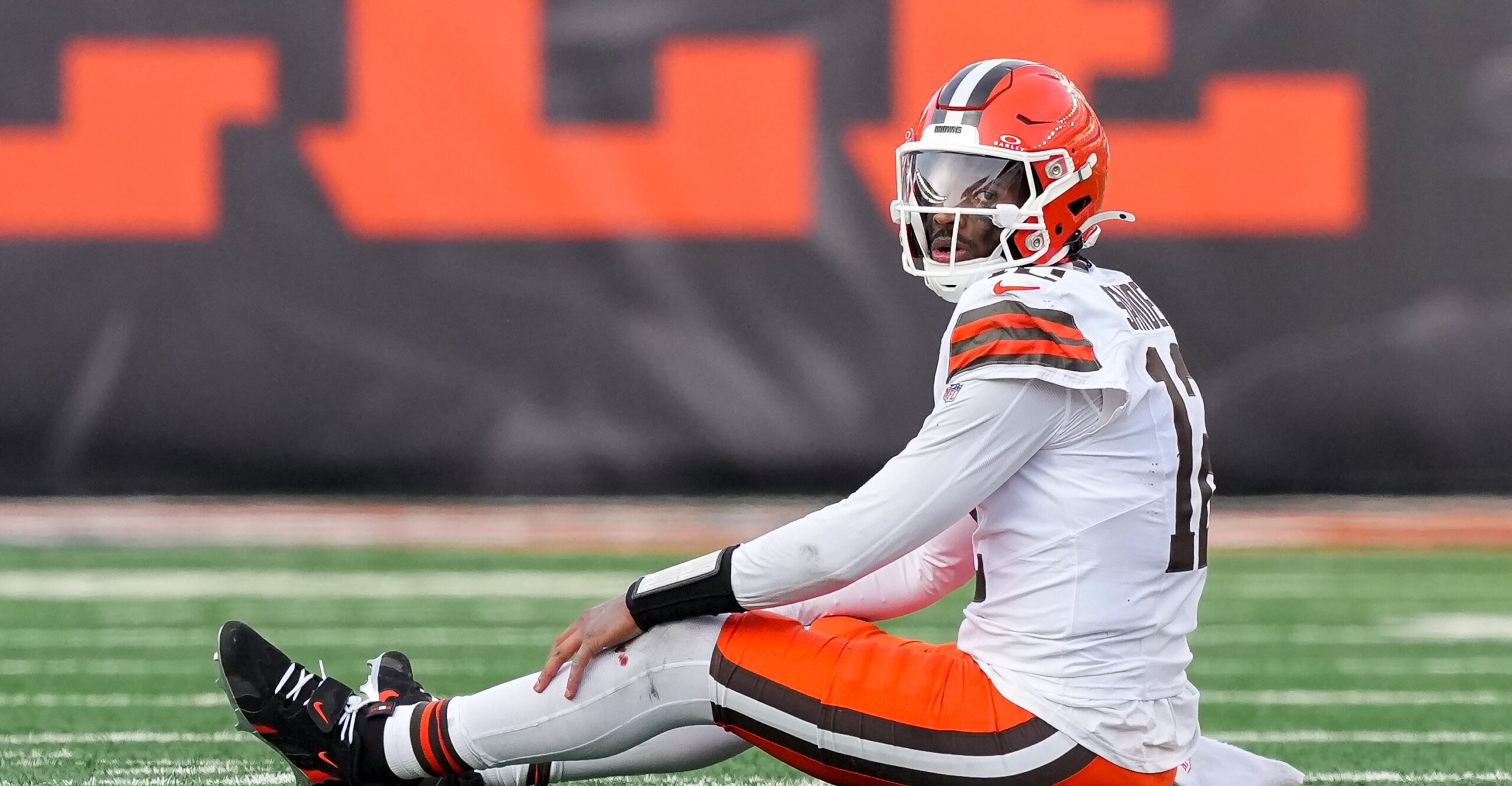
Shedeur Sanders has been named an alternate for the 2026 Pro Bowl, a decision that has sparked considerable debate among football fans and analysts alike. The selection comes in light of injuries and a shortage of available quarterbacks in the American Football Conference (AFC). Despite this opportunity, many observers argue that Sanders’ performance during the 2025 season does not merit such recognition.
The AFC will be represented by Josh Allen, with Justin Herbert and Drake Maye as reserves. Sanders will step in for Maye, who is unavailable due to his team’s participation in the Super Bowl. The statistics from Sanders’ 2025 season paint a stark picture: he recorded just 1,400 passing yards, a completion percentage of 56.6%, and a passer rating of 68.1, ranking him among the lowest quarterbacks in the league.
Critics are quick to point out that Sanders’ lackluster performance raises questions about the integrity of the Pro Bowl selection process. The statistics reveal a quarterback who ranked 35th in passing yards, 42nd in completion percentage, and 41st in both passer rating and interception percentage. This selection, they argue, could be more about marketability than merit.
Several quarterbacks who outperformed Sanders this season, yet were not selected, include Joe Burrow of the Cincinnati Bengals, Aaron Rodgers from the Pittsburgh Steelers, and Tua Tagovailoa of the Miami Dolphins. In total, there are at least nine quarterbacks who had better seasons and remained healthy, leading to speculation that their absence from the Pro Bowl roster may reflect personal decisions rather than performance metrics.
To understand Sanders’ standing in the history of the Pro Bowl, a comparison with other historically low-rated quarterbacks is instructive. Since the Pro Bowl’s inception in 1951, Sanders ranks 15th in the Super Bowl era for the lowest quarterback ratings among selected players. This trend becomes more apparent when examining the lowest-rated Pro Bowl quarterbacks from each decade: Brett Favre in 1993 with a rating of 72.2, Vince Young in 2006 with 66.7, and Andrew Luck in 2012 with 76.5. In stark contrast, Sanders’ rating of 68.1 highlights his struggles.
While Young’s rookie season featured a dual-threat ability with over 500 rushing yards and 19 total touchdowns, Sanders managed only 8 touchdowns against 10 turnovers. This discrepancy further cements Sanders’ reputation as the weakest quarterback to participate in a Pro Bowl.
Despite the controversy surrounding his selection, Deion Sanders, Shedeur’s father and head coach, expressed his pride on social media, stating, “GOD IS GOOD SO GOOD!” This sentiment, while heartwarming, does little to address the broader conversation about the merit-based criteria for such an esteemed event.
As the situation unfolds, the NFL community will undoubtedly continue to scrutinize the implications of Sanders’ selection and what it reflects about the league’s priorities. The Pro Bowl remains a celebration of talent, but this year’s choices may lead to discussions about the balance between performance and popularity moving forward.