The Opéra de Monte-Carlo has launched a significant new production of Wagner’s “Die Walküre,” part of its four-year project to present the entire “Der Ring des Nibelungen.” Directed by Davide Livermore, this ambitious staging features a blend of period-instrument performance and modern visual techniques, setting a notable precedent in the opera world.
Innovative Staging and Visual Techniques
Livermore’s production employs large-scale video projections created by his digital design company, D-Wok. Each act begins with a visual scene depicting a young version of a central character, who writes a phrase before folding it into a paper airplane. This clever framing device suggests an interpretation of the opera as a child’s fantasy scenario. For instance, before Act one, young Wotan writes, “Who’s afraid of the big bad wolf?” This hints at the complex relationships among the characters, such as Siegmund and Sieglinde.
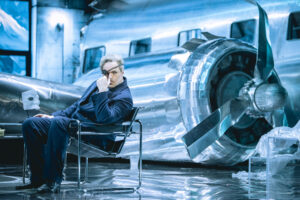
As the story unfolds, the paper airplanes transform into images of a World War II-era aircraft. The opening storm music of Act one features the plane struggling against a tempest, culminating in a striking visual moment when it is struck by lightning. The wreckage of the aircraft remains a significant presence throughout the opera, echoing themes of destruction and loss.
The production also features the ornate but empty Salle Garnier of the Opéra de Monte-Carlo, which serves as a backdrop for many scenes. Its significance, however, remains ambiguous, leaving audiences to ponder its function in relation to the unfolding drama.
A Standout Performance by Daniel Scofield
Originally slated to star Matthias Goerne as Wotan, the production saw a last-minute change when American baritone Daniel Scofield stepped in. Despite this being his debut in the role, Scofield’s performance was commanding, showcasing a deep understanding of the character’s emotional arc. His portrayal ranged from self-assuredness to paternal tenderness, capturing the essence of Wotan with remarkable coherence.
Soprano Nancy Weissbach delivered a nuanced performance as Brünnhilde, evolving from youthful exuberance to a more profound emotional presence. Her rendition of “Hier bin ich, Vater: gebiete die Strafe!” highlighted her vocal intensity and dramatic conviction, although some high notes were less secure.
The production also featured moving performances from soprano Libby Sokolowski and tenor Joachim Bäckström as Sieglinde and Siegmund, respectively. Their portrayal of older, grey-haired lovers added a poignant layer to their tragic narrative. Bass Wilhelm Schwinghammer shone as Hunding, while mezzo-soprano Ekaterina Semenchuk was compelling as Fricka, despite some diction issues.
Exceptional Musical Direction
Under the baton of Gianluca Capuano, the Opéra de Monte-Carlo offered a unique musical experience by employing period instruments. This production is distinguished as the first fully staged performance of Wagner’s “Ring” conducted with a period-instrument orchestra. The brisk tempi maintained throughout the performance contributed to a sustained dramatic tension.
The ensemble, Les Musiciens du Prince, displayed impressive virtuosity, with their woodwinds and gut strings producing a rich palette of sound. Notable solo contributions included performances from cellist Robin Geoffrey Michael and clarinetist Francesco Spendolini, among others. The orchestra’s balance with the singers was notably enhanced by the use of period instruments, allowing for greater vocal projection without forcing the sound.
This innovative approach to Wagner’s music may set a new standard for opera companies worldwide, particularly in how they interpret and present classic works. As the Opéra de Monte-Carlo continues its ambitious project, the results so far suggest a compelling alternative to traditional interpretations of Wagner’s operas.