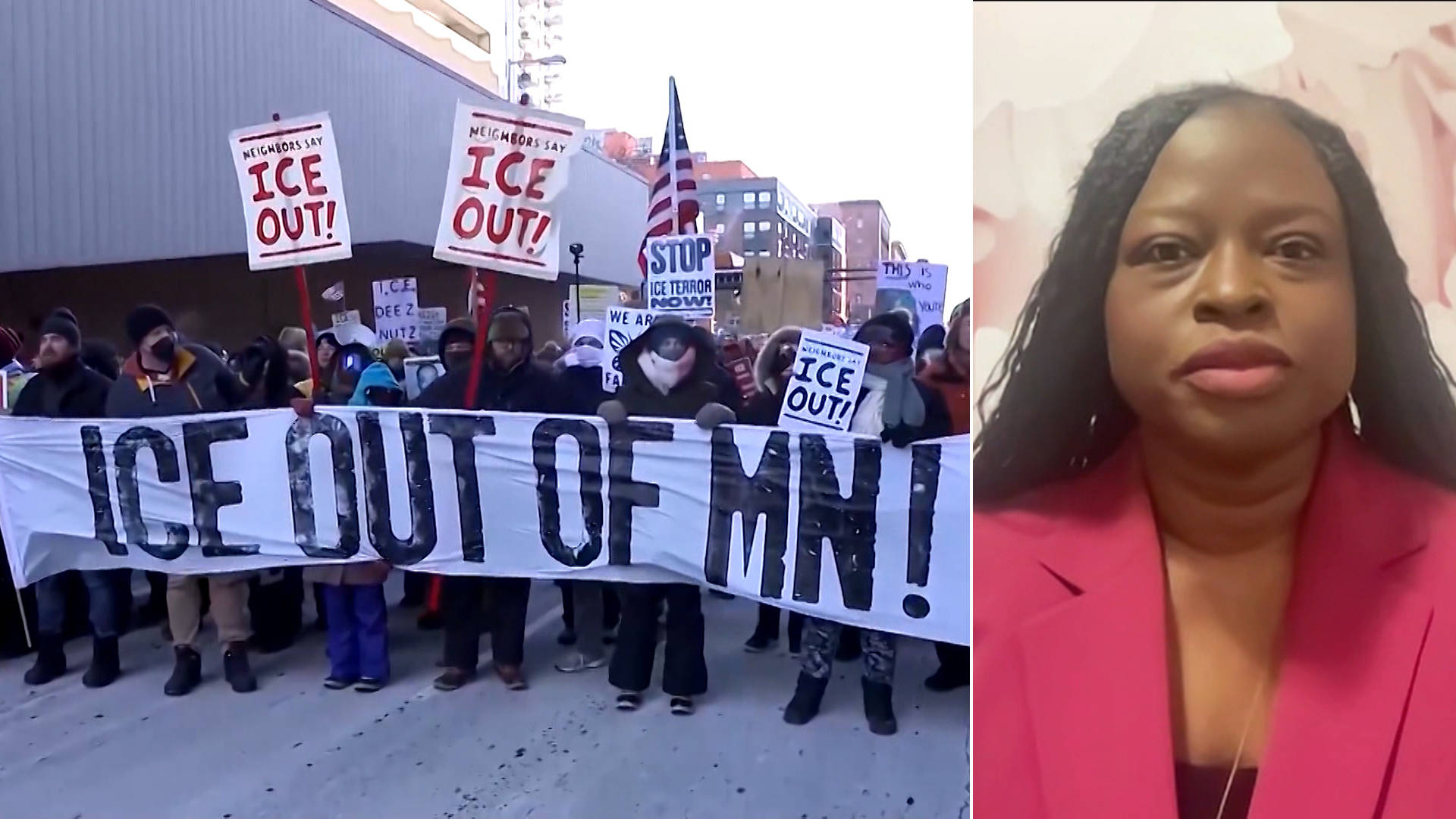
Civil rights attorney and activist Nekima Levy Armstrong was released from federal custody on March 15, 2024, after her arrest during an anti-ICE demonstration at Cities Church in St. Paul, Minnesota. Armstrong, a prominent figure in the fight against immigration enforcement practices, was detained alongside at least two others at the protest, which was aimed at challenging the presence of Immigration and Customs Enforcement (ICE) officials in local communities.
Armstrong criticized the federal government’s actions as an attempt to “criminalize nonviolent, peaceful protests” against what she described as “unlawful and unjust actions.” She highlighted an incident where images released by the Trump administration digitally altered her appearance to portray her as sobbing during her arrest, a claim she strongly refuted.
During the protest, Armstrong and her supporters confronted David Easterwood, the pastor of Cities Church, who also directs the local ICE field office. Protesters chanted slogans, calling attention to the contradiction of a church leader overseeing immigration enforcement. The demonstration aimed to raise awareness about the impact of federal immigration policies on local communities, particularly in light of recent violent incidents involving ICE agents.
Federal Response and Legal Charges
Armstrong was arrested on the direction of Pam Bondi, the Attorney General, who characterized the protest as a “coordinated attack” on a house of worship. The charges against Armstrong and her co-defendants stem from the Freedom of Access to Clinic Entrances (FACE) Act, which the government alleges they violated by disrupting worshippers. Armstrong rebuffed these claims, asserting that church services continued unaffected during the demonstration.
“I think it’s absolutely despicable what our federal government is doing under the guise of immigration enforcement,” Armstrong stated. She referred to the recent killings of two individuals, including Alex Pretti, at the hands of ICE agents, calling for accountability and a reevaluation of federal practices in Minnesota.
She emphasized the lack of checks and balances for federal agents in the region, criticizing not just the federal response but also the Democratic leadership’s failure to protect citizens’ rights.
Calls for Action and Solidarity
Armstrong’s case has drawn significant attention, highlighting broader concerns regarding the treatment of protesters and the implications of federal immigration policy enforcement. She encouraged others to join her in speaking out against what she termed “fascism, tyranny, and authoritarianism” under the Trump administration.
The ongoing situation reflects a growing tension between federal authorities and local communities, particularly as protests against ICE activities become more frequent. Armstrong’s experience serves as a rallying point for advocates of civil rights and immigration reform, galvanizing support for continued activism in the face of governmental pushback.
The events surrounding Armstrong’s protest and subsequent arrest underscore the critical nature of public dissent and the importance of safeguarding the right to peaceful assembly. As the struggle for civil rights continues, voices like Armstrong’s remain vital in advocating for justice and accountability in the face of increasing challenges.