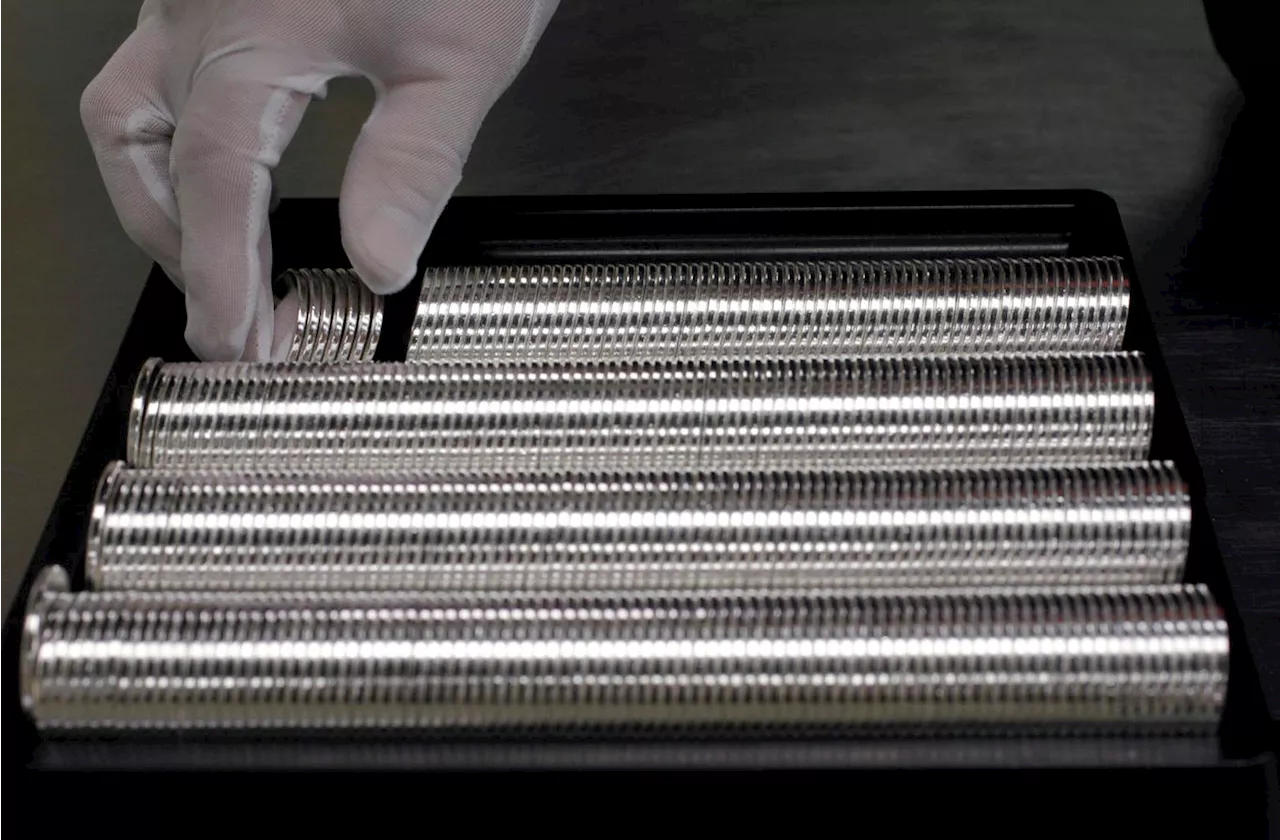
The gold-to-silver ratio has fallen below 50 for the first time since March 2012, indicating that silver is now trading at its highest level relative to gold in nearly 14 years. As of January 26, 2026, gold has risen over 80% in the past year to reach an impressive $5,100 per ounce, while silver has surged by 250% to $110 per ounce, marking both as all-time highs.
This dramatic shift in precious metals prices is largely attributed to a climate of uncertainty among investors. Ongoing conflicts in Europe and the Middle East, escalating trade tensions between the United States and China, and a weakening confidence in the U.S. dollar—exacerbated by rising national debt and persistent inflation—have prompted many to seek safer assets. At the recent World Economic Forum in Davos, Canadian Prime Minister Mark Carney warned that the postwar global order is “breaking down,” referring to decades of international cooperation in trade, security, and finance established after World War II.
Historical Context and Market Implications
The last time the gold-to-silver ratio fell below 50 was in March 2012, coinciding with the Federal Reserve’s Operation Twist. During this period, the Fed attempted to manage long-term interest rates by buying long-term bonds while selling shorter-duration ones. This strategy raised concerns that conventional monetary policy tools were becoming ineffective, leading investors to favor precious metals as a hedge against a weakening dollar.
Historical data shows that since 1985, the average gold-to-silver ratio has been approximately 70, with the ratio dipping below 50 on only about 6% of trading days. Such a rare occurrence captures the attention of investors, as it often triggers market shifts. Although it is uncertain when or how the ratio will rebalance, the current economic landscape suggests that money will continue to flow into metals as investors seek security amidst instability.
If gold remains at around $5,100 per ounce, silver would need to decrease to approximately $72 per ounce to restore the long-term average ratio of 70, a decline of about 35%. Conversely, if silver maintains its price at $110, gold would need to climb to about $7,700 per ounce.
Future Outlook for Precious Metals
The rapid rise of silver relative to gold poses intriguing questions for investors. The dynamics of the current market, driven by geopolitical tensions and economic challenges, indicate that the demand for precious metals may persist. Investors often consider these assets as safe havens during periods of heightened uncertainty, suggesting that the recent price movements could indicate a longer-term trend rather than a temporary spike.
As financial markets react to ongoing global events, the performance of silver and gold will continue to be closely monitored. With political and economic factors shifting rapidly, both metals could play pivotal roles in investment strategies moving forward. The significant price movements and the rare gold-to-silver ratio suggest that investors should remain vigilant as they navigate this evolving landscape.