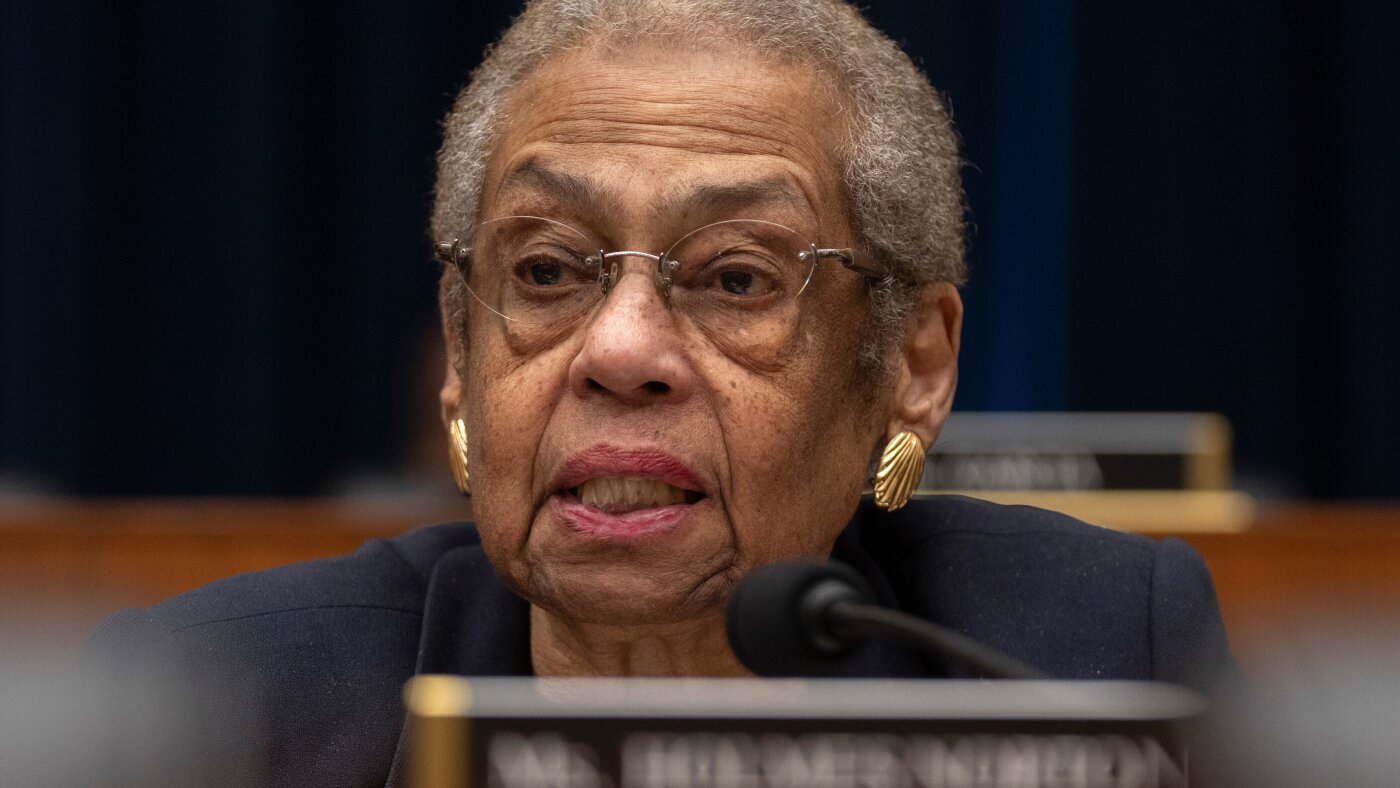
Eleanor Holmes Norton, the long-serving delegate representing the District of Columbia in Congress, has officially concluded her campaign for reelection, signaling the end of a significant chapter in her decades-long public service career. Norton, who has held her position since 1991, filed paperwork with the Federal Election Commission to terminate her campaign, a move likely prompted by increasing scrutiny regarding her efficacy amid recent federal interventions in the district.
Born and raised in Washington D.C., the 88-year-old politician has been a prominent figure on Capitol Hill, often hailed as the “Warrior on the Hill” by supporters. She faced growing challenges in recent years, particularly following the Trump administration’s sweeping measures that heightened federal control over the city. These actions included the deployment of National Guard troops and federal agents to address local unrest, raising concerns among residents about their representation in Congress.
Mayor Muriel Bowser publicly commended Norton on social media, noting her long-standing dedication to the fight for equal representation. “For 35 years, Congresswoman Norton has been our Warrior on the Hill,” Bowser stated. “Her work embodies the unwavering resolve of a city that refuses to yield in its fight for equal representation.”
Norton’s decision to retire opens the door for a potentially competitive primary in a city where the Democratic Party holds a dominant position. Several local lawmakers have already expressed their intentions to run for the forthcoming vacancy, reflecting the political landscape’s shifting dynamics.
Legacy of Advocacy and Civil Rights
Throughout her tenure, Norton has championed numerous causes, despite lacking a formal vote in the House of Representatives. She was a leading advocate for D.C. statehood and fought tirelessly for the rights of federal workers in the region. Among her notable achievements is legislation that enables D.C. residents to attend public colleges at in-state tuition rates, significantly reducing barriers to higher education.
Norton played a crucial role in addressing the city’s financial crisis in the 1990s, negotiating a deal to transfer billions in unfunded pension liabilities to the federal government. This agreement included terms that positively impacted the district’s budget, showcasing her ability to navigate complex political challenges.
Norton’s legacy is deeply rooted in the civil rights movement. She was a personal friend of iconic figures such as Medgar Evers and participated in pivotal events, including the 1963 March on Washington. In her 2023 interview with The Associated Press, Norton recalled that the march remains “the single most extraordinary experience of my lifetime.”
A Changing Political Landscape
Norton’s retirement aligns with a broader trend in Congress, where over 10% of House members are opting not to seek reelection this year, indicating a potential shift in the political climate as lawmakers step back from their roles. Her departure raises questions about the future direction of D.C. representation and the ongoing struggle for statehood.
As Norton steps away from her congressional role, her career serves as a testament to the evolution of D.C. politics and the relentless fight for civil rights and representation. The residents of Washington D.C. and her colleagues in Congress will undoubtedly feel her absence as they navigate the challenges ahead.