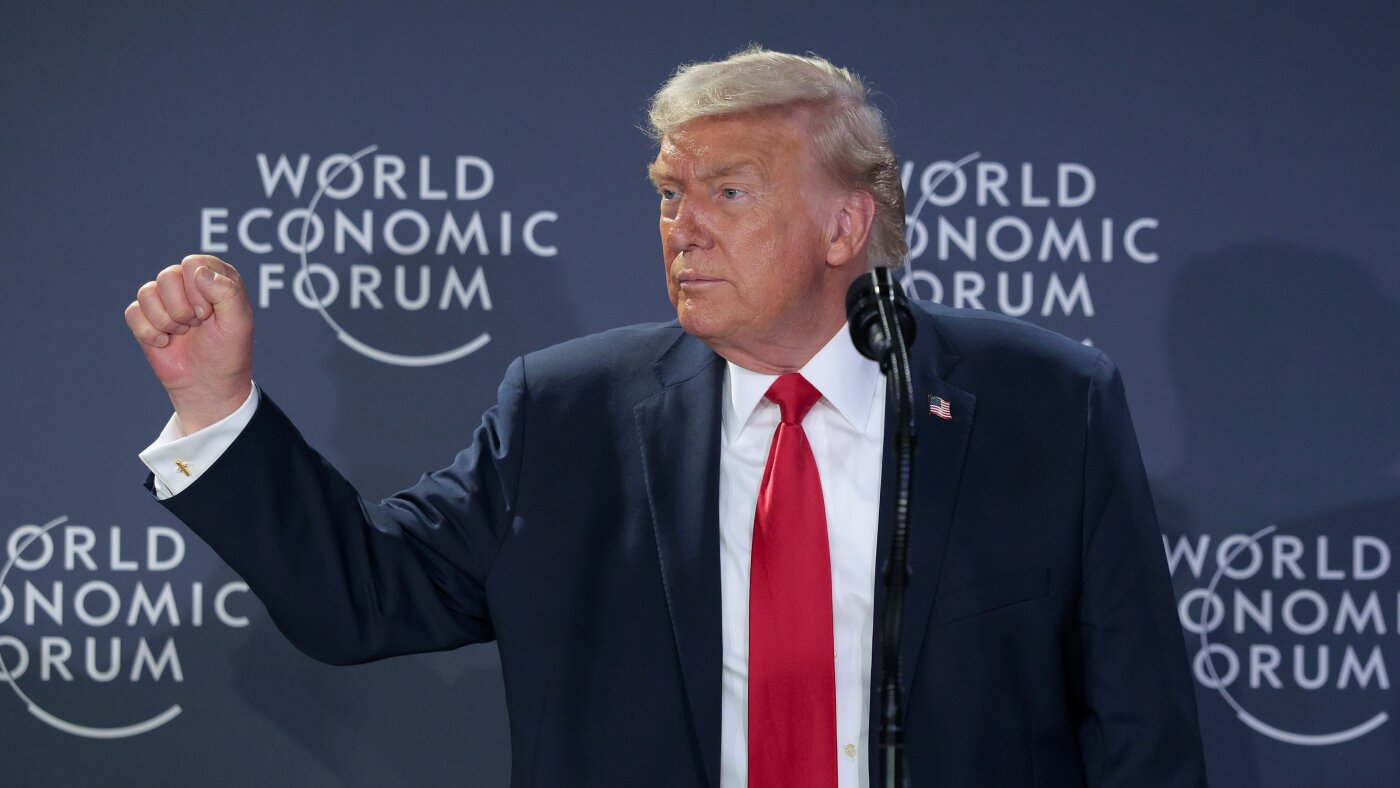
Davos, Switzerland — At the recent World Economic Forum, tensions in trans-Atlantic relations reached a notable peak as U.S. allies expressed deep concerns over a potentially destabilizing shift in global leadership. The week was characterized by a series of controversial statements from U.S. President Donald Trump, which unsettled both global markets and relationships with key allies. Discussions ranged from the U.S. interest in Greenland to ongoing conflicts in Gaza, highlighting a fraught landscape for international diplomacy.
Concerns were palpable as Trump arrived at the Swiss ski resort, where the forum took place amidst growing uncertainty about America’s role in maintaining the post-World War II international order. In the lead-up to the event, Trump’s remarks about a possible U.S. military takeover of Greenland, coupled with threats of new tariffs on eight European nations, left allies scrambling to understand U.S. intentions. The unprecedented rhetoric prompted nervous reactions from global financial markets and raised questions about the durability of longstanding U.S. commitments.
Leaders Address the Erosion of Stability
Several leaders voiced their unease directly during the sessions. Mark Carney, Canada’s Prime Minister, warned that the current global economic and security structure is deteriorating, exposing mid-sized countries like Canada to heightened vulnerabilities. Speaking to an audience of global policymakers, Carney stated, “Let me be direct — we are in the midst of a rupture, not a transition.” He emphasized that great powers have begun leveraging economic tools as weapons, exploiting supply chains and financial infrastructures, further undermining the rules-based international order.
French President Emmanuel Macron echoed these sentiments, framing the current geopolitical climate as one of profound instability. He remarked, “We are reaching a time of instability, of unbalances, both from the security and defense point of view and the economic point of view.” Macron’s comments highlighted a broader retreat from democratic norms and an increase in geopolitical confrontations, indicating a shift toward a more chaotic global environment, where the strongest powers prevail.
In sharp contrast, when Trump addressed the forum the following day, he presented a different narrative. He stressed that maintaining security partnerships relies on showcasing military and economic strength. “We want strong allies, not seriously weakened ones,” he asserted, while also addressing the situation concerning Greenland. Although he ruled out a military invasion of the territory, a semi-autonomous region of Denmark, he continued to question the Danish administration of this strategically significant area.
Diplomatic Ambiguities Persist
Following Trump’s address, NATO Secretary-General Jens Stoltenberg sought to mitigate the rising tensions during an ensuing meeting. Trump later announced via social media that a deal on Arctic security had been reached, although few details were made public. The Danish political leadership subsequently clarified that Stoltenberg did not speak on their behalf, further complicating perceptions of U.S. diplomatic reliability, particularly within Europe.
Amid these developments, Trump also revoked an invitation for Canada to join his Board of Peace, an initiative aimed at stabilizing postwar Gaza and other conflicts, which he had previously highlighted at Davos. This decision only intensified existing concerns among NATO allies regarding U.S. predictability and commitment to collective defense.
Ukrainian President Volodymyr Zelenskyy added to the discussion, voicing frustration over European inaction in the face of ongoing threats. “Europe loves to discuss the future, but avoids taking action today, action that defines what kind of future we will have,” Zelenskyy commented during his keynote speech. His remarks underscored a growing sense of urgency among leaders who feel that the current geopolitical landscape requires immediate and decisive action.
The week concluded without a clear resolution to the uncertainties raised, leaving allies to grapple with whether the recent disruptions represent temporary turbulence or indicate a more profound and lasting transformation in global leadership dynamics. As the world watches, the implications of these discussions are likely to resonate well beyond the confines of Davos, shaping future international relations and security frameworks.