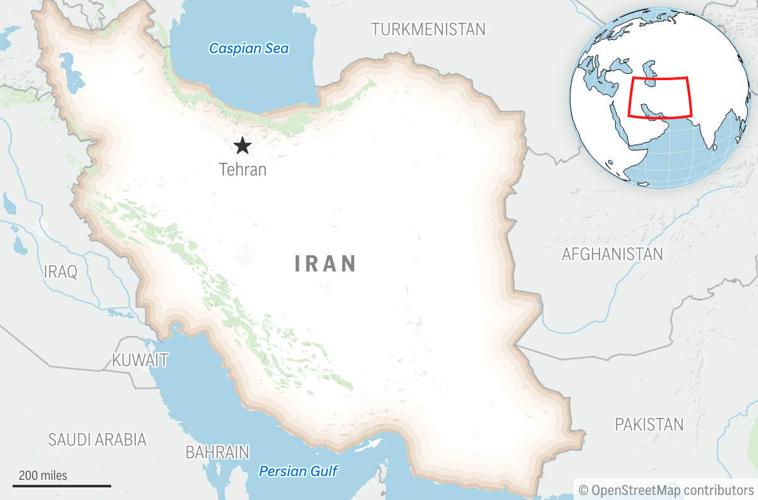
The death toll from Iran’s crackdown on nationwide protests has surpassed 5,000, according to reports from the Human Rights Activists News Agency. Activists have warned that the toll could rise further as the country experiences its most severe internet blackout in history, now extending beyond two weeks. This significant loss of life coincides with escalating tensions between Iran and the United States, as U.S. military assets, including the aircraft carrier group USS Abraham Lincoln, approach the region.
Activists reported that out of the 5,002 fatalities, 4,716 were demonstrators, while others included 203 government-affiliated individuals, 43 children, and 40 civilians not participating in the protests. The agency also highlighted that over 26,800 people have been detained in a widening crackdown by Iranian authorities. The figures provided by the Human Rights Activists News Agency have historically proven accurate during previous unrest, relying on a network of activists to verify deaths within Iran.
The Iranian government, in stark contrast, reported a significantly lower death toll of 3,117 on Wednesday. This figure includes 2,427 civilians and security forces, while attributing the remainder to “terrorists.” The Iranian regime has a history of underreporting casualties during civil unrest, complicating the independent verification of these numbers.
International Response and Military Movements
The current situation has drawn international attention, particularly from the United States. President Donald Trump, speaking to reporters, referred to the U.S. military presence as an “armada” heading toward the Middle East. He emphasized that the deployment of military assets is a precautionary measure, stating, “We have a massive fleet heading in that direction and maybe we won’t have to use it.”
Trump’s statements follow heightened concerns regarding the Iranian government’s response to the protests, with the U.S. laying down two critical red lines: the killing of peaceful demonstrators and the prospect of mass executions. Iranian officials, including the attorney general, have categorized some detained individuals as “mohareb,” or “enemies of God,” a designation that carries the death penalty.
As military tension mounts, the U.S. Navy has confirmed the USS Abraham Lincoln strike group is currently operating in the Indian Ocean. This military buildup follows the rising hostilities between Iran and the U.S., especially in the wake of Israel’s military actions against Iran earlier in the year.
Media Restrictions and Information Blackouts
The Iranian government’s control over information has severely limited independent reporting within the country. Internet access was cut off on January 8, hindering the ability of journalists and activists to communicate and share updates about the protests and associated violence. State media have labeled protestors as “rioters,” suggesting foreign influence from the United States and Israel, although these claims lack substantiation.
The ongoing unrest in Iran echoes the tumultuous period surrounding the 1979 Islamic Revolution, marking one of the bloodiest chapters in the nation’s recent history. As the situation continues to develop, the international community remains watchful, grappling with the implications of escalating violence and military posturing in the region.
As efforts to understand the full scope of the protests and the government’s response continue, the humanitarian impact remains profound, with countless families mourning the loss of loved ones amidst a backdrop of political strife and international tension.