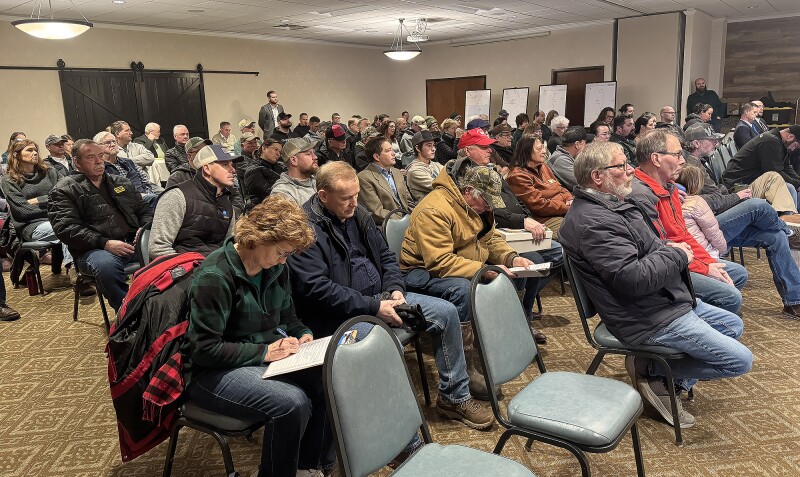
Public concerns regarding the JETx transmission line project were prominently expressed at a hearing on January 16, 2026, organized by the North Dakota Public Service Commission (PSC) in Jamestown. Approximately 100 residents attended this final public hearing, raising issues about potential environmental and health risks posed by the project, property value reductions, and the adequacy of the developers’ public engagement process.
The JETx project, which spans approximately 92 miles and involves the construction of a new double circuit 345 kilovolt transmission line, is proposed to connect Otter Tail Power Company’s substation near Jamestown to Montana-Dakota Utilities’ substation near Ellendale. With an estimated cost of $406 million, the initiative is part of efforts to enhance regional power grid reliability as identified by the Midcontinent Independent System Operators (MISO).
Key Issues Raised by Local Residents
During the hearing, land and property owners voiced significant concerns over a state law allowing the PSC to override local zoning ordinances, which they fear could diminish their property rights. Many residents stressed the need for consideration of local zoning rules, particularly those that establish a minimum setback distance from high-voltage transmission lines. Current local ordinances require setbacks of 1,000 feet from occupied dwellings, while the PSC has a standard of 500 feet.
Levi Taylor, a member of the Stutsman County Commission, highlighted that the methodology for determining the 1,000-foot setback was based on the height of the poles, which are proposed to reach 150 feet. He noted that the applicants had not sought a conditional use permit from the county, raising questions about the project’s adherence to local regulations.
Residents like Alana Wagner expressed frustration over House Bill 1258, passed during the 2025 legislative session, which retroactively granted the PSC authority to override local zoning rules for electric transmission projects. Wagner argued that the bill undermines local governance and jeopardizes property rights.
Support and Justifications for the Project
Despite the opposition, the JETx project has garnered support from organizations like Minnkota Power Cooperative. Dan Inman, senior vice president for power delivery at Minnkota, emphasized the project’s benefits not only for North Dakota residents but also for consumers across the broader region. He pointed out that the project would enhance grid resilience, particularly in light of recent severe weather events that caused significant power outages.
Jason Weiers, the manager of transmission policy and contracts for Otter Tail Power, explained that the project aims to address reliability issues within the existing 230 kV system in eastern North Dakota and parts of South Dakota and Minnesota. He noted that the project will create a 345 kV transmission loop, which would improve energy delivery and system capabilities.
Construction of the JETx project is expected to commence in the third quarter of 2026, with completion anticipated by the fourth quarter of 2028. Weiers assured that all necessary land rights and easements would be secured prior to the start of construction, and final reclamation activities are planned for 2029.
The PSC will now consider the public input received during the hearings as it deliberates on the project’s viability and compliance with state regulations. As the debate continues, residents remain vigilant about the potential impacts of the JETx project on their land and community.