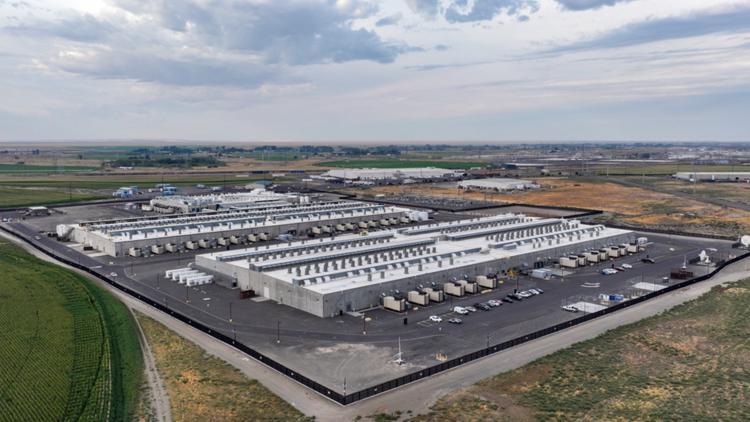
The rapid expansion of data centers across the United States is projected to significantly increase residential electricity bills and greenhouse gas emissions over the next decade. A newly released report from the Union of Concerned Scientists highlights that while the outlook appears grim, there are approaches to mitigate these impacts through investments in renewable energy.
The report, titled “Data Center Power Play,” was published on March 15, 2024. It reveals that data centers could increase electricity demand by up to 62% between 2025 and 2050 under a “mid-demand growth” scenario. This increase would account for nearly half of the total growth in national electricity demand. In a “high-demand growth” scenario, projected demand could rise by almost 80% during the same period.
The financial implications are staggering. The report estimates that households across the nation will face cumulative electricity costs exceeding $500 billion by 2025 and nearing $1 trillion by 2050. In addition, the emissions generated by this growth are expected to rise by 10%, resulting in an estimated $1.6 trillion in health and climate damages by 2035, escalating to $4.5 trillion by 2050.
Investing in Clean Energy Could Alleviate Costs
Despite these alarming forecasts, the Union of Concerned Scientists emphasizes that the projected costs could be substantially reduced with the implementation of ambitious climate and clean energy policies. The decarbonization of the power grid could prevent an increase in electricity costs by $248 billion and lower overall climate-related damages by $1.6 trillion. Furthermore, the report suggests that health care costs could decrease by $220 billion by 2050 if clean energy investments are prioritized.
Steve Clemmer, the Director of Energy Research at the Union of Concerned Scientists and the lead author of the report, stated, “The climate and health benefits and net cost savings of building clean energy to meet future electricity needs are obvious and enormous, but they will not materialize without political support and responsible management of data center load growth.”
In a related development, the U.S. Department of the Interior announced that a coalition of technology companies has pledged $15 billion toward new power generation projects. These initiatives aim to offset the anticipated increases in energy costs. However, the details regarding which companies are involved and the nature of the projects remain unclear.
Concerns Over Fossil Fuel Dependence
Critics, including James Gignac, Midwest Policy Director for the Union of Concerned Scientists, argue that such investments may only serve to prolong the reliance on fossil fuels, which could exacerbate public health risks. Gignac remarked in an emailed statement, “The recent data center announcement by the Trump administration focuses on propping up dirty fossil fuels instead of driving investments toward cost-effective and clean energy resources, such as wind and solar.”
He stressed the urgent need for policymakers to prioritize clean energy solutions to protect public health and the environment. Gignac added, “This is not the time to take clean energy off the table if policymakers want to protect our health, climate and wallets. They have the ability to take action now and require data center developers to build more clean energy while ensuring Big Tech doesn’t price gouge the public to subsidize these proposed projects.”
The findings of the Union of Concerned Scientists serve as a call to action for lawmakers and industry leaders to collaborate on innovative solutions that balance the growing energy demands of data centers with the necessity of protecting both the environment and consumers’ financial well-being.