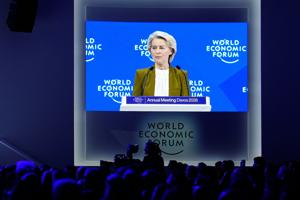
Corporate leaders and government officials are convening in Davos, Switzerland, for the annual World Economic Forum, where discussions will focus on pressing global issues, including the potential impact of tariffs proposed by U.S. President Donald Trump. The event, taking place from January 22 to 25, 2024, has drawn attention for its high-profile attendees and the economic implications of the proposed trade measures.
Concerns Over Trade Policies
The looming threat of tariffs has raised concerns among international business leaders. President Trump’s administration has indicated that it may impose additional tariffs on various imports, which could disrupt global trade flows. This potential policy shift is expected to be a central topic at the forum, as leaders seek to navigate the complexities of international commerce.
In previous years, the forum has served as a platform for dialogue on economic cooperation and trade relations. However, the prospect of tariffs has created an atmosphere of uncertainty. Many corporate executives are urging for collaboration to mitigate the risks associated with protectionist policies.
Global Economic Outlook
As leaders gather in Davos, the global economy is already facing challenges, including supply chain disruptions and inflationary pressures. According to the International Monetary Fund (IMF), the world economy is projected to grow by only 3.1% in 2024, down from previous estimates. This slowdown is prompting discussions on sustainable economic practices and innovation to foster growth.
Corporate leaders from various sectors are expected to share insights on how their organizations are adapting to these changes. Many companies are exploring strategies to enhance resilience in the face of potential trade barriers. The discussions will likely emphasize the importance of maintaining open markets while addressing domestic economic concerns.
The forum will feature keynote speeches, panel discussions, and networking opportunities, allowing leaders to engage directly with one another. The aim is to foster a spirit of cooperation that transcends national interests, particularly in light of the challenges posed by tariffs and other protectionist measures.
As the event unfolds, attendees will be keenly observing how global leaders respond to the evolving economic landscape, with the hope that constructive dialogue can pave the way for more stable trade relations.