A series of recent federal court rulings have provided a boost to the offshore wind industry on the East Coast, particularly for projects like Revolution Wind, based in New London. The courts have temporarily blocked the Trump administration’s attempts to halt these projects, which the administration claims pose a national security threat. The allegations stem from a classified Pentagon report that is reportedly too sensitive to discuss publicly.
For years, former President Donald Trump has expressed his opposition to offshore wind, labeling turbines as unsightly and a danger to birds and marine life. His administration’s latest efforts to suspend work on projects such as Revolution Wind and Empire Wind have met skepticism from various quarters, including courts and Congress. The core of the administration’s argument hinges on fears that the large rotating blades of wind turbines may interfere with military radar systems, creating an issue known as clutter.
The Pentagon has not elaborated on these claims, even when pressed by influential lawmakers. Notably, U.S. Representative Joe Courtney, who serves as the ranking member of the House Armed Services Committee’s Seapower Subcommittee, has sought clarification but received no substantive response. The Pentagon’s defense staff informed Courtney that they cannot discuss the issue while still recognizing the committee’s oversight role.
In a letter from the Department of Defense to Revolution Wind developers, it was stated that the project “would not have adverse impacts to DoD missions in the area.” Additionally, the U.S. Department of the Interior has indicated that it has continuously consulted with military agencies throughout the planning process, addressing concerns about military operations and training.
Financial Stakes in Offshore Wind Development
The stakes for the Northeast offshore wind industry are significant, particularly in Connecticut, where Revolution Wind is the only project involving state investment. The state has committed to procuring 304 megawatts of energy from this project, enough to power over 100,000 homes. This project is also crucial for Connecticut’s ambitious goal of generating 2,000 megawatts of offshore wind energy by 2030.
“The project involves billions of dollars of investment and all the permitting approvals. There is no justification to just shut it down,”
said Courtney, emphasizing the extensive planning and federal permitting already completed for Revolution Wind.
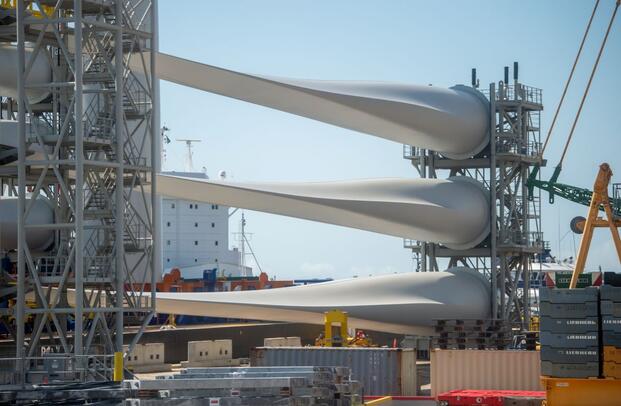
The Norwegian multinational Orsted has invested heavily in this initiative, contributing to the revitalization of New London’s State Pier, transforming it into a state-of-the-art supply hub for offshore wind operations. Orsted has committed at least $5 billion to offshore wind development, creating approximately 2,000 jobs in construction and promising additional positions for operations and maintenance.
Despite previous attempts by the Trump administration to shut down the project, including orders issued in August 2023 and again in December, courts have ruled in favor of the developers. U.S. District Court Judge Royce Lamberth emphasized that to justify halting work, the administration must demonstrate a national emergency and specific harm that cannot be resolved without ceasing project activities.
Legislative Response and Future Prospects
In response to ongoing concerns, four senior House Democrats have reached out to both the Defense and Interior Departments, requesting briefings on the potential security risks posed by offshore wind projects. Courtney noted the inconsistency in the Pentagon’s stance, questioning why a national security issue would be relegated to the Department of the Interior for resolution.
The future of the Northeast’s offshore wind industry hangs in the balance, with significant implications for local economies and energy strategies. As the legal battles continue, Orsted remains committed to the project, awaiting further developments. With Revolution Wind reportedly 87 percent complete, the urgency to resolve these issues grows, underscoring the need for clarity on national security concerns related to renewable energy projects.
The ongoing discourse highlights the tension between advancing renewable energy initiatives and national security considerations, a debate that is likely to continue as the administration and Congress navigate these complex issues.