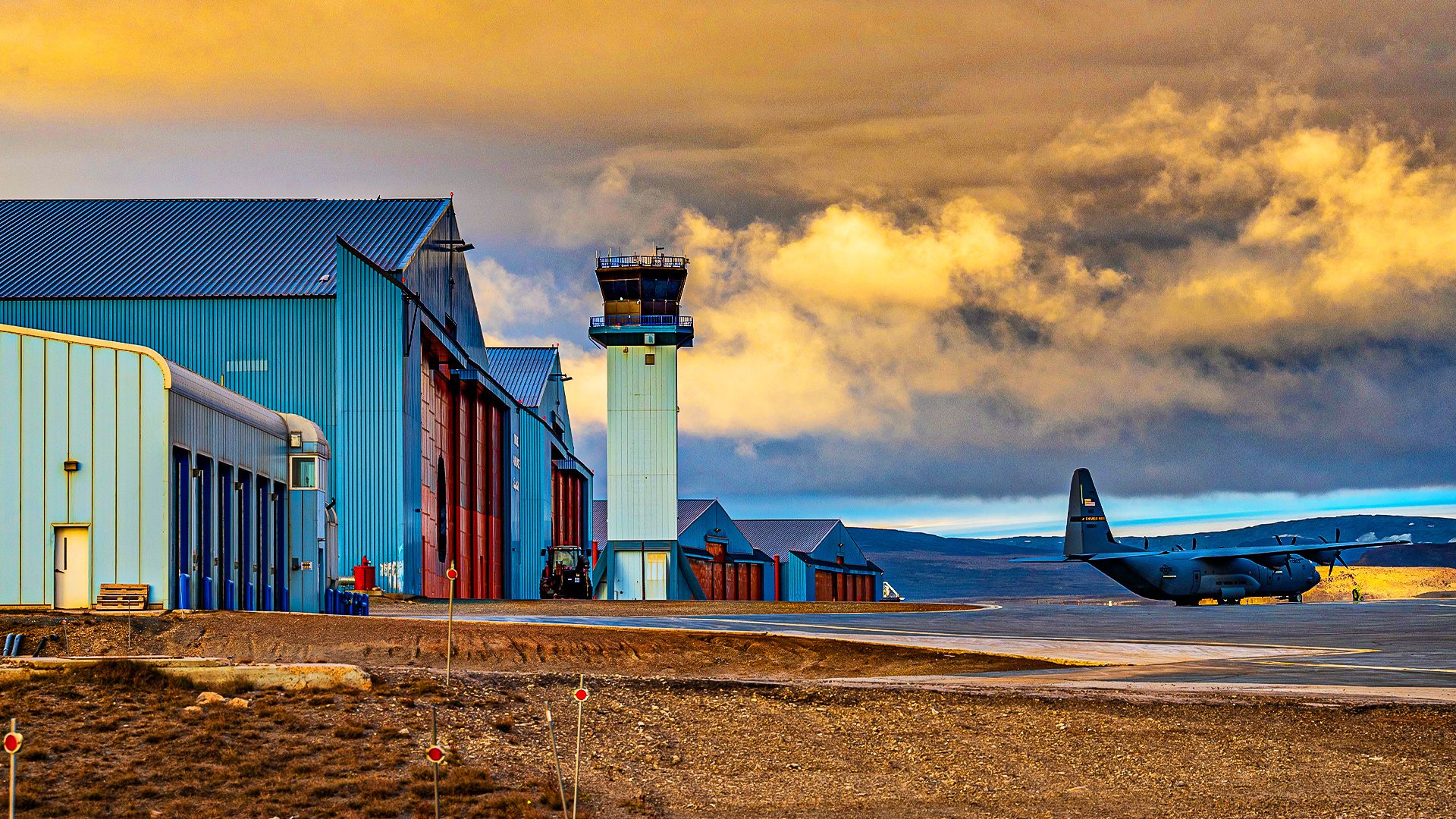
The United States Air Force’s former Thule Air Base in Greenland has been renamed Pituffik Space Base as of 2023. This facility, the northernmost military installation under the United States Department of Defense, plays a critical role in the country’s missile warning and defense system. The mission, initiated by the United States Air Force (USAF), continues under the management of the US Space Force. Its strategic importance lies not only in deterrence against nuclear threats but also in supporting contemporary space surveillance programs essential for both the United States and NATO.
Geopolitical Significance of Pituffik Space Base
Pituffik Space Base’s geographical location in the Arctic provides a unique vantage point for monitoring air and space approaches between North America and Russia. As a critical component of the North American Aerospace Defense Command’s (NORAD) missile warning mission, the base serves as a vital sensor node. The facility is home to the 12th Space Warning Squadron, which operates the Upgraded Early Warning Radar (UEWR) system. This advanced radar technology is designed to detect and track ballistic missiles launched from sea and across continents, ensuring timely alerts for NORAD.
Operation Noble Defender (OND) is a regular exercise at Pituffik, involving personnel from both the US and Canada. These exercises underscore NORAD’s ability to rapidly deploy forces in the Arctic, maintaining “Total Domain Awareness” and deterring potential adversarial actions. Positioned in the Arctic’s “center sector,” Pituffik addresses critical capability gaps that could otherwise be exploited by rival nations.
The base contributes to a global network of satellite tracking stations, providing telemetry, tracking, and command services for US and allied satellite programs. This capability enhances space domain awareness by monitoring thousands of objects in orbit. Furthermore, Pituffik is at the forefront of NORAD’s modernization initiatives, with ongoing investments aimed at expanding infrastructure, including new refueling hangars and personnel recovery facilities.
Operational Capacity and Infrastructure
Pituffik Space Base is recognized for its specialized Arctic engineering and advanced sensor systems. The base maintains a variety of closed-loop systems, including primary and auxiliary power plants, heating facilities, and communication centers capable of withstanding extreme temperatures, reaching as low as -85°F. Managed by the 821st Space Base Group, the base supports a fluctuating workforce of 150 to 600 personnel, depending on seasonal scientific activities.
The facility features a single asphalt runway that spans 10,000 feet (3,050 meters) and is positioned at an elevation of 251 feet. Significant safety enhancements are underway, including the installation of bi-directional advanced approach lighting and navigational aids to support operations during severe weather conditions. Additionally, Pituffik boasts the northernmost deep-water port in the US Armed Forces’ network, capable of accommodating large supply vessels like the Pacer Goose, which makes seasonal visits during the summer months when sea ice is minimal.
To protect the underlying permafrost, all permanent structures are elevated at least three feet above ground. Utilities such as heating, electricity, and sewage systems are constructed above ground to prevent freezing and to safeguard the permafrost from melting.
The AN/FPS-132 Upgraded Early Warning Radar operated by the 12th Space Warning Squadron provides extensive coverage, with a detection range exceeding 3,000 miles. Additionally, the Satellite Control Network (SCN) hosts Detachment One of the 23rd Space Operations Squadron, which offers telemetry, tracking, and commanding services for US and allied satellite operations.
Strategic Importance in the Arctic
Pituffik is increasingly recognized as a pivotal outpost for monitoring the strategically significant GIUK (Greenland, Iceland, United Kingdom) Gap, where NATO tracks Russian naval movements in the North Atlantic. The Kingdom of Denmark granted the United States permission to establish the base to defend Greenland, formalized through a 1951 agreement that allows the US to construct, maintain, and operate military installations in specific locations.
Under this agreement, US forces are granted “unrestricted freedom of operation” across Greenland’s national territory, including its territorial seas and airspace. While Denmark retains sovereignty over Greenland, the US holds “exclusive jurisdiction” over its military personnel and operations, which includes exemptions from certain Danish laws.
As climate change renders the Arctic more accessible, Pituffik’s role as a strategic hub for military operations and scientific research has grown. The region’s emerging shipping routes and natural resources have drawn increased interest from rival powers such as Russia and China.
Throughout its history, Pituffik Space Base has adapted to changing defense priorities. Originally established as Thule Air Base, it served crucial roles during the Cold War, including supporting the Strategic Air Command and participating in various operations related to nuclear deterrence.
In recent years, discussions surrounding Greenland have intensified, especially as some US politicians have suggested acquiring or annexing the island. However, experts emphasize that the 1951 treaty already provides substantial military access, making such claims unnecessary for security. A new Defense Cooperation Agreement (DCA) in December 2023 further expanded US access to Danish territory, reinforcing the strategic partnership.
The establishment of the base in the early 1950s led to the relocation of the local Greenlandic population, as the base’s operations disrupted their traditional hunting and fishing practices. The construction project, known as Operation Blue Jay, involved a significant logistical effort comparable to the Panama Canal, utilizing 120 ships and 12,000 personnel.
In response to US concerns about regional security, Denmark announced substantial Arctic defense packages in 2025, including billions of dollars allocated for enhanced surveillance and situational awareness in Greenlandic waters. The original treaty mandates that both US and Danish flags fly over defense areas to signify joint responsibility for the island’s defense under the NATO framework.
Pituffik Space Base remains a cornerstone of Arctic defense strategy, exemplifying the enduring partnership between the United States and Denmark in ensuring security in a rapidly changing geopolitical landscape.