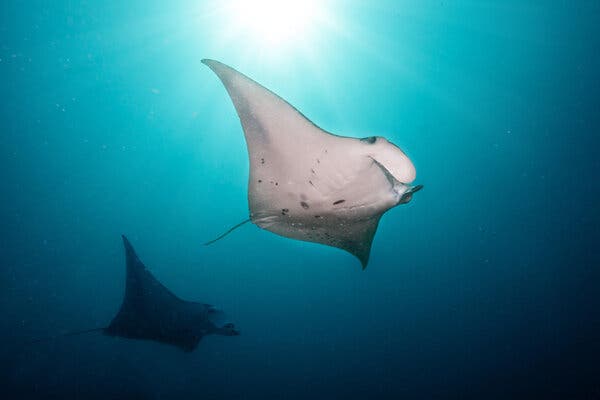
An international agreement aimed at protecting marine life, known as the High Seas Treaty, has officially come into effect. This landmark treaty represents the first time international waters, which cover nearly half of the Earth’s surface and lie outside any national jurisdiction, are subject to formal protective measures.
The United Nations engaged in discussions about the treaty for over two decades, with formal negotiations beginning in 2017. The treaty enables countries to establish environmentally protected zones in international waters and sets regulations for emerging ocean industries. Its implementation coincides with the United States reviewing an application from a company seeking to explore the deep sea floor for precious minerals, although seabed mining is generally governed by a separate treaty.
Ratification and Global Impact
In September, Morocco became the 60th nation to ratify the High Seas Treaty, triggering a 120-day countdown for it to become international law. Currently, a total of 83 countries have ratified the treaty, although the United States has yet to do so. Countries that have ratified the treaty have committed to cooperating and upholding its terms, but enforcement mechanisms for such international laws remain limited.
Rena Lee, an ambassador from Singapore who led the final negotiations, described the treaty’s implementation as “a rare opportunity to make a positive difference in the high seas and deep seabed.” This treaty aligns with a biodiversity goal set by a separate United Nations agreement in 2022, which aims to protect 30 percent of the Earth’s land and oceans by 2030.
Challenges and Future Directions
The high seas, which account for two-thirds of the world’s ocean area, have long been sparsely monitored and are often referred to as a maritime “wild west.” Currently, less than 10 percent of these waters are protected. “This is a game changer,” said Rebecca Hubbard, director of the High Seas Alliance. “And in many ways, the work is just beginning.”
As nations move to implement this treaty, the focus will be on establishing effective protected zones and addressing the challenges posed by new ocean industries. The international community will be watching closely to see how the treaty’s provisions are enforced and whether it will lead to meaningful conservation efforts in the high seas.