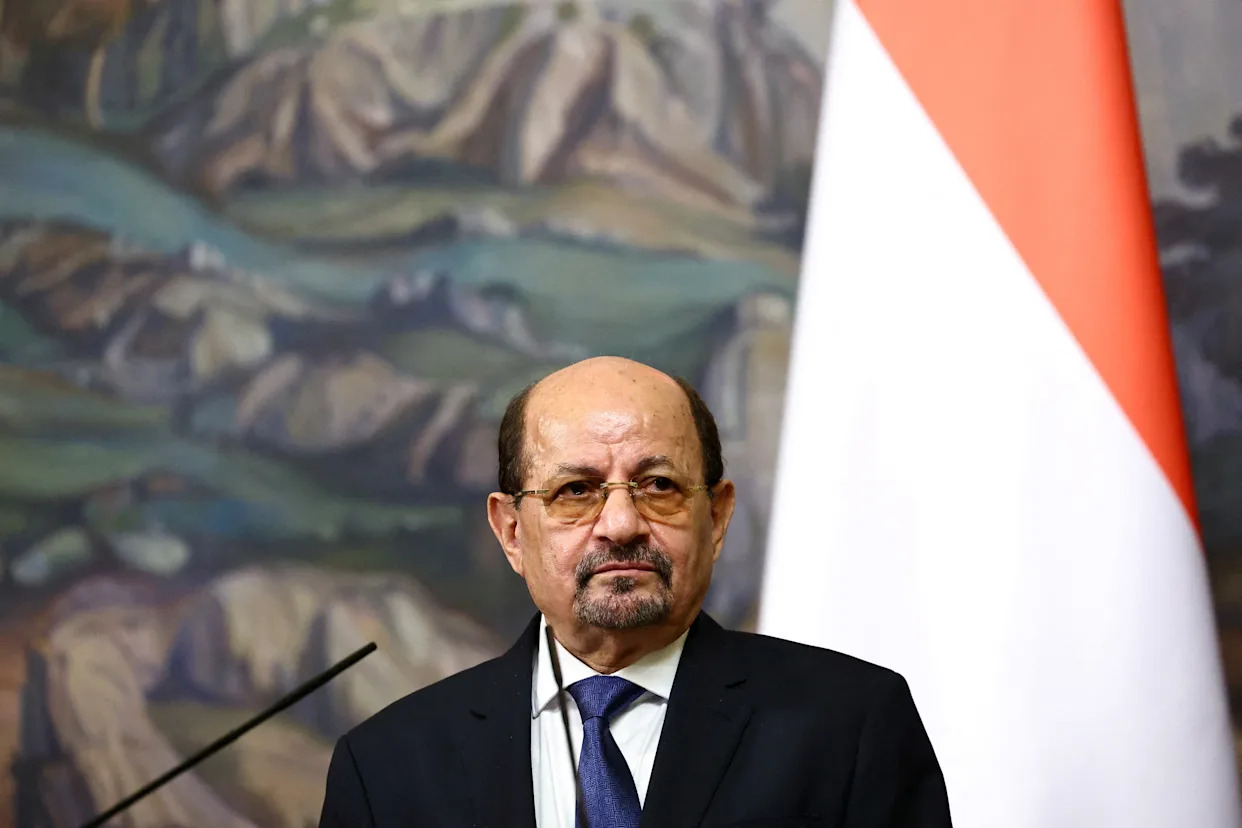
Yemen’s Saudi-backed presidential leadership council has appointed Shaya Mohsin al-Zindani as the new prime minister, following the resignation of Salem bin Breik. The decision was announced by the state news agency Saba on Thursday, marking a significant shift in the country’s leadership as it continues to navigate ongoing political tensions.
Al-Zindani, previously the foreign minister, will be tasked with forming a new cabinet. The council accepted bin Breik’s resignation, which was submitted earlier this week. This change comes amid a backdrop of increasing instability in Yemen, particularly in relation to the influence of the Southern Transitional Council (STC), a separatist group that has gained control over significant territories in the south and east of the country.
Political Turmoil and Regional Tensions
Yemen has been at the center of rising tensions between Saudi Arabia and the United Arab Emirates in recent months. The STC, which is perceived to have UAE backing, has made substantial territorial gains, encroaching on areas near the Saudi border. This situation has been viewed by Saudi Arabia as a direct threat to its national security. In response, Saudi-backed forces have largely regained control of these regions.
In a related development, the presidential council dismissed Faraj Salmeen Al-Bahsani, a southern separatist leader, as part of its efforts to consolidate authority. Al-Bahsani, who had been receiving medical treatment in the UAE, previously served as governor of the oil-rich Hadramout province, a key region in the ongoing conflict. The council’s official resolution cited his support for the STC and his recent statements regarding the coalition’s unity as reasons for his dismissal.
Earlier this month, STC leader Aidarous al-Zubaidi was also removed from the council and subsequently fled to the UAE after being accused of “high treason.” This dismissal reflects the growing rift within Yemen’s leadership and the challenges posed by internal divisions among southern factions.
Saudi Arabia’s Financial Commitment
On Thursday, the presidential leadership council appointed two pro-Saudi figures to replace the dismissed leaders. Lieutenant General Mahmoud al-Subaihi, a former defense minister, and Salem al-Khanbashi, the governor of Hadramout, are expected to play pivotal roles in the new administration.
In a show of support for the Yemeni government, Saudi Arabia announced a financial package of $90 million to cover two months’ salaries for public servants and servicemen. This funding follows a previous commitment of $500 million for humanitarian projects in Yemen, reflecting the kingdom’s ongoing involvement in addressing the humanitarian crisis resulting from the protracted civil war.
As Yemen’s political landscape continues to evolve, the implications of these changes will likely reverberate through the region, influencing both local governance and the broader geopolitical dynamics involving Saudi Arabia and the UAE. The new prime minister will face significant challenges as he seeks to stabilize a nation plagued by conflict and humanitarian distress.