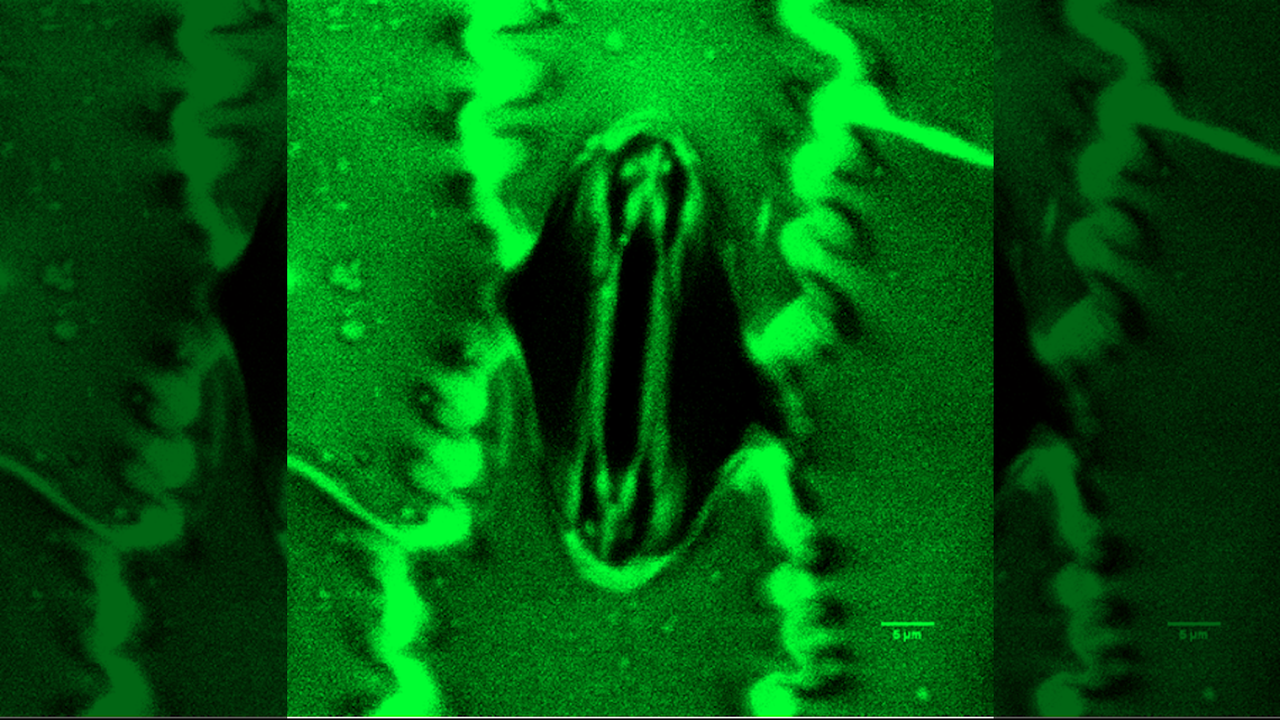
Scientists have developed an innovative tool, named Stomata In-Sight, allowing researchers to observe how plants breathe in real time. This advancement could play a crucial role in enhancing crop resilience against the challenges posed by global climate change. The tool’s design enables scientists to study the tiny pores on plant leaves called stomata, which are essential for regulating carbon dioxide intake and the release of oxygen and water vapor.
The ability to understand stomatal function is vital for improving agricultural practices. According to Andrew Leakey, a plant biologist at the University of Illinois Urbana-Champaign, “It’s very important for us to understand stomata better… to produce better crops, in particular ones that need less water.” This research is particularly relevant in light of increasing drought conditions and water scarcity across the globe.
Innovative Technology Combines Multiple Techniques
The Stomata In-Sight tool integrates a microscope, a gas flux measurement system, and machine-learning image analysis to monitor the activity of thousands of stomata simultaneously. Researchers can place small leaf samples in a climate-controlled chamber, allowing for adjustments in temperature and moisture to observe the stomata’s response. This method offers a comprehensive view of the gases exchanged by the stomata.
Leakey explained, “It measures the collective activity of thousands upon thousands of stomata in terms of these carbon dioxide and water fluxes.” Despite the advantages, the development of this tool took several years, with challenges including vibrations that caused image blurriness. “This actually took us about five years, and we had probably three prototypes that failed when we got to the final solution,” Leakey noted.
The researchers have already applied the tool to study crops such as maize (Zea mays) and have engineered sorghum (Sorghum bicolor) plants to require less water by identifying genes responsible for stomatal density. The University of Illinois Urbana-Champaign has patented this promising technology, although it is not yet available for commercial use.
Mixed Reactions from the Scientific Community
Not all experts are convinced of the tool’s revolutionary potential. Alistair Hetherington, an emeritus professor of botany at the University of Bristol, expressed skepticism, stating that traditional microscopy techniques have been effective for over a century. “Researchers are likely to stick to tried and tested existing techniques that deliver,” he said.
Despite differing opinions, Leakey remains optimistic about the future of the Stomata In-Sight tool. One major challenge is the time-consuming nature of monitoring stomatal changes. Currently, researchers can observe an average of two to three stomata per leaf sample, but need to analyze 40 to 50 to account for variability. This manual process can slow down research efforts, as scientists must wait for stomata to respond to changing conditions.
To overcome this, Leakey envisions the potential integration of robotics and artificial intelligence, which could streamline the measurement process. “There’s a lot of excitement in the scientific community about how we can accelerate biological research using those sorts of tools,” he said.
The advancement of the Stomata In-Sight tool represents a significant step forward in plant biology, with the potential to enhance agricultural practices and contribute to food security in an era of climate uncertainty. As researchers continue to refine this technology, the implications for crop resilience and water-efficient farming methods could be profound.