Prime Minister Benjamin Netanyahu announced that Israel is “closely monitoring” the increasing protests in Iran. This statement comes as tensions rise, with U.S. President Donald Trump issuing threats that could potentially escalate the unrest into a broader conflict within the region. The Iranian protests have garnered international attention, raising concerns about stability in the Middle East.
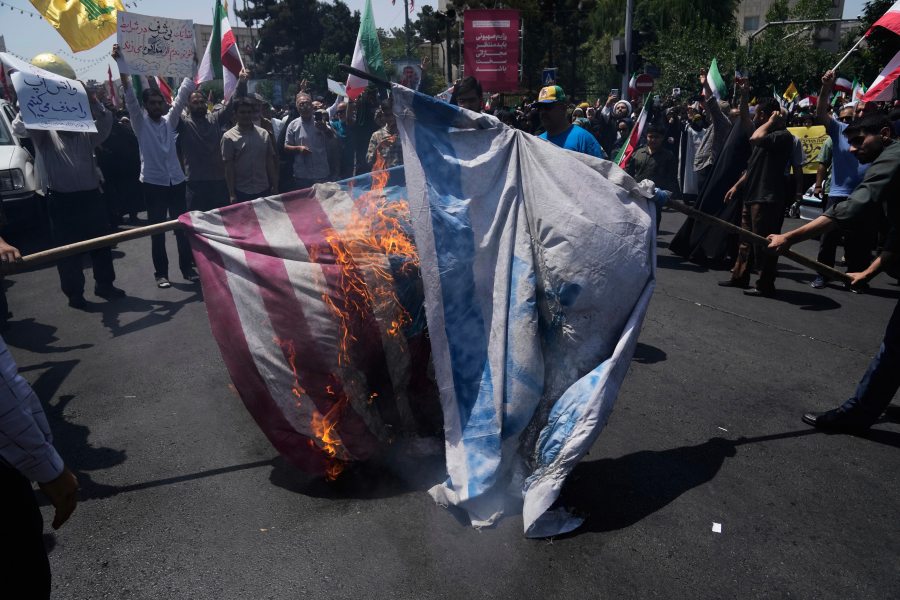
In recent weeks, protests have surged across various Iranian cities, driven by widespread dissatisfaction with the government and economic challenges. Demonstrators have called for significant political change, reflecting deep-seated discontent among the populace. As these protests intensify, the Iranian government has responded with a heavy security presence and attempts to quell dissent.
Netanyahu’s comments indicate Israel’s heightened alertness to the developments in Iran, a nation it has historically viewed with suspicion. The Prime Minister emphasized that the situation requires careful observation, as any instability in Iran could have direct implications for Israeli security. He stated, “The people of Israel, the entire world, are in awe of the courage shown by the Iranian protesters.”
The backdrop of these protests is complicated by Trump’s recent threats to take military action against Iran. His administration has taken a hardline stance towards Tehran, particularly concerning its nuclear ambitions. This rhetoric has the potential to exacerbate tensions and could lead to increased military engagement in the region.
The dynamic between Israel and Iran remains fraught. Israel has long been concerned about Iran’s influence in neighboring countries and its support for groups antagonistic toward the Israeli state. As protests unfold, Israel is not only watching the situation closely but is also preparing for various scenarios that could emerge from the unrest.
International reactions to the protests have varied. Some nations have expressed support for the Iranian people’s right to protest and call for reform, while others maintain a more cautious approach, weighing the risks of further destabilizing the region. The United Nations has urged restraint from both the Iranian government and external parties, highlighting the need for dialogue.
As the situation develops, the potential for a regional conflict looms large. Analysts caution that if the protests lead to a significant shift in Iran’s political landscape, the consequences could ripple across the Middle East, affecting alliances and security arrangements.
The coming weeks will be crucial in determining the trajectory of the protests and how they will influence the already complex geopolitical landscape. With Israel closely observing the situation, the world watches to see how the Iranian populace will respond to both internal pressures and external threats.