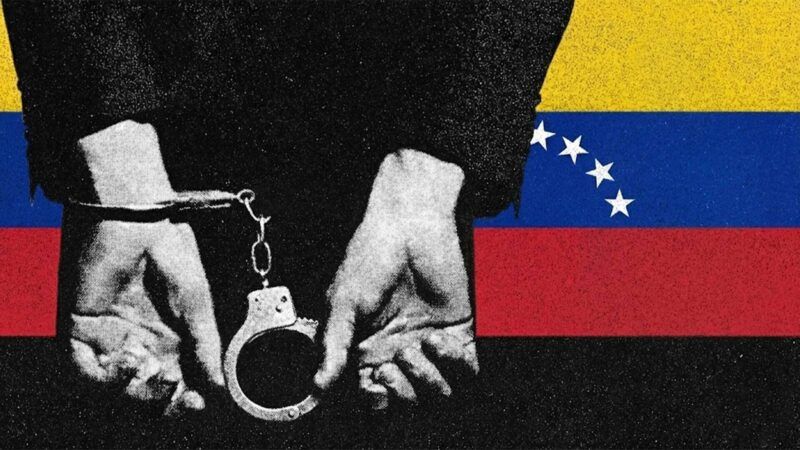
BREAKING: The Venezuelan socialist regime has just announced the release of several political prisoners in a surprising move aimed at easing tensions. Jorge Rodríguez, president of Venezuela’s National Assembly and brother of acting dictator Delcy Rodríguez, confirmed this development on Thursday, describing it as a “gesture” to promote “the peace” in a country rife with political turmoil.
While Rodríguez did not specify the names of those being freed, human rights lawyer Rocío San Miguel has already been released, according to her family. San Miguel’s arrest in February 2023 sparked widespread protests. She was detained at Caracas’ main airport along with five relatives and accused of plotting to assassinate Nicolás Maduro and other officials. For months, San Miguel was held at the notorious El Helicoide prison, facing charges of treason and conspiracy without access to her lawyer or family.
Another prominent detainee, María Oropeza, a young libertarian activist, was arrested in 2024 for denouncing political repression and declaring Edmundo González the legitimate president-elect on social media. Her arrest was livestreamed on Instagram, capturing the moment as she was taken into custody. A disturbing video released by Venezuela’s military counterintelligence agency showed Oropeza in an armored vehicle, underscored by ominous music from the film *A Nightmare on Elm Street*. As of now, her status remains unknown.
The regime’s crackdown continues, as evidenced by the recent arrests of Pablo and Lubin Montilva, who were taken into custody just days ago for allegedly celebrating Maduro’s capture by firing a revolver into the air. They face serious charges of terrorism and treason, which could lead to a maximum prison sentence of 30 years under Venezuelan law. There has been no confirmation of their release.
According to Provea, a Venezuelan human rights organization, over 53,000 Venezuelans have suffered political imprisonment under Maduro’s regime. Reports of systematic torture within Venezuelan prisons are alarming, with cases like that of Fernando Albán, an opposition councilman who died in custody after being tortured, highlighting the brutal conditions. His family reported that he suffered suffocation and electric shocks before his body was thrown from a building.
The political landscape has shifted dramatically since Maduro’s capture. Rodríguez immediately declared a state of emergency, ordering police to arrest anyone allegedly supporting U.S. involvement in the regime’s downfall. Videos have surfaced of arrests, including that of Marioxis Martínez, detained for a post celebrating Maduro’s arrest, surrounded by masked police without identification.
In a further escalation of repression, the regime detained 14 journalists covering the swearing-in of the newly elected National Assembly on Monday, including 13 from international outlets. Most were released after hours, but CNN correspondent Steffano Pozzebon was deported, raising concerns over press freedom in Venezuela.
The motivations behind the release of political prisoners remain unclear. Observers speculate whether this is a strategic move to mitigate international pressure from the United States or a genuine step toward democratic change. The world is watching closely as the situation develops, with significant implications for the future of Venezuela.
As this story unfolds, the international community awaits further updates on the fate of those remaining in custody and the regime’s next steps in this ongoing crisis.