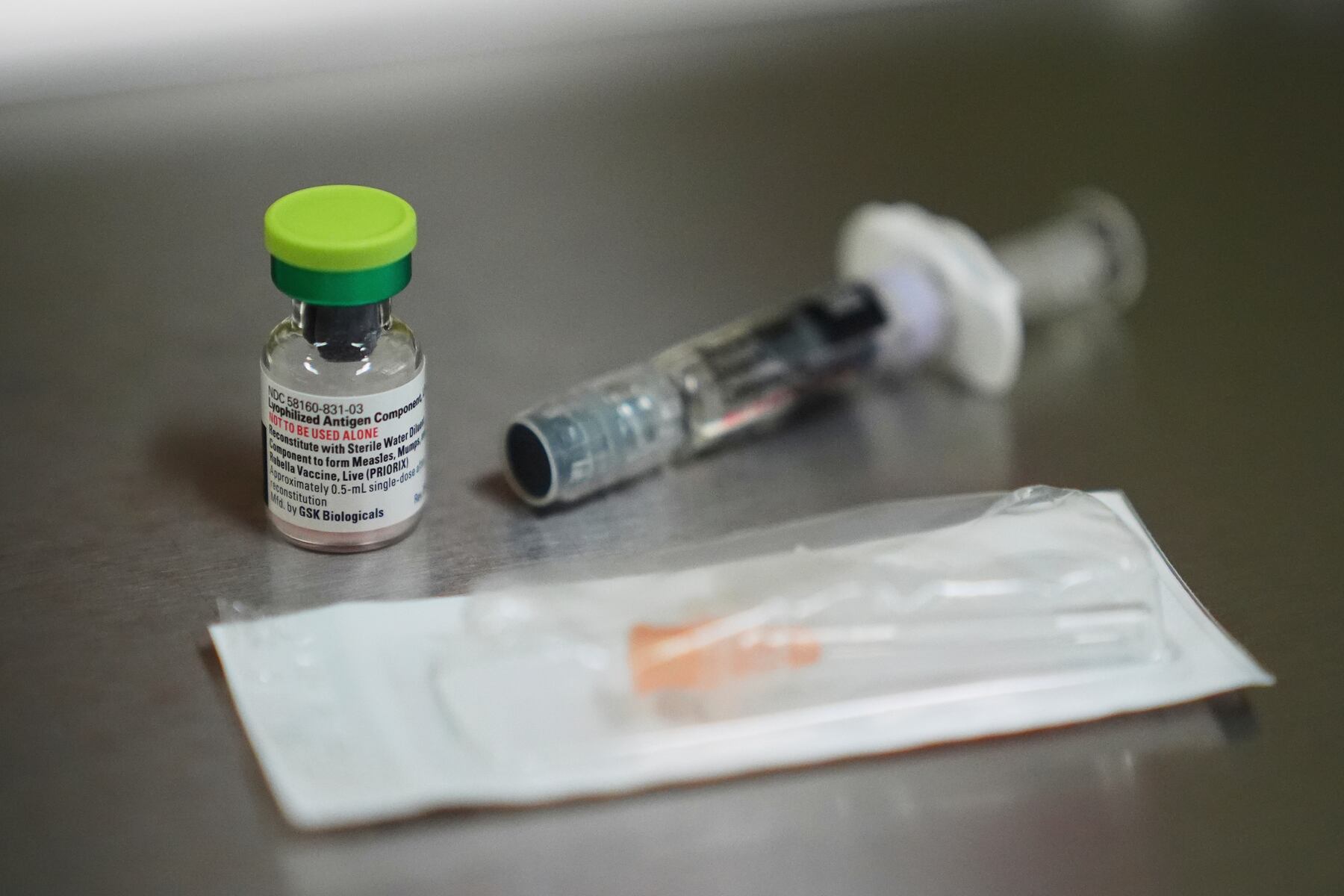
Vaccination rates among kindergarteners in three counties of Western Massachusetts have dropped below the threshold needed for herd immunity against measles. According to data released by the Washington Post, only 93.8% of kindergarteners in Hampden County have received both doses of the measles, mumps, and rubella (MMR) vaccine. Franklin County and Berkshire County report lower rates of 91.5% and 91.8%, respectively. The Centers for Disease Control and Prevention (CDC) states that a vaccination rate of at least 95% is necessary to protect the community through herd immunity.
Despite higher vaccination rates in broader areas such as Massachusetts, Rhode Island, and Connecticut, concerns remain in specific regions. Public health officials noted that lower vaccination rates in Western Massachusetts necessitate ongoing efforts to boost vaccine confidence. With smaller populations in some areas, decisions made by a few families can significantly impact overall vaccination rates.
“Our biggest battle now is there’s a lot of misinformation and confusion,” said Jessica Collins, executive director of the Public Health Institute of Western Massachusetts. She emphasized the role of pediatricians and school nurses as “critical messengers” in promoting vaccination.
The Healey administration recently criticized the previous federal administration for its decision to drop several vaccines from the list of 17 traditionally recommended for children. Dr. Robbie Goldstein, the state’s public health commissioner, condemned the move as “reckless,” arguing it undermines years of evidence-based public health guidance.
The measles vaccine remains a priority for the CDC, particularly in light of recent outbreaks across the country. In Massachusetts, the state has not reported any measles cases in 2025 and has only documented one instance in the last five years. Nevertheless, the rising number of vaccine exemptions for medical or religious reasons in Franklin and Berkshire counties raises alarm among health officials.
To address the issue, the state plans to reach out to schools reporting low vaccination rates, providing information on vaccine importance and the dangers associated with measles. Local incidents, such as a recent chickenpox outbreak in Westfield schools, highlight the potential risks.
“Chickenpox can be fairly mild for most people, but the real fear is measles,” said Fawne St. Pierre, the district’s health and safety supervisor.
The challenges extend beyond vaccine hesitancy, as rural regions struggle with limited access to healthcare. Phoebe Walker, director of community health for the Franklin Regional Council of Governments, pointed out that the area lacks pediatric practices. Many local doctors may not have the resources to store vaccines properly or sufficient patient volume to justify ordering them.
The pandemic shifted vaccination habits, with many individuals now opting for local pharmacies. Unfortunately, in Walker’s region, only a few pharmacies offer vaccinations, and even fewer cater to children. “So there’s a lot of layers of barriers,” she noted.
The drop in vaccination rates is alarming for public health, prompting a dual focus on education and preparedness. Walker underscored the need for strong relationships with school nurses and identifying schools that might be particularly vulnerable.
“Our rates are still good compared to other parts of the country,” Walker said, “but these are terrifying times.” As the region navigates these challenges, it remains crucial to strengthen community trust in vaccinations to ensure the safety of all residents.