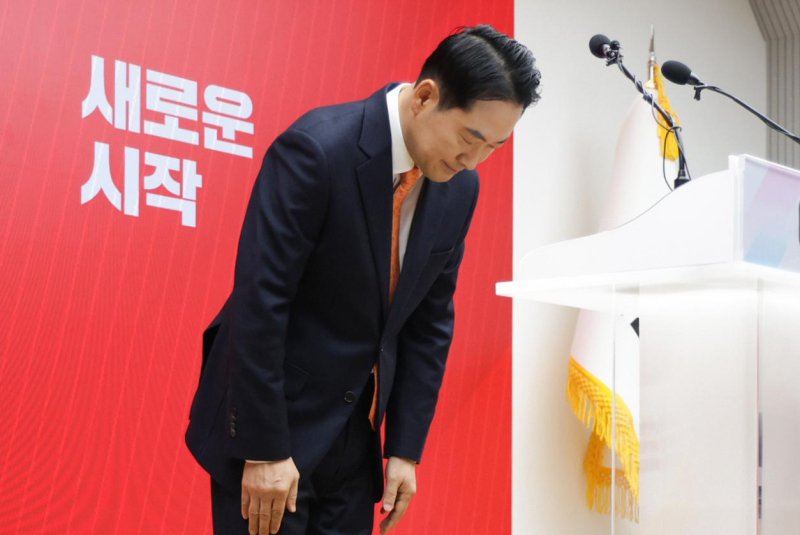
UPDATE: South Korea’s main opposition party leader, Jang Dong-hyeok, has just issued a public apology for the controversial martial law declaration made by former President Yoon Suk Yeol in December 2024. This urgent statement, delivered during a press conference at party headquarters in Seoul earlier today, aims to distance the People Power Party (PPP) from the impeached ex-leader while signaling a commitment to reform ahead of the critical local elections on June 1.
Jang emphasized the significance of the apology, stating that the emergency martial law declared on December 3, 2024, was a “wrongful measure” that “did not fit the situation.” He acknowledged that this declaration caused “great confusion and inconvenience” to the public and inflicted “deep wounds” on party members dedicated to upholding constitutional democracy.
The leader of the PPP highlighted the party’s “heavy responsibility” for the incident, noting that he was among the 18 PPP lawmakers who rushed to the National Assembly to vote down the decree, which was overturned within hours. “I gravely acknowledge that responsibility and offer my deepest apology to the people,” Jang stated firmly.
In a bid to move forward, Jang unveiled a new reform initiative called “Change to Win,” which aims to reshape the party’s image and broaden its appeal. Proposed measures include mandatory youth nominations for upcoming local elections, new platforms to recruit policy experts, and the establishment of standing committees focused on pressing issues like labor and social welfare.
The timing of this initiative is critical, as the PPP seeks to reestablish itself as a viable alternative to the current administration of President Lee Jae Myung. Jang expressed a readiness to collaborate with other opposition parties, stating, “If they agree with the values of liberal democracy and share the will to stop the dictatorship of the Lee Jae Myung regime, we will open our hearts and join forces with anyone.”
The backdrop of this apology and reform announcement includes ongoing accusations against Lee’s administration for legislative overreach, which critics argue has marginalized the opposition. Meanwhile, the government defends its actions as necessary for stability and reform.
Jang affirmed that the PPP will persist with internal reforms, including stricter anti-corruption measures and possible changes to the party’s name. He urged the party to move beyond past political turmoil, including the martial law episode and Yoon’s impeachment, focusing instead on restoring public trust.
“We will cross the river of martial law and impeachment and move toward the future,” Jang declared, highlighting the urgency to regain the confidence of the electorate in the lead-up to the upcoming elections.
This developing story highlights the shifting landscape of South Korean politics as the People Power Party attempts to navigate its path forward amid significant challenges. Stay tuned for more updates on this evolving situation.