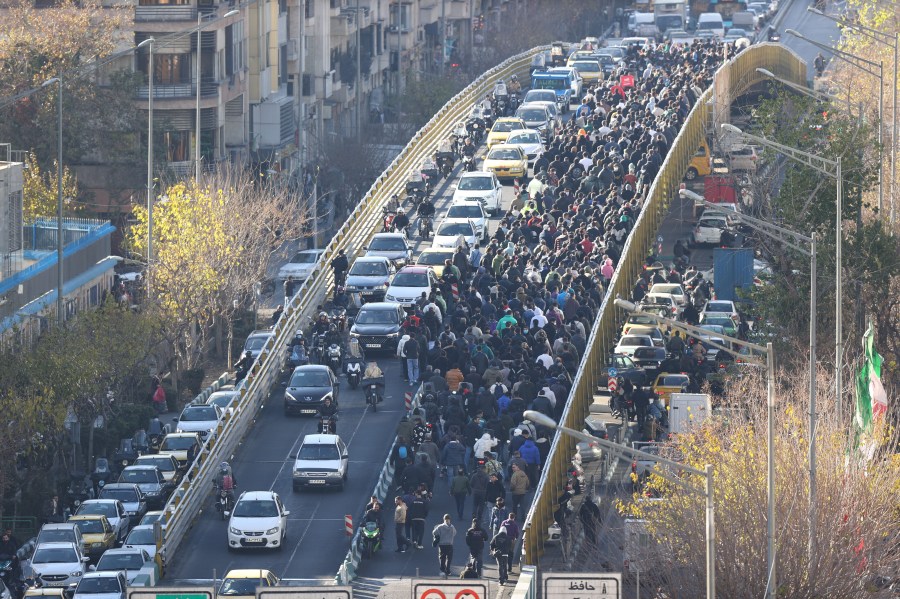
Protests in Iran have escalated significantly, resulting in a reported death toll of at least 35 individuals, according to activists. The demonstrations, which began in response to the country’s ongoing economic difficulties, have prompted a widespread crackdown, with more than 1,200 people detained amid the unrest.
The unrest has garnered attention from various human rights organizations. The U.S.-based Human Rights Activists News Agency provided the latest figures, highlighting the severity of the situation as protests continue across multiple cities in Iran. The protests reflect growing public dissatisfaction with the government’s handling of economic issues, including inflation and unemployment.
Continuing Unrest and Government Response
Despite the government’s efforts to quell the protests, including the deployment of security forces, demonstrations have persisted. Eyewitness accounts describe protests characterized by both peaceful marches and violent confrontations. The situation remains fluid, and many citizens are voicing their frustrations over economic hardships and government policies.
Activists have expressed concern not only over the rising death toll but also about the implications of mass detentions. The authorities’ response has drawn criticism from international organizations advocating for human rights. The Iranian government has yet to release a comprehensive statement addressing the growing number of fatalities and detainees.
The protests are fueled by a range of grievances, from soaring prices to unemployment. Many citizens are demanding accountability from their leaders and a more transparent approach to governance. As the demonstrations continue, the international community watches closely, with calls for restraint and respect for human rights echoing from various quarters.
Impact on Iranian Society
The impact of the protests extends beyond immediate violence and detentions. The ongoing turmoil has led to a heightened sense of fear and uncertainty among citizens. Families are grappling with the loss of loved ones, and many are living in fear of further government reprisals.
The protests have also prompted discussions about potential reforms within Iran. Some commentators suggest that the government must address the underlying economic issues to restore public trust and prevent further unrest. As the situation develops, it remains to be seen how the Iranian authorities will respond to the mounting pressure from both citizens and the international community.
As Iran faces this critical juncture, the need for dialogue and reform has never been more urgent. The unfolding events may have lasting implications for the country’s political landscape and its relationship with the global community.