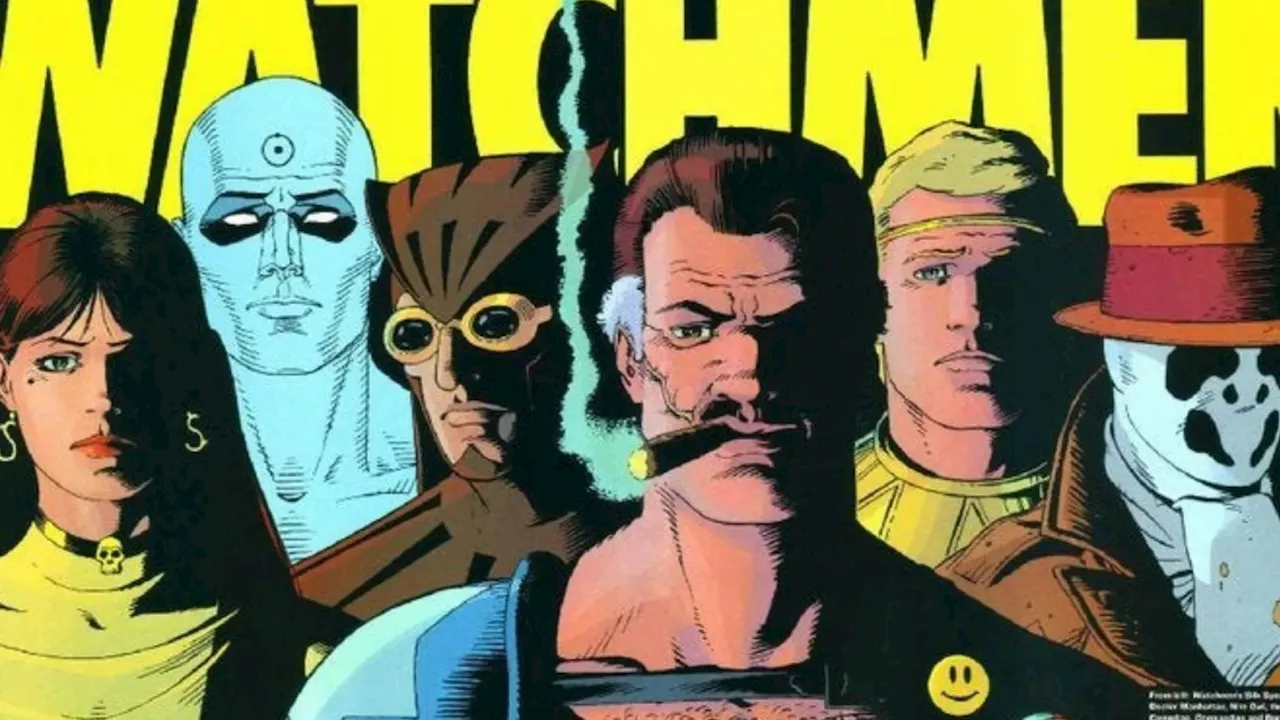
UPDATE: Today marks the 40th anniversary of the groundbreaking comic, Watchmen, prompting a critical reassessment of its lasting influence on the superhero genre. Created by writer Alan Moore and artist Dave Gibbons, Watchmen was serialized from 1986 to 1987 before being published as a single volume in 1987. Its satirical deconstruction of the superhero archetype has secured its place as not just a comic, but a pivotal work of literature.
As discussions heat up around Watchmen, it raises urgent questions about its relevance in today’s cultural landscape. While the comic is celebrated for its innovative use of the nine-panel grid and visual storytelling, critics suggest that its legacy may be misunderstood or even inflated in contemporary discourse.
The narrative’s roots lie deeply embedded in the Cold War anxieties of the late 1980s, echoing the moral complexities of government distrust, nuclear threats, and societal shifts. As Moore and Gibbons crafted their story, real-world events like the Watergate scandal and the Vietnam War colored the narrative, reflecting a world steeped in cynicism.
However, as we analyze Watchmen today, the question arises: Are we holding onto a relic of its time, ignoring the evolution of societal values and anxieties? The comic’s portrayal of darkness and moral ambiguity may not resonate with modern readers who navigate an entirely different cultural landscape.
Many creators have drawn inspiration from Watchmen, but critics argue that they often misinterpret its core messages. The trend of dark and gritty narratives has led to a saturation of morally ambiguous heroes that lack the depth and context that made Watchmen groundbreaking. Rather than fostering genuine exploration of heroism, many stories simply replicate the shock factor that made Watchmen a commercial success.
As the comic’s influence continues to be felt across the industry, it is crucial to recognize that while Watchmen is a monumental work, it is not the sole standard for excellence in the genre. New narratives are emerging that push the boundaries and explore themes relevant to today’s society.
With the landscape of comics evolving, readers and creators alike are encouraged to seek fresh perspectives rather than rely solely on the legacy of Watchmen. As we celebrate this iconic work, it is vital to acknowledge the transformations in storytelling that reflect the complexities of contemporary life.
As discussions surrounding Watchmen gain momentum, what remains clear is the urgent need for ongoing dialogue about its impact and the future of superhero narratives. The legacy of Watchmen is not just in its pages, but in how it continues to shape the conversation about comics today.
Stay tuned for more insights and analyses as the cultural significance of Watchmen is reexamined in light of its 40th anniversary.