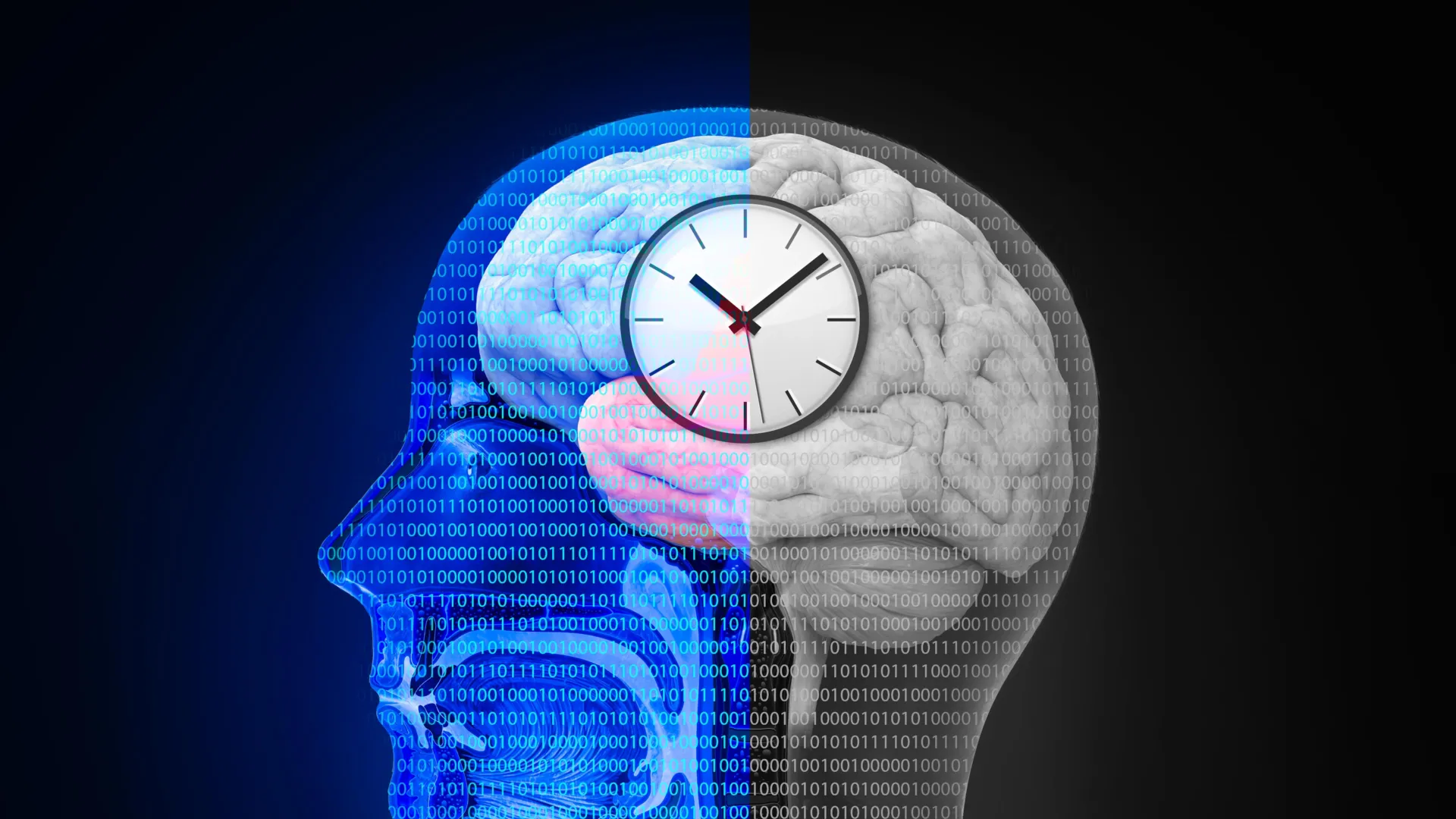
BREAKING: A groundbreaking study from Rutgers University reveals how a hidden timing system in the brain affects cognitive abilities. Published in Nature Communications, researchers discovered that different brain regions operate on unique internal clocks, significantly influencing how we think and make decisions.
This research uncovers the brain’s complex mechanism that blends rapid reactions with slower, more deliberate processing. The findings could explain why cognitive abilities vary among individuals, a critical insight for mental health research.
The study, released on January 3, 2026, highlights that brain regions communicate through white matter connections, allowing the exchange of information across different timescales. “To affect our environment through action, our brains must combine information processed over different timescales,” stated Linden Parkes, assistant professor of Psychiatry at Rutgers Health and senior author of the study. This integration is vital for effective human behavior.
Researchers analyzed brain imaging data from 960 individuals to create detailed maps, or connectomes, of brain connectivity. By applying mathematical models, the team tracked how information flows through these networks. “Our work probes the mechanisms underlying this process in humans by directly modeling regions’ intrinsic neural timescales (INTs) from their connectivity,” Parkes emphasized.
The study reveals that the arrangement of neural timescales significantly impacts the brain’s efficiency in switching between activity patterns tied to behavior. This timing organization is not uniform across individuals, leading to variations in cognitive abilities. “We found that differences in how the brain processes information at different speeds help explain why people vary in their cognitive abilities,” Parkes added.
Crucially, the research connects these timing patterns to genetic, molecular, and cellular features of brain tissue, suggesting a fundamental biological basis for cognitive differences. Similar mechanisms were observed in mouse brains, indicating that these findings may be applicable across species.
The implications of this study extend beyond understanding cognition. The research team plans to apply these insights to neuropsychiatric conditions such as schizophrenia, bipolar disorder, and depression. By examining how changes in brain connectivity disrupt information processing over time, they aim to develop new therapeutic strategies.
With this urgent revelation about the brain’s hidden timing system, researchers open new avenues for understanding human cognition and mental health. As the study progresses, the world watches closely for developments that could reshape how we comprehend neurological function.
Stay tuned as more findings emerge from this significant research initiative at Rutgers University, where the intersection of neuroscience and mental health could lead to revolutionary breakthroughs.