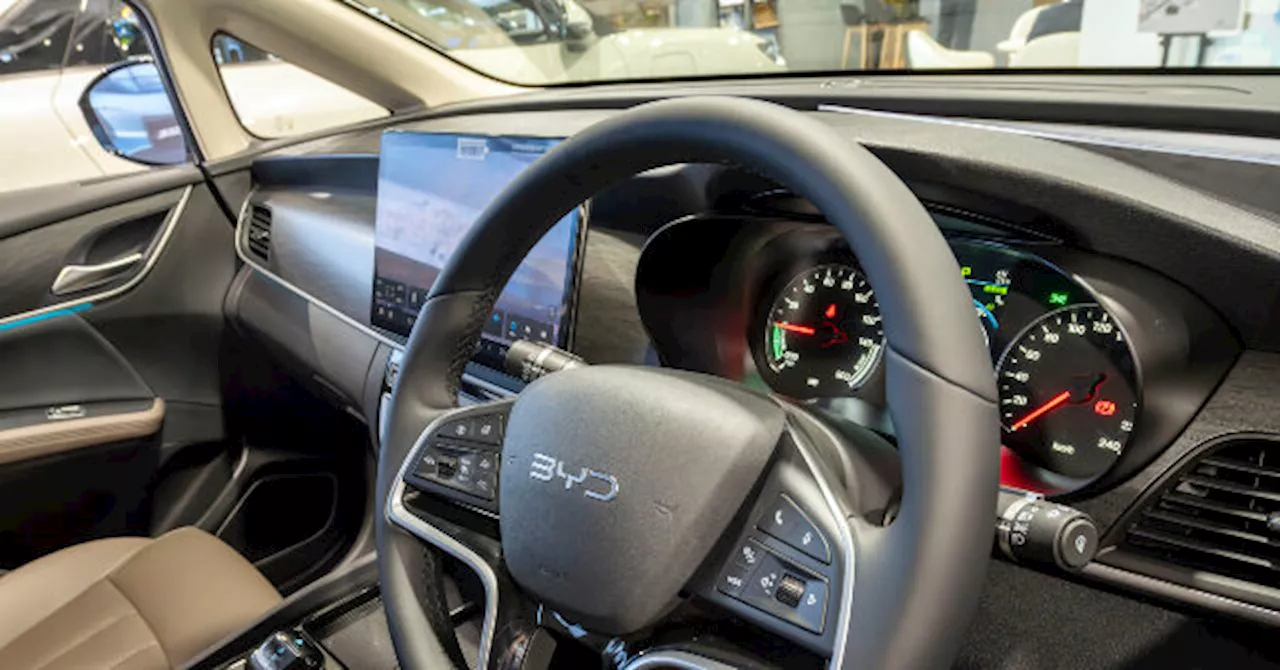
URGENT UPDATE: In a stunning turn of events, BYD has officially surpassed Tesla as the world’s leading electric vehicle (EV) manufacturer for the year 2025. Reports confirm that BYD’s sales surged by 28 percent to over 2.25 million units, while Tesla faced a significant decline, with sales dropping 9 percent to 1.64 million vehicles.
The implications of this shift are profound, as it reflects changing dynamics in the global automotive landscape. Tesla’s struggles stem from several factors, including the expiration of critical U.S. government subsidies, heightened competition from aggressive Chinese brands, and consumer backlash linked to political perceptions. The U.S. market’s lukewarm response to Tesla’s latest models has compounded these challenges, creating a perfect storm for the EV pioneer.
Meanwhile, BYD’s remarkable growth can be attributed to a strategic push in key international markets, particularly the United Kingdom, where sales skyrocketed by an astonishing 880 percent. This expansion is emblematic of the broader rise of Chinese automakers, who are capturing significant market shares across Europe, including in countries like Germany, France, and Spain.
The increasing dominance of Chinese brands has raised alarm within the European Union, prompting protective measures such as tariffs on imports of Chinese EVs. These tariffs, which can reach up to 38 percent, aim to protect local manufacturing from what EU officials describe as unfair pricing tactics and excessive government subsidies benefiting Chinese automakers.
As the market turns, analysts anticipate a challenging year ahead for the EV sector in 2026, but some experts remain hopeful for a rebound in 2027, especially with the expected introduction of more affordable, domestically produced EVs. Tesla is reportedly shifting its focus from consumer vehicles to the development of self-driving “robotaxi” technology, signaling a strategic pivot in response to the evolving competitive landscape.
The rivalry between BYD and Tesla underscores the interplay of technological advancements, policy changes, and shifting consumer preferences that are reshaping the automotive industry. With BYD’s ascent, the balance of power in the EV market appears to be shifting decisively towards Chinese manufacturers, emphasizing the importance of government support, robust supply chains, and cost-effective production methods.
Stay tuned for further developments as the EV market continues to evolve. The outcome of this fierce competition will have lasting implications for both consumers and manufacturers worldwide.