The Atacama Large Millimeter/Submillimeter Array (ALMA) in Chile has significantly upgraded its capabilities with the installation of 145 new low-noise amplifiers (LNAs). This enhancement, which expands the array’s Band 2 coverage to frequencies ranging from 67 to 116 GHz, is expected to provide researchers with invaluable insights into various cosmic phenomena.
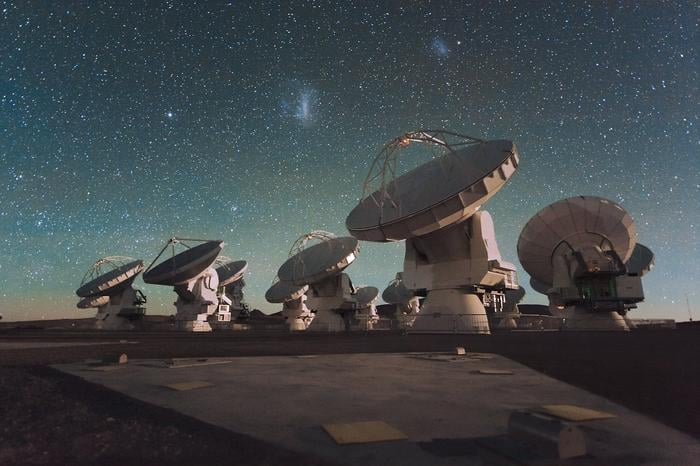
ALMA, known for its advanced observational capabilities, utilizes 66 parabolic antennas to detect millimeter and submillimeter radiation. This radiation originates from cold molecular clouds critical to star formation. The recent addition of LNAs will improve the sensitivity of ALMA’s receivers, enabling scientists to observe the cold interstellar medium more effectively.
According to a press release from the Fraunhofer Institute for Applied Solid State Physics (IAF), these new amplifiers will enhance the study of the gas, dust, radiation, and magnetic fields that contribute to star formation. Additionally, astronomers will be able to investigate planet-forming disks and complex organic molecules (COMs) in nearby galaxies, which are key components in understanding the origins of life.
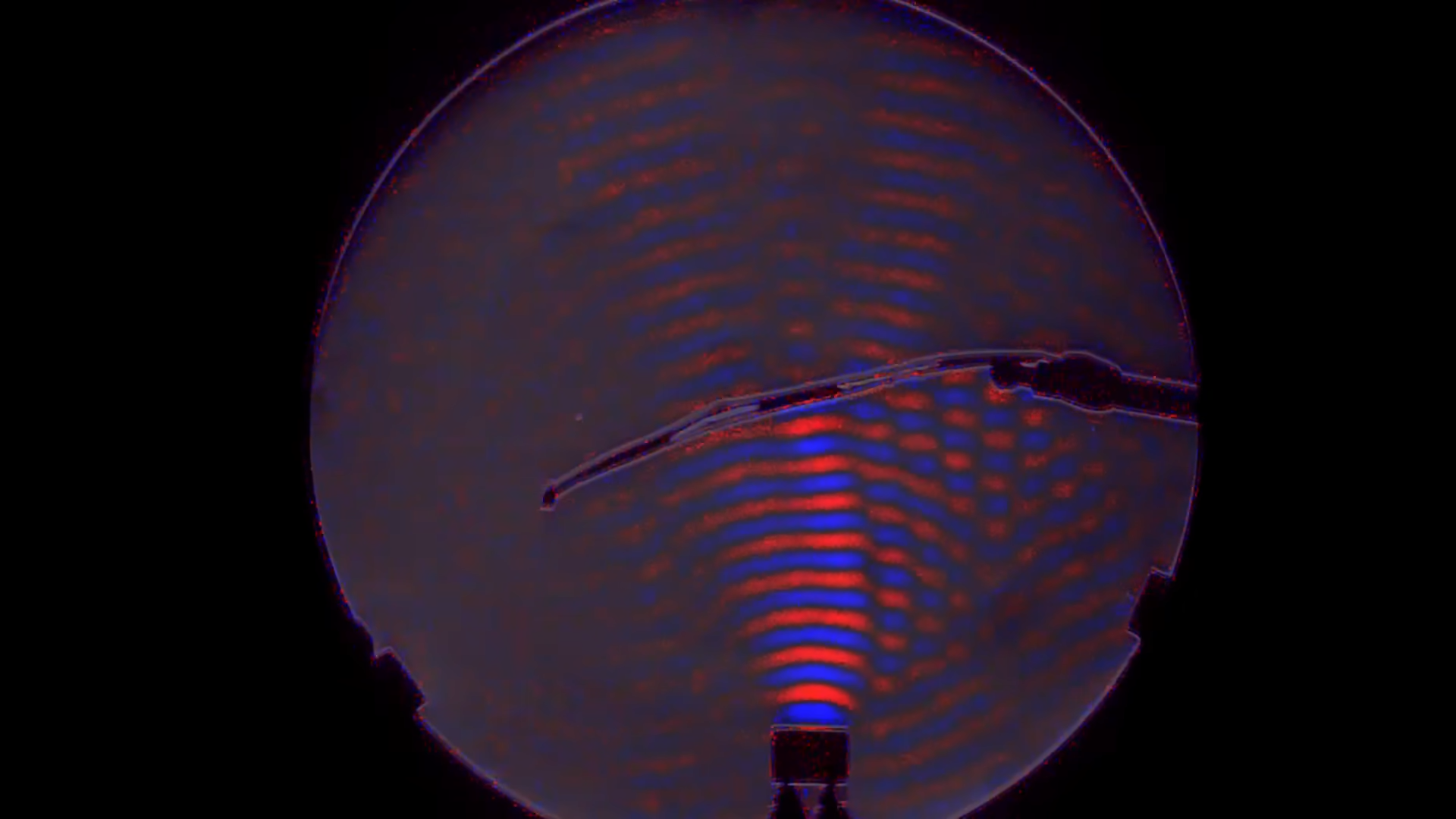
The LNAs are equipped with monolithic microwave integrated circuits (MMICs) developed by the Fraunhofer IAF using indium gallium arsenide (InGaAs). The MMICs employ metamorphic high-electron-mobility transistor (mHEMT) technology, a cutting-edge approach that optimizes performance in high-frequency applications. This technological advancement will significantly reduce background noise, allowing for clearer observations.
Dr. Fabian Thome, who leads the subproject at Fraunhofer IAF, highlighted the collaborative effort between Fraunhofer IAF and the Max Planck Institute for Radio Astronomy (MPIfR). The European Southern Observatory (ESO) commissioned both institutions to design and manufacture the amplifiers. Fraunhofer IAF was responsible for developing and testing the MMICs, while MPIfR handled the assembly and qualification of the LNA modules under cryogenic conditions.
Prof. Dr. Michael Kramer, executive director of MPIfR, expressed pride in the collaboration, stating, “This is a wonderful recognition of our fantastic collaboration with Fraunhofer IAF, which shows that our amplifiers are not only ‘made in Germany’ but also the best in the world.”
This upgrade to the ALMA array represents a significant step forward in our understanding of the cosmos. By enabling more detailed observations of star formation, planetary systems, and the building blocks of life, astronomers are poised to make groundbreaking discoveries about the universe’s structure and origins.