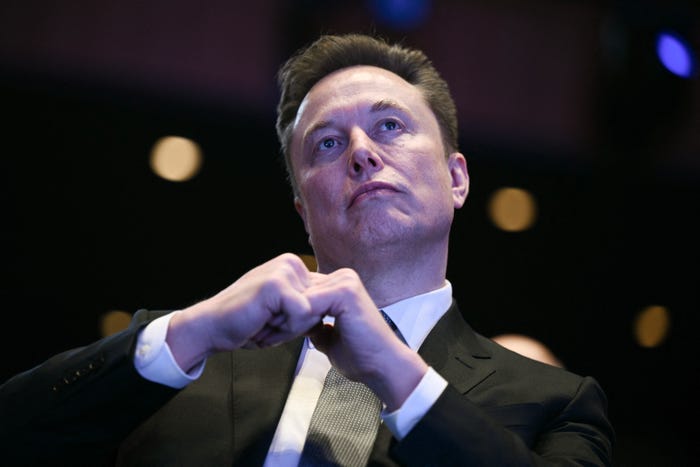
UPDATE: Elon Musk has just announced a significant ramp-up in the production of Neuralink brain chips, set to begin in 2026. In a recent post on the social media platform X, Musk revealed plans to automate the surgical procedure for implanting these advanced devices, marking a groundbreaking shift in medical technology.
Neuralink, co-founded by Musk in 2016, is dedicated to developing brain-chip implants aimed at assisting individuals with severe neurological disorders such as Parkinson’s, Alzheimer’s, and paralysis. Musk emphasized that the company will initiate “high-volume production of brain-computer interface devices” this year, making it an urgent development for patients seeking innovative solutions.
According to Musk, the surgical procedure will transition to a “streamlined, almost entirely automated” process, which is a significant advancement. The procedure will allow device threads to penetrate the dura—protective membrane covering the brain—without the need for surgical removal, making it less invasive and more efficient. Musk described this advancement as “a big deal.”
The Neuralink chip, comparable in size to a coin, features an array of thin threads—each roughly 20 times thinner than a human hair—that extend into the brain to facilitate communication with computers. Previously, implanting the device required a human surgeon to remove a portion of the skull before mechanized assistance took over.
Noland Arbaugh, a quadriplegic, became Neuralink’s first human patient in January 2024. He reported that the implant has significantly improved his quality of life, granting him newfound independence and social connections. As of September 2025, Neuralink confirmed that 12 individuals globally have received implants and are actively using them. Musk predicts that the number could exceed 1,000 patients by 2026.
Neuralink’s recent expansion includes a hiring surge for manufacturing technicians and microfabrication specialists, aimed at supporting this production explosion. This rapid development underscores the urgency and potential impact that Neuralink’s technology could have on medical treatments and human capabilities.
As this story unfolds, the medical community and tech enthusiasts alike are watching closely. The implications of merging human consciousness with artificial intelligence could redefine our understanding of neuroscience and rehabilitation.
Stay tuned for more updates on this groundbreaking initiative from Neuralink and Elon Musk.