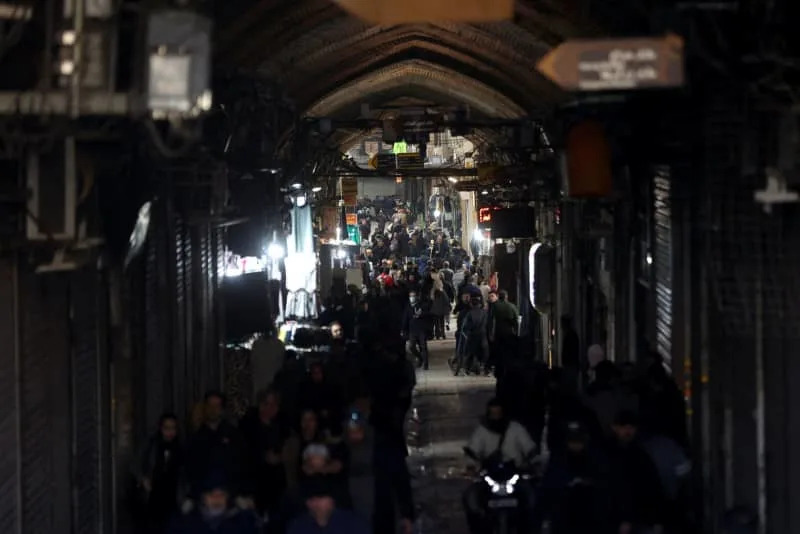
Protests in Iran have intensified as citizens voice their dissatisfaction with the government amid a deepening economic crisis. In various cities, including Tehran and Kermanshah, authorities have responded with tear gas and arrests, marking a significant escalation in the regime’s crackdown on dissent. Footage has emerged of demonstrators successfully pushing back police forces, particularly on Tehran’s Jomhuri Street, where law enforcement was forced to retreat in the face of mounting public anger.
The protests began over the rapidly declining value of the rial, which has fallen to a record low of 1.4 million rials per US dollar as of March 2023, down from 817,500 rials at the start of the year. The Islamic Republic has witnessed widespread unrest since the death of Mahsa Amini in custody last year, with protests reflecting broader grievances about economic mismanagement and political repression.
Authorities Respond with Force
Authorities have begun a concerted effort to quell the unrest, with reports indicating that at least 11 individuals were arrested on Sabunian Street in Tehran. Among those detained was Mehdi Biek, the political editor of Etemad newspaper, who was covering the protests. His wife expressed concern over his welfare after not hearing from him for over 24 hours, until his eventual release on Tuesday.
In Kermanshah, the regime has employed tear gas against large crowds chanting slogans such as “shame, shame!” In Tehran, protesters have taken to the streets with the rallying cry: “Neither Gaza nor Lebanon, I will sacrifice my life for Iran.” These chants signify a shift in focus from economic grievances to broader political dissent against the ruling authorities.
According to Iranian dissident journalist Masih Alinejad, the current protests represent a significant challenge to the legitimacy of the Islamic Republic. She noted, “Yes, the immediate trigger is economic collapse. Iran’s currency has lost nearly 90 percent of its value since 2018. When money collapses, lies collapse too.”
Government’s Attempt to Address Concerns
In an effort to alleviate public dissatisfaction, Iranian President Masoud Pezeshkian stated, “The livelihood of the people is my daily concern. We have fundamental actions on the agenda to reform the monetary and banking system and preserve the purchasing power of the people.” He has tasked the Minister of the Interior with engaging in dialogue with protesters to address their legitimate demands.
Following the president’s remarks, a spokesman for Iran’s Budget Consolidation Commission announced that government salaries would increase by 30 percent next year, up from the 20 percent initially planned. Some officials have resigned in response to the unrest, highlighting the regime’s internal divisions. Massoud Pezzekian, a member of the information council, stated, “I cannot defend the government” in light of widespread public criticism.
Despite these gestures, the response to protests at universities has been markedly more violent. Reports from Iran International indicate that a student was severely injured when the IRGC’s Basij paramilitary forces attacked a gathering near Amirkabir University in Tehran. Several students, including those from various academic disciplines, have also been arrested on campus, reflecting the regime’s harsh stance on dissent among young people.
As the situation continues to unfold, the Iranian government faces increasing pressure to address both the economic turmoil and the growing wave of public discontent. The coming days may prove crucial in determining the trajectory of these protests and the regime’s ability to maintain control amid widespread calls for change.