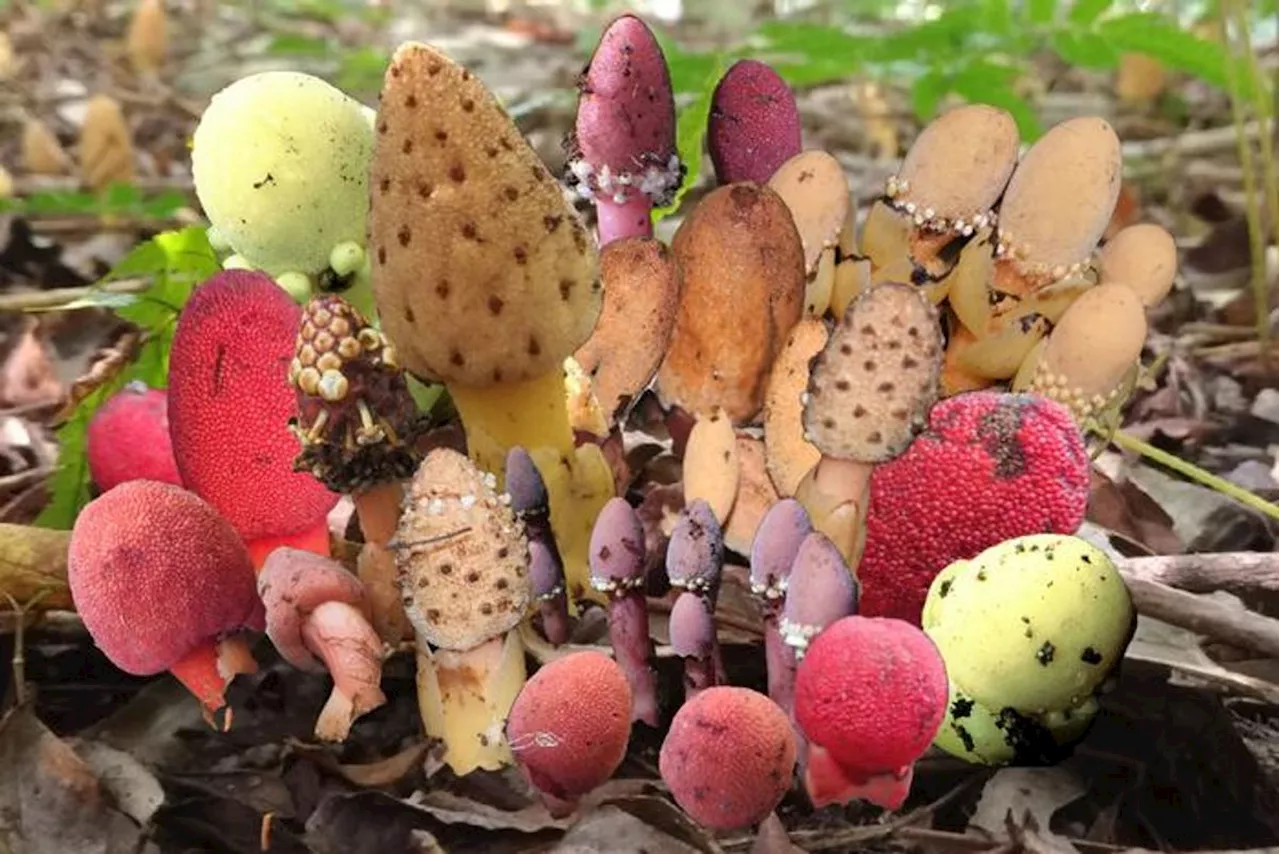
Recent research has unveiled the remarkable survival tactics of the parasitic plant Balanophora, which thrives underground without photosynthesis and can reproduce asexually. This unique plant, found in the humid regions of Japan, Taiwan, and Okinawa, relies entirely on other plants for nourishment by parasitizing the roots of specific host trees. A study published in the journal New Phytologist sheds light on how Balanophora has evolved to adapt to its unusual lifestyle.
The plant’s underground existence poses significant challenges for scientific study. Balanophora spends most of its life in the shaded undergrowth of forests, emerging only briefly to flower. This hidden lifestyle has made it difficult for botanists to examine its ecology comprehensively. Historically, research focused on isolated traits such as genetics or reproduction, rather than the interconnectedness of these traits. The new study adopts a broader perspective, combining field surveys with genetic and evolutionary analyses across multiple species.
Unique Cellular Adaptations
One of the most intriguing findings from the study involves the plant’s plastids, the organelles that include chloroplasts and are typically vital for photosynthesis. In most plants, when photosynthesis ceases, plastids lose genes and functionality. However, Balanophora has reduced its plastid genome to one of the smallest known in land plants, containing only about 20 genes compared to the nearly 200 found in photosynthetic species. Remarkably, the plastid has not vanished but remains crucial for the plant’s metabolism.
Dr. Kenji Suetsugu, a botanist at Kobe University and a coauthor of the study, expressed excitement about these findings. “It is thrilling to see how far a plant can reduce its plastid genome, which at first glance looks as though the plastid is on the verge of disappearing. But looking more closely, we found that many proteins are still transported to the plastid, showing that even though the plant has abandoned photosynthesis, the plastid is still a vital part of the plant’s metabolism,” he stated in a press release.
Genetic analyses indicate that hundreds of proteins continue to be directed into the plastid, which now supports essential metabolic functions unrelated to photosynthesis. This suggests that Balanophora has effectively repurposed its plastids to maintain life underground.
Reproductive Strategies and Evolution
The study also highlighted the varied reproductive strategies of Balanophora. Certain populations engage in sexual reproduction, while others produce seeds without fertilization through a method known as apomixis. This strategy allows flowering plants to reproduce without the need for a male counterpart. By reconstructing the evolutionary history of Balanophora, researchers discovered that asexual reproduction has evolved multiple times, particularly within isolated island populations.
In environments where mates or pollinators are scarce, the ability to reproduce independently can provide a significant advantage, enabling the plant to persist despite its limited ecological requirements. These findings position Balanophora among the oldest fully parasitic plant lineages, offering insights into how it has adapted and survived while shedding traits previously considered essential.
The comprehensive nature of this study marks a significant advancement in understanding the biology of Balanophora. By examining the interconnected evolution of its parasitic lifestyle, cellular biology, and reproductive methods, researchers have opened new pathways for investigating the complexities of plant life.
The implications of this research extend beyond the study of Balanophora itself, contributing to a broader understanding of parasitic plants and their unique adaptations. As scientists continue to explore these remarkable organisms, they provide critical insights into the resilience and diversity of life on Earth.