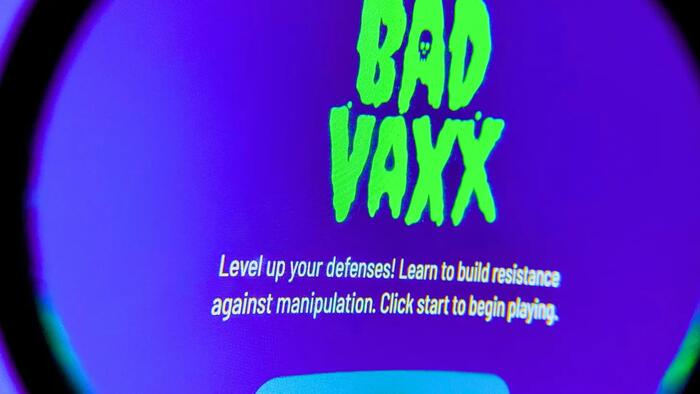
Federal health agencies in the United States are allocating taxpayer funds to develop and assess online games aimed at addressing vaccine skepticism, particularly among younger audiences. An August 2023 study published in *Nature Scientific Reports* indicates that the project, which received funding of $2,000,000 from the Centers for Disease Control and Prevention (CDC), is part of a broader initiative to combat what is termed “vaccine misinformation.”
This initiative is under the auspices of the U.S. Department of Health and Human Services and has been facilitated by a grant administered by the American Psychological Association. The funding is part of a larger award, titled “COVID—INOCULATING AGAINST VACCINE MISINFORMATION,” which has disbursed a total of over $4.3 million since its inception in 2018.
The study frames dissent regarding vaccines as akin to exposure to a pathogen, suggesting that psychological conditioning can foster resistance to such skepticism. The focal point of the project is an online game named **Bad Vaxx**, designed not to debate vaccine claims but to shape how players interpret vaccine-critical narratives. The authors of the study argue that “vaccine misinformation endangers public health by contributing to reduced vaccine uptake,” thereby justifying their approach.
The game’s design aims to equip players with the ability to identify four specific manipulation techniques associated with vaccine misinformation: emotional storytelling, fake expertise, the naturalistic fallacy, and conspiracy theories. According to the study, these techniques are prevalent in anti-vaccine messaging. Interestingly, the research does not explore whether similar persuasive tactics are present in vaccine-promoting communications or pharmaceutical advertisements.
The Bad Vaxx project, ironically, employs some of the same persuasive strategies it seeks to negate, including emotional framing and authority cues, all presented in a gamified format that emphasizes instinctive reactions over critical analysis. The classification of “vaccine misinformation” appears to apply exclusively to narratives opposing injectable pharmaceuticals, neglecting a balanced examination of the broader discourse around vaccines.
The project’s authors assert that susceptibility to misinformation correlates with lower compliance with public health guidelines and reduced willingness to receive vaccinations. They highlight the game’s engaging format as a unique strength, describing it as “entertaining,” “immersive,” and scalable. Their goal is to create a tool that can foster resilience against the manipulation tactics frequently used to disseminate false information about vaccines.
Notably, the study’s outcome measures focus on players’ discernment scores and confidence ratings rather than an independent assessment of facts or evidence. The researchers emphasize the potential for widespread adoption of the Bad Vaxx game, suggesting that it could significantly impact public attitudes toward vaccination.
However, the funding source raises important questions about the inherent conflict of interest. The CDC, a primary federal agency responsible for vaccine promotion and public health policy, is directing resources towards a psychological intervention aimed at managing dissent towards its own recommendations. This dynamic invites scrutiny regarding the definition of misinformation utilized in the project and the ethical implications of using taxpayer funds for such initiatives.
The implications of this endeavor extend beyond mere public health messaging. The structure of the project—state funding, psychological conditioning, and a one-sided definition of misinformation—highlights a potential shift in how public health narratives are crafted and disseminated. By prioritizing intuitive responses over critical debate, the Bad Vaxx initiative embodies a complex intersection of governance and public perception, warranting careful consideration of its long-term impact on discourse surrounding vaccines.