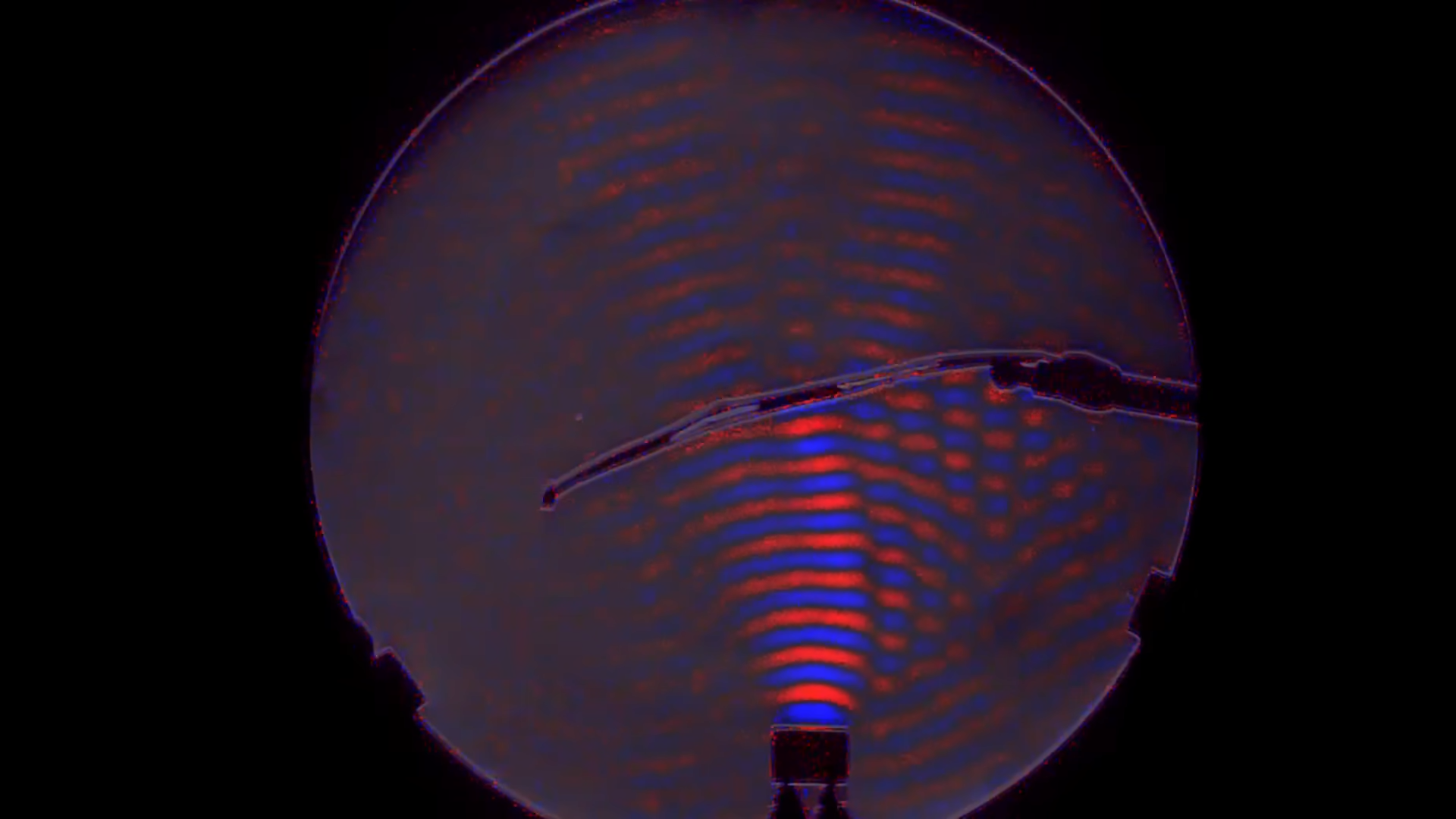
A new camera developed by PlasmatronX offers an innovative way to visualize sound waves, all for under $200. This device utilizes a unique imaging technique that captures sound through variations in air density caused by pressure waves. By employing a modified optical system, the camera can effectively demonstrate the principles of sound in a visually engaging manner.
How the Camera Works
The technology behind this camera is rooted in a process known as Schlieren imaging, typically used to visualize air currents influenced by thermal changes. However, PlasmatronX adapts this method to focus on sound waves. Instead of heat, the camera captures the changes in air density due to sound pressure variations, providing a unique perspective on audio phenomena.
To achieve this, a concave mirror amplifies the refraction of air at different densities. The setup requires a camera capable of high shutter speeds, which can often be quite expensive. Instead, PlasmatronX has cleverly synchronized audio and optical capture systems to create a more affordable alternative.
While the concept of visualizing sound is innovative, executing it presents significant challenges. Modifications to audio circuits are necessary to eliminate high-pass filters, which can interfere with sound capture. Furthermore, the LED flash must be overvolted to generate quick strobe effects essential for freezing sound waves in motion.
Open Source Access and Community Engagement
For those interested in exploring this technology, PlasmatronX has made the project available on GitHub. This open-source approach invites enthusiasts and researchers to experiment with the technique and potentially enhance its functionality. By sharing the project, PlasmatronX contributes to a growing community of makers and innovators eager to explore new ways to visualize complex phenomena.
The introduction of this camera signals a significant step forward in the field of sound visualization. As a tool for education and experimentation, it opens up possibilities for artists, educators, and scientists alike. Beyond the immediate applications, it also showcases the potential for affordable technology to democratize access to advanced imaging techniques.
As this project gains traction, it could inspire further developments in the realm of sound and visual art. The ability to see sound not only enhances our understanding of audio but also enriches the creative landscape, offering new avenues for expression and exploration.