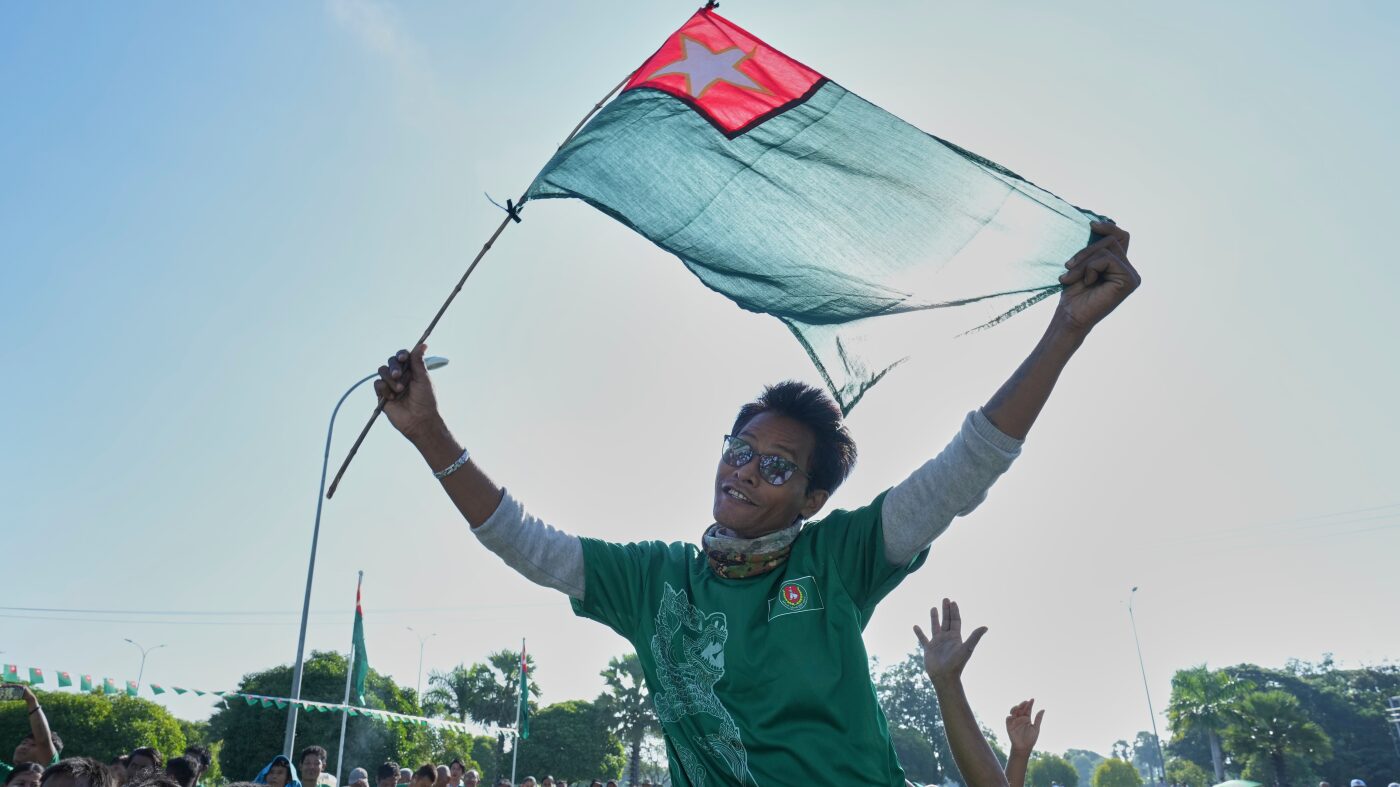
Myanmar’s military government is preparing for a staggered general election scheduled to commence on December 28, 2023 and conclude in late January 2024. This initiative is intended to restore stability in the country and reduce the junta’s international diplomatic isolation. The elections will occur despite an ongoing civil war that erupted following the military’s coup in February 2021, which has left the nation in turmoil.
Since the coup, the military has faced significant opposition, resulting in widespread violence against civilians, the imprisonment of tens of thousands, and the displacement of millions. According to aid agencies, more than 11 million people are confronting food insecurity as the military seeks to regain territories lost to opposition forces.
At a recent summit of the Association of Southeast Asian Nations in Malaysia, United Nations Secretary-General António Guterres questioned the legitimacy of the upcoming elections. “Is there anyone who believes that there will be free and fair elections in Myanmar?” he asked, underscoring the dire state of human rights under the military junta.
The military has enacted a new law that criminalizes what it deems “interference” in the electoral process. Reports from Human Rights Watch indicate that nearly 100 individuals were detained under this law as of November 2023, with that number reportedly more than doubling since then. Many detainees face severe penalties for merely criticizing the electoral process on social media.
The elections are expected to favor the military’s proxy party, the Union Solidarity and Development Party (USDP), which was significantly defeated by Aung San Suu Kyi‘s National League for Democracy (NLD) in the previous 2020 elections. The NLD is banned from participating this time, and Suu Kyi, along with other party leaders, remains imprisoned.
The military’s recent efforts to recapture territory from rebels have contributed to a shift in the conflict’s dynamics. Morgan Michaels, a Southeast Asia security analyst at the International Institute for Strategic Studies (IISS), noted that the military has regained momentum, aided by a campaign of conscription and improved battlefield organization.
China, while critical of the military’s takeover, has emerged as a key ally, viewing the junta as a stabilizing force in a region vital for its economic interests. According to Yun Sun of the Stimson Center in Washington, D.C., Beijing perceives the civil strife in Myanmar as a direct threat to its substantial infrastructure investments, including gas and oil pipelines.
The junta’s control has been bolstered by China’s support, which includes pressuring ethnic armed groups to relinquish territories gained from the military. As a result, the opposition’s ability to launch major offensives has been hampered, with fragmented groups struggling to maintain cohesion.
Public fatigue with the ongoing conflict has also emerged as a significant factor in the military’s favor. Many citizens who once supported the armed struggle are now seeking stability. Analyst Min Zaw Oo highlights that some young fighters are leaving the conflict to find better living conditions in neighboring countries, a sign of dwindling optimism.
Despite these challenges, some remain resolute in their commitment to overthrow the military regime. Rebel commander Ko Ta Mar, who transitioned from a medical career to armed resistance, expressed frustration with the lack of unity among opposition forces. He likened the upcoming elections to “injecting steroids into a patient,” suggesting that while they may offer temporary relief, they will ultimately exacerbate the underlying issues facing the country.
Longtime Myanmar analyst David Mathieson points to a growing disillusionment with the shadowy National Unity Government, which is perceived as lacking a clear plan for the future. Many citizens express a desire for any semblance of order, even if it means accepting a regime with a questionable democratic vision.
As the military prepares for the second and third rounds of elections in January, it is banking on the hope that even a semblance of order can facilitate its return to legitimacy, both domestically and on the international stage.