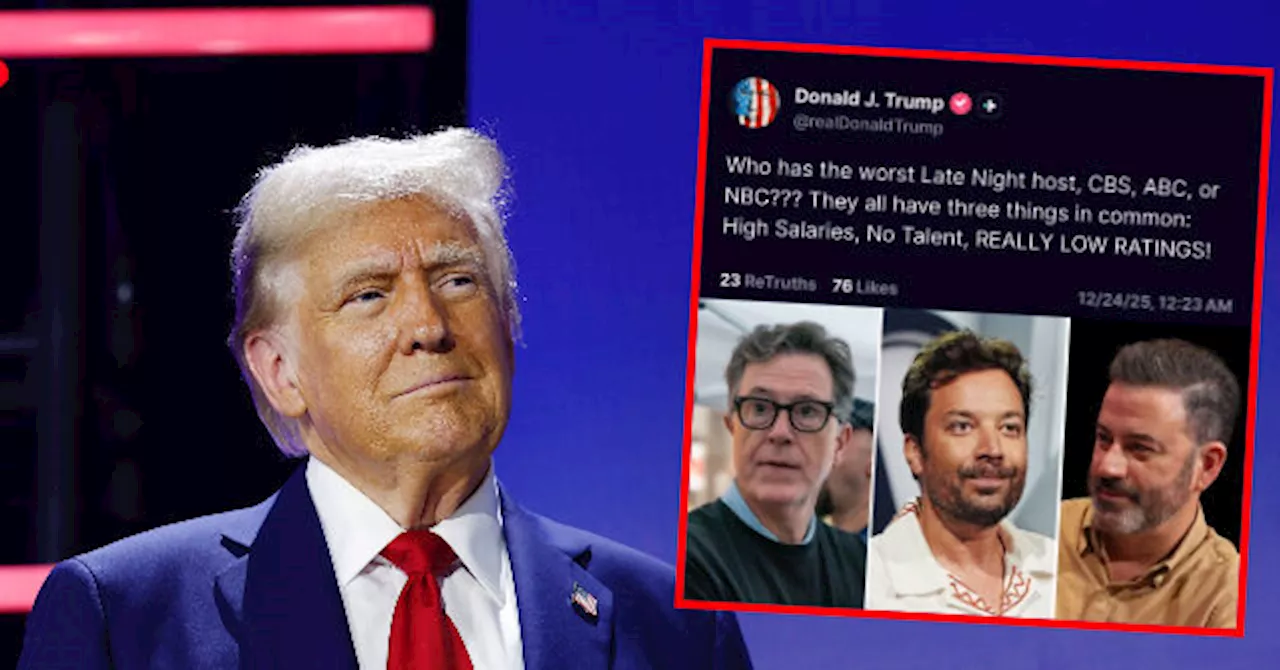
Former President Donald Trump has intensified his ongoing conflict with the media by criticizing late-night talk show hosts and threatening the broadcast licenses of major television networks. His remarks, made via social media, reflect his longstanding discontent with media portrayals of his presidency.
Trump directed his critiques at hosts from CBS, ABC, and NBC, characterizing them as lacking talent and delivering unsatisfactory ratings. He specifically targeted Stephen Colbert, the host of The Late Show, labeling him a “pathetic trainwreck” and questioning his abilities. Trump’s comments underline his broader dissatisfaction with what he perceives as negative coverage of himself and the Republican Party.
In addition to disparaging remarks, Trump issued a stark warning regarding the potential revocation of broadcast licenses for networks that he believes negatively report on his administration. He framed this threat as a matter of fairness, suggesting that media outlets should face consequences for coverage he deems unjust.
Media Relations and Legal Actions
This latest confrontation exemplifies the strained relationship between Trump and the media, characterized by mutual mistrust and accusations of bias. His recent comments are not isolated incidents but part of a larger campaign against outlets he views as unfriendly. Trump has consistently expressed his belief that media coverage is biased, utilizing both public rhetoric and legal actions to combat this narrative.
Recent legal developments include a lawsuit against the BBC, where Trump seeks financial damages for defamation related to a speech he delivered in March 2021. Although the BBC acknowledged an error in their reporting, they declined Trump’s demands for compensation. This case highlights Trump’s willingness to leverage legal avenues to address perceived grievances with media coverage.
Trump’s approach goes beyond individual complaints; it represents an attempt to reshape the media landscape and challenge the foundational principles of press freedom. His actions have raised concerns about the potential chilling effects on journalists and news organizations that report critically on him.
The Implications for Press Freedom
The implications of Trump’s rhetoric are significant, touching on the essential role of media in a democratic society. His comments and threats could create an environment where critical journalism is stifled, undermining the media’s capacity to hold power accountable. By targeting specific hosts and networks, Trump aims to redefine the standards of journalism, pushing back against coverage that contradicts his narrative.
Trump’s recent public statements and legal maneuvers reflect a concerted effort to regain control over the narrative surrounding his presidency. The ongoing scrutiny of his actions raises important questions about the future of press freedom and the role of the media in a functioning democracy.
As the landscape continues to evolve, the relationship between Trump and the media remains a focal point of public interest, highlighting the challenges faced by journalists in a time of heightened tension between government and press.