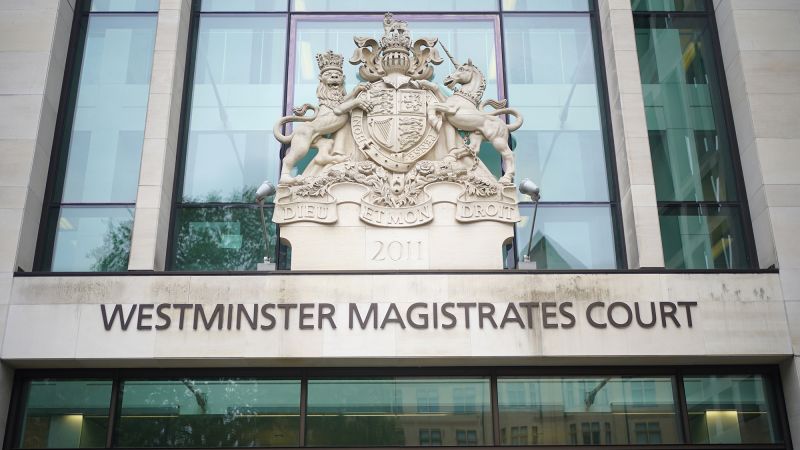
The UK government is moving to eliminate jury trials for many crimes as it confronts a severe backlog in its criminal justice system. Announced by David Lammy, the Justice Secretary, these reforms aim to establish a new tier of jury-free courts to expedite cases involving sentences of up to three years. Offenses such as fraud, robbery, and drug crimes would thus be removed from the purview of Crown Courts, which traditionally handle serious allegations. While serious crimes like murder, sexual assault, and human trafficking will continue to be tried by jury, critics express concerns that the proposed changes undermine a longstanding legal right.
The urgency of these reforms comes in response to a staggering backlog of nearly 80,000 criminal cases awaiting trial in the Crown Courts, a figure projected to soar to 100,000 by 2028. Among these cases are over 13,238 sexual offense cases, leaving many victims waiting up to four years for justice. According to a report from the Victims’ Commissioner, released in October, the current state of the justice system has led to widespread disillusionment among victims. One individual, a victim of assault, recounted his ordeal, stating that despite having substantial evidence, including an admission from the perpetrator, he was told that the Crown Prosecution Service was unlikely to pursue the case due to backlog pressures.
Concerns about delayed justice are echoed by victims like a woman who endured years of stalking and harassment while her case lagged in the courts. She described her experience as “three years of terror,” underscoring the emotional toll that prolonged legal processes can take on victims.
Advocates of the reforms, including Sarah Sackman, minister of state for courts and legal services, argue that the changes are necessary to alleviate the backlog. In a statement to the House of Commons on December 8, she declared, “justice delayed is justice denied.”
Historical Context and Opposition
The right to trial by jury in the UK dates back to the Magna Carta in the 13th century, making it a cornerstone of the nation’s legal framework. Critics, including Robert Jenrick, Conservative MP and Shadow Justice Minister, condemned the proposed reforms as a “disgrace” that erodes an ancient right. A November 2025 poll conducted by YouGov revealed that 54% of the public prefer a jury to decide verdicts in criminal cases, reinforcing the importance of this democratic principle.
Legal experts like Lachlan Stewart, a criminal barrister in Birmingham, highlight that the backlog has been exacerbated by delays stemming from the Covid-19 pandemic. He noted that the justice system was already under strain prior to the pandemic and has struggled to recover.
Despite the push for reform, there is substantial skepticism regarding its effectiveness. Helena Kennedy KC, a member of the House of Lords, expressed concerns that the decision to limit jury trials reflects a misguided belief that ordinary citizens are unfit to perform this civic duty. She emphasized that jury service is an essential aspect of a democratic society and argued that the real issue lies in inadequate funding for the justice system, leading to underutilized courtrooms.
On December 6, a group of 39 Labour Party backbenchers wrote to Prime Minister Keir Starmer, urging him to reverse the proposed reforms. They criticized the approach as an ineffective response to the backlog, suggesting instead that increasing the number of court sitting days could be a more viable solution. Currently, around 130,000 sitting days are available, yet restrictions limit usage by 20,000 per year.
Implications for Fairness in Justice
One of the central arguments against the proposed reforms is that jury trials contribute to a more equitable justice system by incorporating diverse perspectives. A 2017 independent review examining the treatment of Black, Asian, and Minority Ethnic individuals in the criminal justice system found evidence of racial biases but concluded that jury trials are more likely to yield fair outcomes than judge-only trials. Stewart noted that juries, composed of individuals from varied backgrounds, can mitigate discrimination and biases that may arise in a system dominated by judges, who often share similar demographics.
Conversely, some advocates for sexual assault reform argue that the proposed changes do not go far enough. Organizations like Rape Crisis England & Wales have long raised alarms about systemic flaws in handling sexual offenses and call for juryless trials in these cases. Their report, “Living in Limbo,” published in November, highlights the trauma experienced by survivors who face repeated delays and last-minute changes to their trial dates. Many survivors abandon their cases entirely due to the stress and uncertainty, with one victim stating, “It took too long. It ruined my life.”
While the intention behind the reforms is to streamline court proceedings and reduce waiting times for victims, experts like Stewart caution that there is currently no evidence to suggest that these changes will enhance the efficiency of the system.
The future of the UK’s criminal justice system remains uncertain as lawmakers grapple with balancing the need for reform against the preservation of fundamental rights. With ongoing discussions and debates, the outcome of these proposed changes will likely have lasting implications for the rights of defendants and the experiences of victims within the legal landscape.